Seblang: The Ancestral Trance Ritual of Banyuwangi
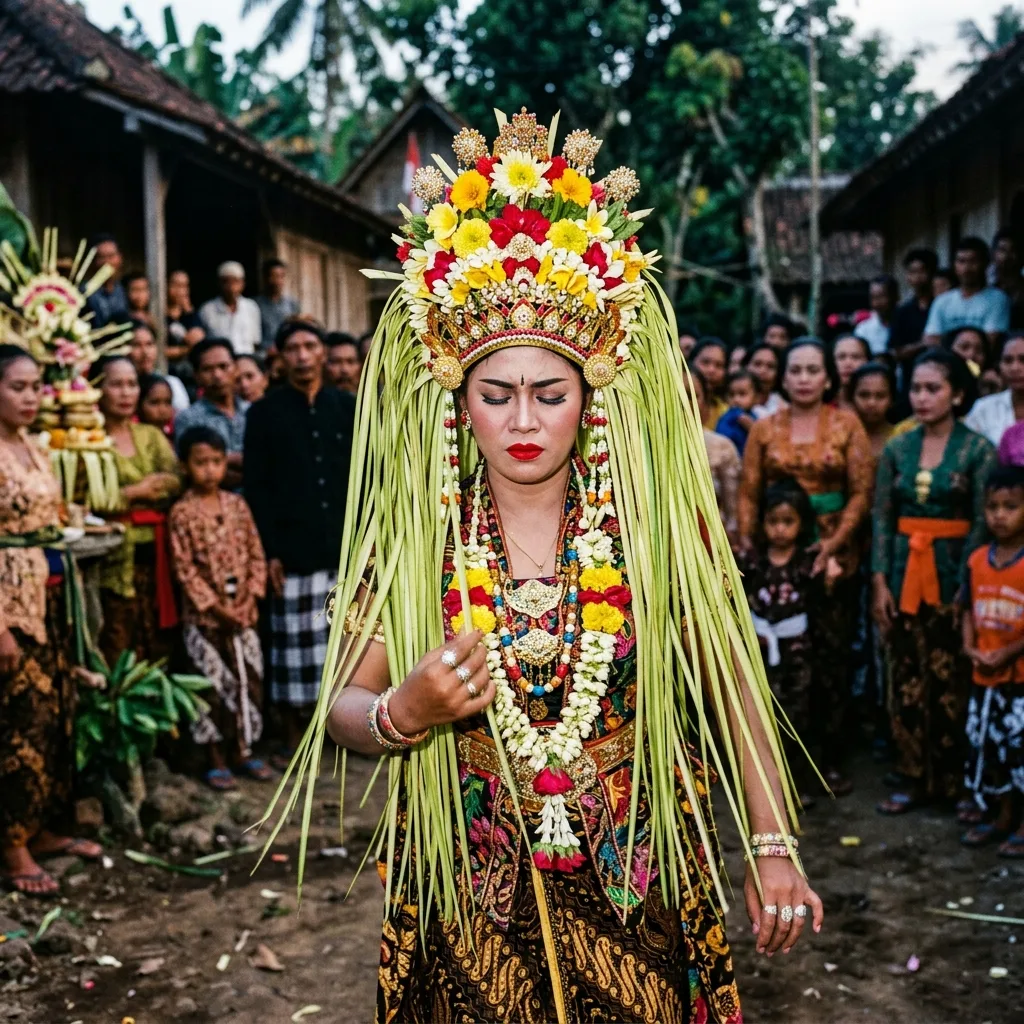
Once a year, two Osing communities in Banyuwangi conduct distinct Seblang trance rituals as part of village purification and agricultural wellbeing.
Near the end of the rice harvest season in Banyuwangi, a pawang (ritual conductor) crouches beside the chosen dancer and lights incense. Smoke curls upward. The gamelan ensemble begins. For the communities of Olehsari and Bakungan in the Glagah district, what follows is not merely a performance—it is a bersih desa, a village purification, and the dancer is its medium.
The Seblang ritual belongs to the Osing people, Banyuwangi's long-established community whose culture took shape in the territory of the former Blambangan kingdom, one of Java's last Hindu polities. The ritual is understood by communities as a vehicle to communicate with ancestral spirits, to protect the harvest, and to cleanse accumulated misfortunes from the village before a new agricultural cycle begins.
Olehsari and Bakungan: Two Different Traditions
Seblang survives today in only two locations within the Glagah district, and the rules for each are distinct. In Olehsari, the ritual runs for seven consecutive days beginning in the week after Eid al-Fitr. The dancer must be a pre-pubescent girl, traditionally believed to come from the lineage of previous Seblang dancers. In Bakungan, the ritual is held for a single night, a week after Eid al-Adha. The dancer must be a post-menopausal woman. The two communities share the same core function but observe entirely separate calendars, durations, and requirements for who can serve as vessel.
What Happens During the Ritual
The ceremony begins with the pawang offering prayers and placing the omprog, the ritual headdress, on the dancer's head. In Olehsari, a new omprog is made fresh each day of the seven-day ritual from young banana leaves, fresh flowers, and small mirrors. The pawang then burns incense over the dancer, and shortly afterward, those present describe the dancer as entering a condition in which she is no longer directing her own movement.
Once in trance, the dancer moves continuously to the music of the gamelan, guided by the chanting of the pawang. At certain points during the ritual, the dancer throws a selendang (cloth sash) toward the audience. Whoever the sash lands on is expected to come forward and dance alongside the Seblang dancer for a short time.
The seven-day cycle in Olehsari ends with two closing ceremonies: the Ider Bumi, a procession that circles the entire village, and the Ngelungsur, a closing ritual bathing that marks the end of the ceremony.
How the Dancer Is Chosen
According to local tradition, a Seblang dancer in Olehsari is not selected through open audition. The role is believed to pass through specific family lines connected to previous dancers. The pawang plays a central role in confirming who will serve as the chosen dancer for that year. The Bakungan tradition, which some local accounts date to 1639, follows similar principles.
The Omprog, the Music, and the Pawang
The omprog differs significantly between the two villages. In Olehsari, it is remade every day from fresh young banana leaves, seasonal flowers, and small mirrors. In Bakungan, the omprog is permanent—passed down through generations, often made of white cotton cloth. This distinction makes the headdress itself a marker of the two traditions' different orientations: one oriented toward renewal, the other toward continuity.
The gamelan ensemble and the pawang's voice together set the pace and direction of the dancer's movement. The pawang leads the prayers, monitors the ritual, and directs each stage of the ceremony.
Why Seblang Is Performed
For the communities that run the ritual, Seblang is a form of bersih desa: a periodic cleansing tied to village safety and continued agricultural wellbeing. It is part of the annual ritual rhythm of both Olehsari and Bakungan, observed alongside the Islamic calendar.
The Banyuwangi government has included Seblang in the Banyuwangi Festival calendar. For the communities themselves, the calendar, the lineage, and the pawang's knowledge remain the core of what keeps the ritual running.
Frequently Asked Questions
What is the difference between Seblang in Olehsari and Bakungan?
In Olehsari, the dancer must be a pre-pubescent girl, the ritual lasts seven days, and it occurs the week after Eid al-Fitr. In Bakungan, the dancer must be a post-menopausal woman, the ritual lasts one night, and it occurs the week after Eid al-Adha. The Bakungan tradition is also associated with a separate date of origin, with some local accounts tracing it to 1639.
Can tourists watch the Seblang trance ritual?
Yes. The Banyuwangi government has included Seblang in the Banyuwangi Festival calendar and a dedicated outdoor venue now exists in Olehsari. Visitors are welcome to attend, but the Seblang is an active village purification ritual—not a staged performance—and should be treated accordingly. Dates traditionally fall the week after Eid al-Fitr (Olehsari) and the week after Eid al-Adha (Bakungan); verify the current year's schedule before planning travel.