Balinese Ngaben: Cremation, Cost, and the Tradition of Release
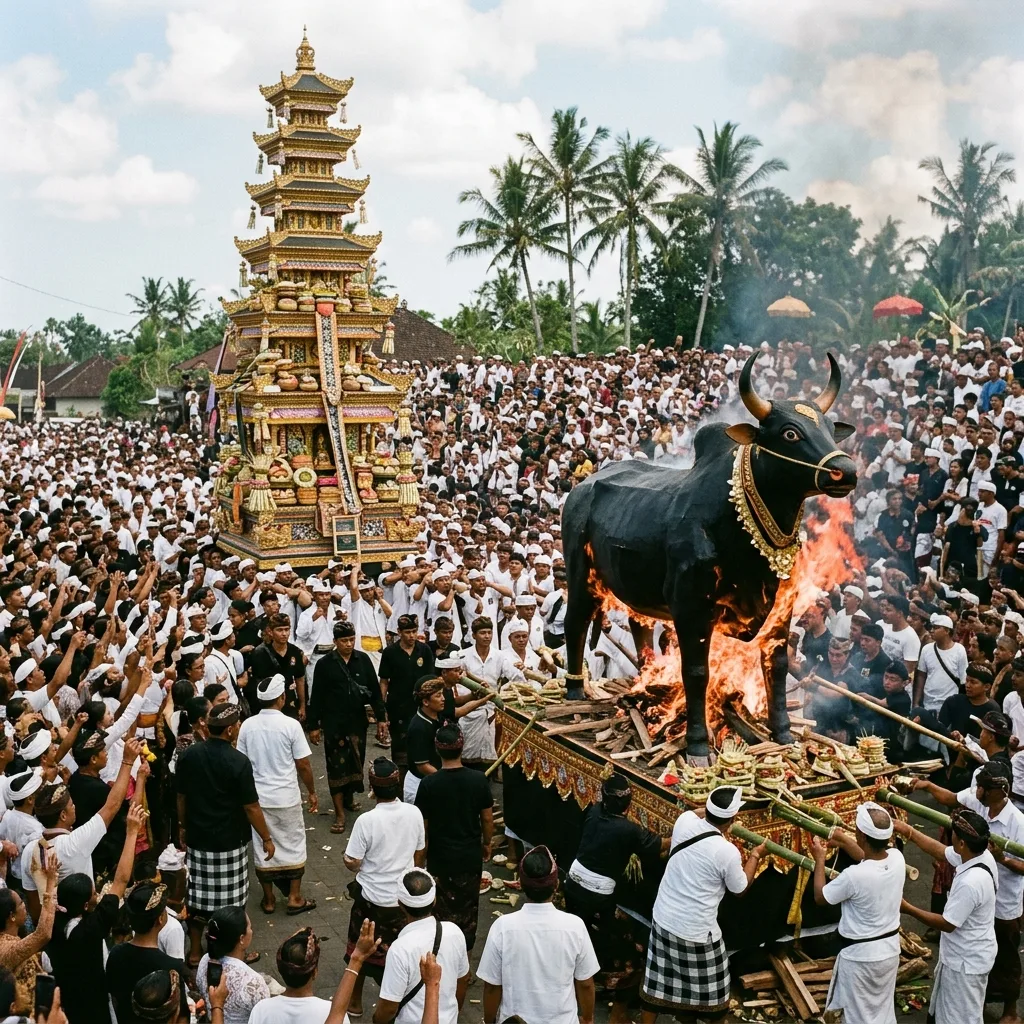
Beyond the towering fires and intricate carvings, the Balinese Ngaben cremation is a complex intersection of cosmology, communal obligation, and modern economic realities.
Before the cremation fire is lit, a Balinese Hindu family may have waited months, or even years, for this day. Death in Bali is not always immediately followed by the burning of the body. In certain traditions and circumstances, the first step may actually be a temporary burial in the village cemetery—a practice known as Makingsan ring Pertiwi (also written as Makinsan di Pertiwi, entrusting to the mother earth)—while they wait for the right time and sufficient resources to carry out the true ceremony.
What Ngaben Actually Means
To outsiders, Ngaben is often seen merely as an exotic parade or a festive funeral. However, cosmologically, the human body is viewed as a temporary vessel formed from Panca Maha Bhuta (the five elements of nature: earth, water, fire, wind, and ether). Ngaben is fundamentally a purification process through fire to return these elements to the universe, freeing the soul (atma) from worldly attachments so it can continue its journey toward reincarnation or ultimate liberation (moksha).
Why Cremation May Not Happen Immediately
This ritual of releasing the soul cannot be performed haphazardly. Aside from requiring substantial funds, the timing of Ngaben generally considers an auspicious day (dewasa ayu) based on the calendar system and local ritual provisions. If that good day is still far off, or if the family is not yet financially ready, the body is entrusted to the earth (Makingsan ring Pertiwi). When the right time arrives, the remains are exhumed through a ritual called Ngebet, to be cleaned and purified before cremation.
The Bade, the Sarcophagus, and the Procession
On the day of the ceremony, the deceased is carried on a towering bade structure to the setra (cemetery). The body is then transferred into a wooden cremation sarcophagus called petulangan. The shape of this sarcophagus varies greatly depending on local tradition, lineage, and ritual requirements, with forms ranging from a lembu (bull) to a singa (lion) or others. At every crossroad leading to the cemetery, the procession will spin the bade tower three times. In popular explanations, spinning the bade tower is associated with spiritual tactics to spark confusion in the spirit so it does not remember the way back home.
Ngayah: A Funeral Built by a Community
Ngaben is not merely a single family's affair; it is a collective obligation of the entire banjar (traditional neighborhood council). Leading up to the ceremony, villagers gather to build the tower, weave palm leaves, and prepare offerings. This voluntary labor system is known as ngayah. Through ngayah, the social solidarity of the village is tested and reaffirmed. In traditional practice, much of the work is carried out through ngayah, the voluntary contribution of labor from community members.
Why Ngaben Can Become Expensive
The scale of a ceremony that involves the entire village naturally requires massive logistics. Building the bade and petulangan, preparing offerings, gamelan, and meals for the community requires massive resources. For a large-scale ceremony with a complex ritual structure, the cost can reach hundreds of millions of rupiah. It is this reality that often forces families to postpone the cremation.
Ngaben Massal: Sharing the Cost
As a solution to this economic pressure, many traditional villages routinely organize Ngaben Massal (mass cremations). In this system, dozens of bodies that were previously buried (Makingsan ring Pertiwi) are cremated simultaneously. By undertaking several stages and ceremonial needs together, participating families can share portions of the cost, making Ngaben more affordable.
Crematoriums and a Changing Bali
Modernization has also brought pragmatic shifts. Changes in work patterns, urban living, rising costs, and time demands have shifted how some families conduct death rituals. In response, over the past decade, gas crematorium facilities managed by foundations or traditional villages have emerged. These services offer a much more affordable, fast, and practical cremation process, even if it means sacrificing some elements of grandiose architecture and the intensity of traditional communal labor.
When Visitors Become Spectators
The immense visual scale of Ngaben—giant blazing fires, golden carvings, and the sound of gamelan—makes it highly attractive to foreign tourists. However, there is a fine line between cultural observation and visual exploitation. Treating Ngaben merely as a tourist spectacle often ignores the fact that this is a sacred moment of transition. If the family and local community permit the presence of visitors, basic ethics still demand full respect for the family's space and the ongoing ritual protocols.
Release Without Spectacle
Ultimately, whether the cremation takes place in a grand ceremony with elaborate bade and petulangan, or through a simpler gas crematorium facility, the essence of Ngaben remains the same. The ultimate goal is not to show off family wealth to the world, but an act of love and duty—returning the elements of the body to their origin so that the soul can continue its circular journey without the ties of the past.
Frequently Asked Questions
Why are some bodies buried before the Ngaben cremation?
Families may wait for an auspicious day or to save funds for the ceremony. This temporary burial, called Makinsan di Pertiwi, allows time to prepare for the Ngaben, which can be an expensive and logistically demanding communal effort.
What is the purpose of spinning the cremation tower at crossroads?
In popular interpretations, the procession spins the bade tower three times at intersections to confuse the spirit of the deceased, ensuring it is less likely to find its way back to its former earthly home.
What is the difference between a traditional Ngaben and a modern crematorium?
Traditional Ngaben relies heavily on ngayah (voluntary communal labor) to build elaborate wood structures over weeks. Modern gas crematoriums offer a faster, more affordable alternative for families lacking the time or funds for traditional communal preparations.