Santet in Banyuwangi: Between Healing, Fear, and Black Magic
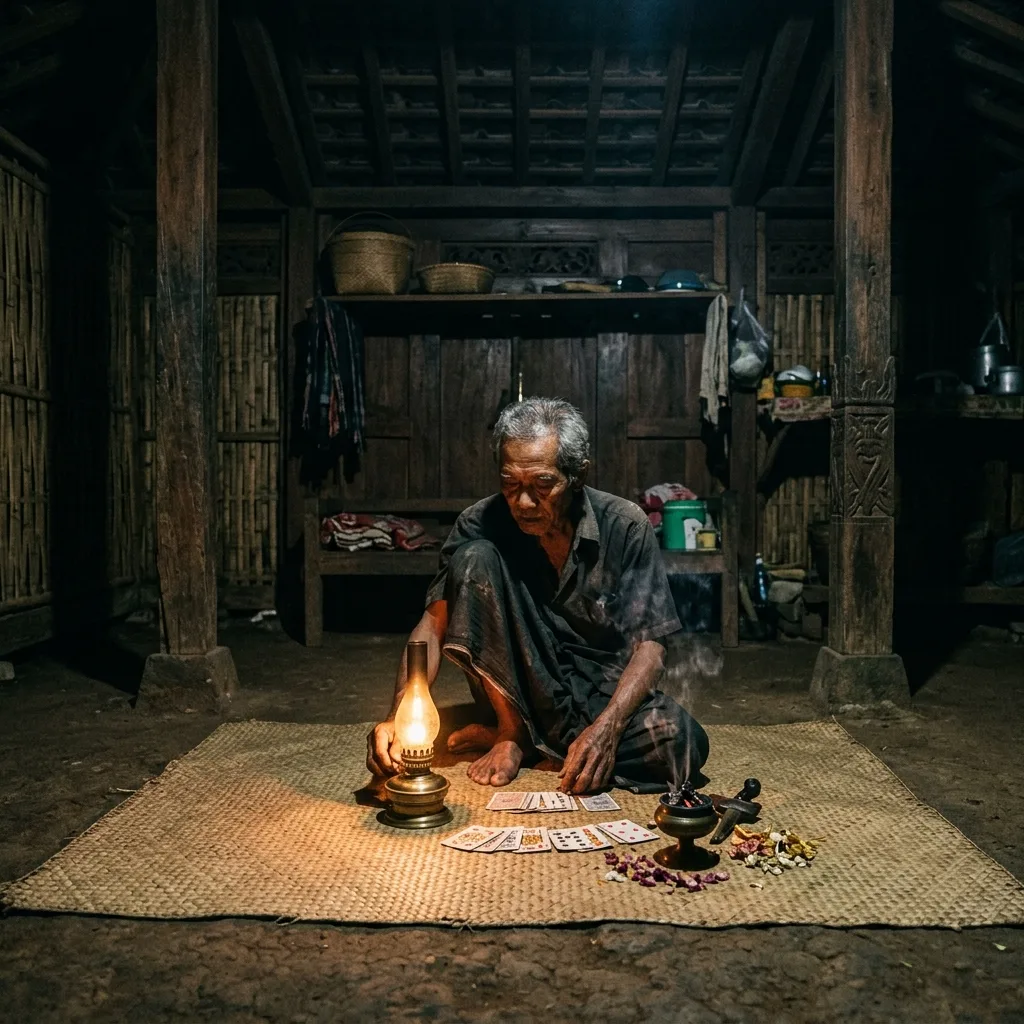
Beyond its dark reputation, the supernatural culture of Banyuwangi is a complex ecosystem of healers, spells, and social balance.
For decades, Banyuwangi has carried a reputation that makes mainland Indonesians shudder: the City of Black Magic. In the popular imagination, this is a realm of invisible needles and inexplicable illnesses. Yet, for the indigenous Osing people who inhabit the easternmost edge of Java, this cinematic horror trope flattens a highly pragmatic, deeply ingrained spiritual ecosystem. In anthropological studies of Osing tradition, magic is not always understood as inherently evil; its moral value depends on the type of spell, its purpose, and its application.
In traditional Osing culture, magic (ngelmu) operates on a spectrum. Anthropological studies of the region often categorize it into distinct colors. There is white magic (ajat) for healing and protection, yellow magic (pengasihan) for love and attraction, and red or black magic (santet) meant to curse or harm. These forces are not isolated from daily life, but actively shape social dynamics, dispute resolution, and local medicine.
At the center of this ecosystem is the wong pinter (the smart one). While outsiders might use the terrifying label of dukun santet (black magic shaman), the community sees these practitioners as vital pillars. A wong pinter is consulted for everything from determining auspicious days for farming or ceremonies, to curing ailments that cannot be medically explained. Their position in the village is built on a delicate tightrope of immense respect and quiet dread.
The Hierarchy of Magic
The dual nature of ngelmu means that the line between a revered healer and a feared sorcerer is razor-thin. A wong pinter who possesses the knowledge to cure a magical illness (suwuk) using blessed water, prayers, and herbs is logically assumed to understand how that illness was inflicted in the first place. The knowledge is neutral; the intent of the practitioner—and the client paying them—determines whether it becomes suwuk or santet.
A practitioner gains their formidable reputation either by inheriting ancestral knowledge, studying under a master, or undertaking severe asceticism (bertapa) in sacred, highly active spiritual zones like Alas Purwo. Once a reputation is established, it acts as a powerful social leveling mechanism. The mere fear of santet forces the wealthy to be generous and the arrogant to be humble, lest they become the target of a poorer neighbor's magical grudge.
Lintrik and the Economy of Spells
Despite the bloody reputation of Banyuwangi's magic, the most frequently sought-after spells are not meant for murder, but for romance and economics. Lintrik is one of the region's most legendary forms of pengasihan (attraction magic). Interestingly, it relies on a highly specific medium: old Dutch-style playing cards (kartu ceki), and is historically dominated by female practitioners.
Clients quietly seek out lintrik to bind a wandering spouse, attract a desired lover, or secure the absolute loyalty of business clients. It is a transactional, mundane reality of the supernatural. The belief in santet carries consequences that reach far beyond the ritual space. In 1998, accusations against individuals believed to possess black magic mutated into a wave of mass killings in Banyuwangi, which later spread across East Java. More than just an issue of local belief, the violence erupted amidst national political instability, leaving lingering questions about who truly orchestrated the purge.
→ Read the full historical account: The 1998 Banyuwangi Ninja Killings
Today, the stigma of 1998 still casts a long shadow. While the local government pours millions into rebranding Banyuwangi as an eco-tourism and festival hub, Banyuwangi’s reputation as the "City of Black Magic" does not mean these practices can be reduced to mere sorcery. In Osing tradition, the boundary between healing, protection, attraction, and harm is far more complex than the label suggests.
Frequently Asked Questions
Why is Banyuwangi known as the City of Black Magic?
Banyuwangi gained this reputation due to its deeply rooted indigenous Osing spiritual culture, where magic (ilmu) is widely acknowledged as a social tool. The stigma was tragically amplified nationwide following the 1998 mass killings of suspected shamans.
Are Santet and Suwuk considered different types of magic?
Historically, they are viewed as two sides of the same knowledge. Santet is used to inflict harm or illness, while Suwuk is used for healing and protection. A respected practitioner (wong pinter) is typically assumed to possess the knowledge of both.
What is Lintrik in Osing culture?
Lintrik is a specific, well-known form of attraction magic (pengasihan) in Banyuwangi that utilizes old Dutch playing cards (kartu ceki). It is commonly sought out to bind romantic partners or secure business loyalty.