Pesugihan Gunung Kawi: The Reality Behind Java's Wealth Myth
Gunung Kawi is one of Java's most persistent supernatural wealth myths—yet at its core lies the grave of two 19th-century Islamic figures who fled colonial rule. Explore how a legitimate Islamic pilgrimage site became Java's most famous center of pesugihan lore.
In the Indonesian popular imagination, the name Gunung Kawi is deeply synonymous with pesugihan, the pursuit of supernatural wealth. Mention the mountain in casual conversation, and it immediately evokes rumors of dark pacts, overnight tycoons, and heavy debts to the unseen. Yet, visiting the actual site in Malang, East Java, reveals a striking paradox: the epicenter of this dark reputation is not a hidden occult cave, but rather the well-kept mausoleums of two revered 19th-century Islamic figures. Understanding how that transformation happened is more interesting than the legend itself.
Eyang Jugo, Eyang Sujo, and the Java War
The story of Gunung Kawi begins with Kiai Zakaria II, known today as Eyang Jugo. A nobleman from the Yogyakarta Sultanate, he served as a close spiritual advisor and loyal follower of Prince Diponegoro during the Java War (1825–1830), the last great anti-colonial rebellion in Java before the Dutch consolidated total control. After Diponegoro was captured through an act of deception by Dutch colonial officials in 1830, his remaining followers scattered to avoid arrest.
Kiai Zakaria II fled east toward Blitar. When he arrived at the village of Sanan in Kesamben, locals asked about his identity. To conceal himself, he replied that he had come alone—in Javanese, sajugo. The villagers misheard the word and began calling him "Eyang Jugo." He eventually settled on the slopes of Mount Kawi, established an Islamic boarding school (padepokan), and became a respected religious teacher until his death on January 22, 1871.
He was buried on the mountain as per his wish. His closest student and adopted son, Raden Mas Iman Soedjono (Eyang Sujo), continued managing the school and the burial grounds until his own death on February 8, 1876. In accordance with their shared wish, the two men were buried in the same grave, side by side. It is this burial site, Pesarean Gunung Kawi, that became the origin of everything that followed.
The Genesis of Syncretism: The Story of Tamyang
The reason Gunung Kawi carries Chinese architectural pavilions, incense urns, and active ciam si (bamboo divination stick) rituals alongside its Islamic graves is documented in a specific origin story. According to local historical accounts, Eyang Djoego had, at some point, helped a family in China. A man named Tamyang, out of gratitude for that act, made the long journey to the pesarean to personally tend and maintain Eyang Djoego's grave. He would arrive wearing all black, and over time established a place of worship in the Chinese tradition beside the tomb.
Tamyang's presence formed the seed of what became a permanent Chinese-Indonesian community at the site. Over the following decades, as the site's spiritual reputation spread, a Klenteng dedicated to Dewi Kwan Im was established within the complex. Today, Javanese pilgrims pray at the tomb, while others shake ciam si tubes at the Chinese pavilion—rituals that have become part of a shared practice without being perceived as contradictory.
What Pilgrims Actually Do
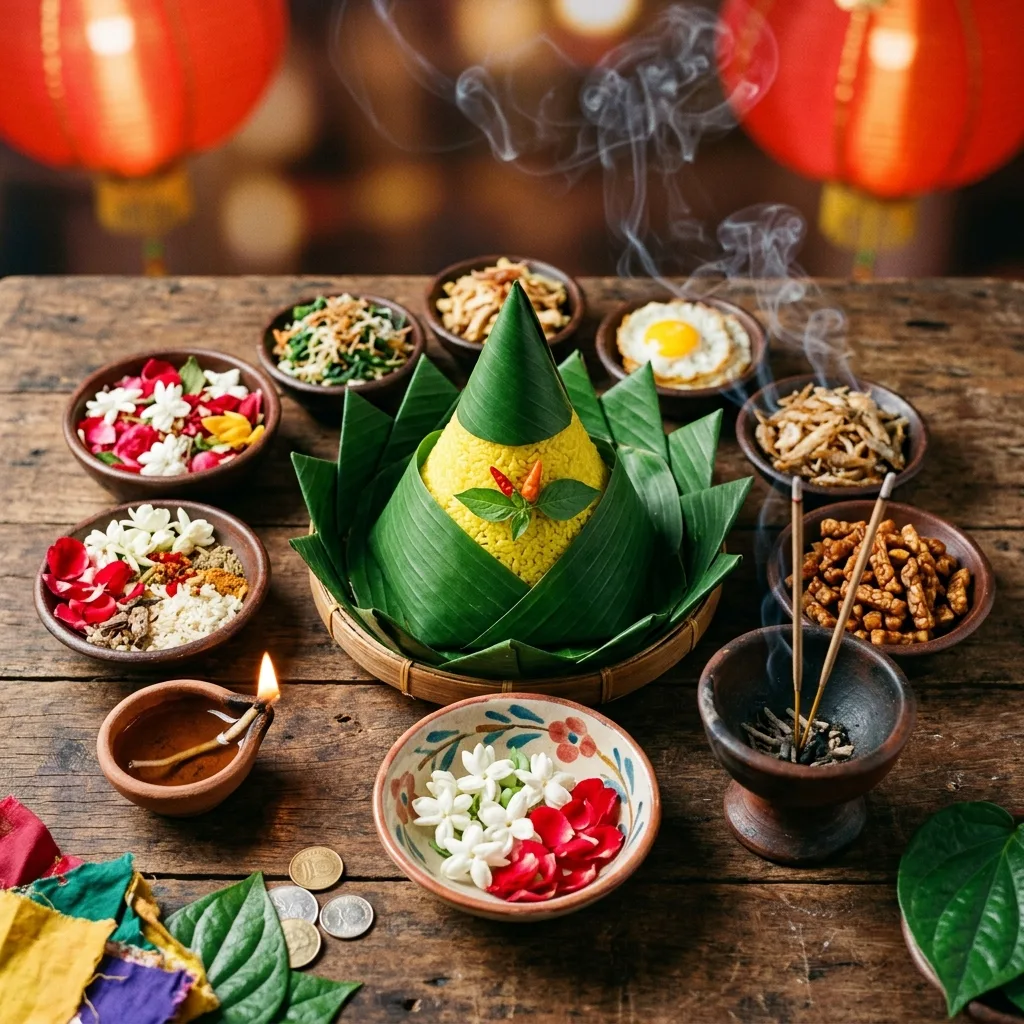
The site draws visitors on all days, but the most significant arrivals cluster around certain dates in the Javanese calendar. Friday Legi holds particular meaning because it is recognized as the day Eyang Jugo died. On these nights, the pesarean fills with pilgrims who come to pray, meditate, or hold selamatan (communal thanksgiving rituals). The official pengelola (site managers) provide packages for selamatan with yellow rice (tumpeng), led by a modin (religious officiant) in the main pendopo of the complex.
Near the complex, at a natural water source called Sumber Manggis, some pilgrims perform ritual bathing to cleanse themselves before entering the tomb area—a practice rooted in Islamic purification traditions as much as in Javanese custom. The site's official juru kunci (hereditary custodians) assist pilgrims in the proper protocol. The pengelola has formally warned visitors to be cautious of unauthorized individuals posing as juru kunci; only those stationed at the official pendopo are legitimate.
Where the Pesugihan Myth Enters
None of this is quite pesugihan. The site's pengelola, local religious leaders, and academic observers consistently emphasize that Pesarean Gunung Kawi is a site of ziarah (Islamic pilgrimage and veneration), not a center for dark supernatural wealth transactions. The pesugihan reputation appears to have grown through a specific cultural dynamic: when some visitors experienced improved fortune after their visits and attributed it to the site, those stories spread and amplified.
From there, Gunung Kawi's reputation attached itself to the broader folklore of pesugihan in Java—a belief system where large, sudden wealth is rarely understood as coincidental. In many Javanese pesugihan narratives, supernatural fortune comes with a demand for repayment, the feared concept of tumbal. The legend holds that a family member's life force must eventually be surrendered as debt. But tumbal is a motif that appears across many Javanese supernatural narratives; linking it specifically and exclusively to Gunung Kawi is more the work of popular culture than of any documented practice at the site. The pesarean's own managers actively refute it.
The Economy of Pilgrimage
Whether pilgrims arrive for orthodox ziarah, cultural tourism, or with more transactional hopes, the sheer volume of visitors sustains a substantial local economy. The roads leading to the complex are lined with hundreds of stalls selling incense, ceremonial food, and ritual offerings. Surrounding villages provide homestays, transport services, and food vendors. This micro-economy functions entirely on earthly principles, regardless of what beliefs motivate those who travel through it.
Reputation and Reality
The regional government today promotes Pesarean Gunung Kawi as a model of religious pluralism and a certified cultural heritage destination. Official narratives focus on the beauty of the architecture and the peaceful coexistence of Islamic and Chinese traditions. Meanwhile, the pesugihan reputation continues to circulate independently through word of mouth, social media, and popular Indonesian horror culture.
Gunung Kawi is not really one thing or the other. It is a legitimate historical site, a functioning Islamic pilgrimage destination, a rare space of documented cultural syncretism, and simultaneously the subject of one of Java's most persistent supernatural wealth myths. What makes it genuinely strange is that all of this is true at the same time.
Frequently Asked Questions
Is the pesugihan wealth ritual at Gunung Kawi real?
The pilgrimage (ziarah), prayers, and offerings at Pesarean Gunung Kawi are real and observable practices. However, the claim that these rituals produce supernatural wealth—or require a blood debt (tumbal) in return—sits firmly in the realm of belief and folklore, not verifiable fact. The site's own official managers actively refute the pesugihan and tumbal reputation.
Who are Eyang Jugo and Eyang Sujo?
Eyang Jugo (Kiai Zakaria II) was a nobleman and follower of Prince Diponegoro who fled east after the Java War (1825–1830). He settled on Mount Kawi, established an Islamic boarding school, and died January 22, 1871. His adopted son Eyang Sujo continued the school until his death on February 8, 1876. Both men were buried in the same grave by their mutual wish.
Why does Gunung Kawi have Chinese architecture and traditions?
Local historical accounts trace it to a man named Tamyang, who traveled to the pesarean to tend Eyang Djoego's grave as an act of gratitude for past help. He established a Chinese-style place of worship beside the tomb, forming the origin of the Chinese-Indonesian community at the site. Over time, a Klenteng dedicated to Dewi Kwan Im was established within the complex, creating the site's distinctive syncretic character.