Odori Nenbutsu: When Buddhist Prayer Became a Dance
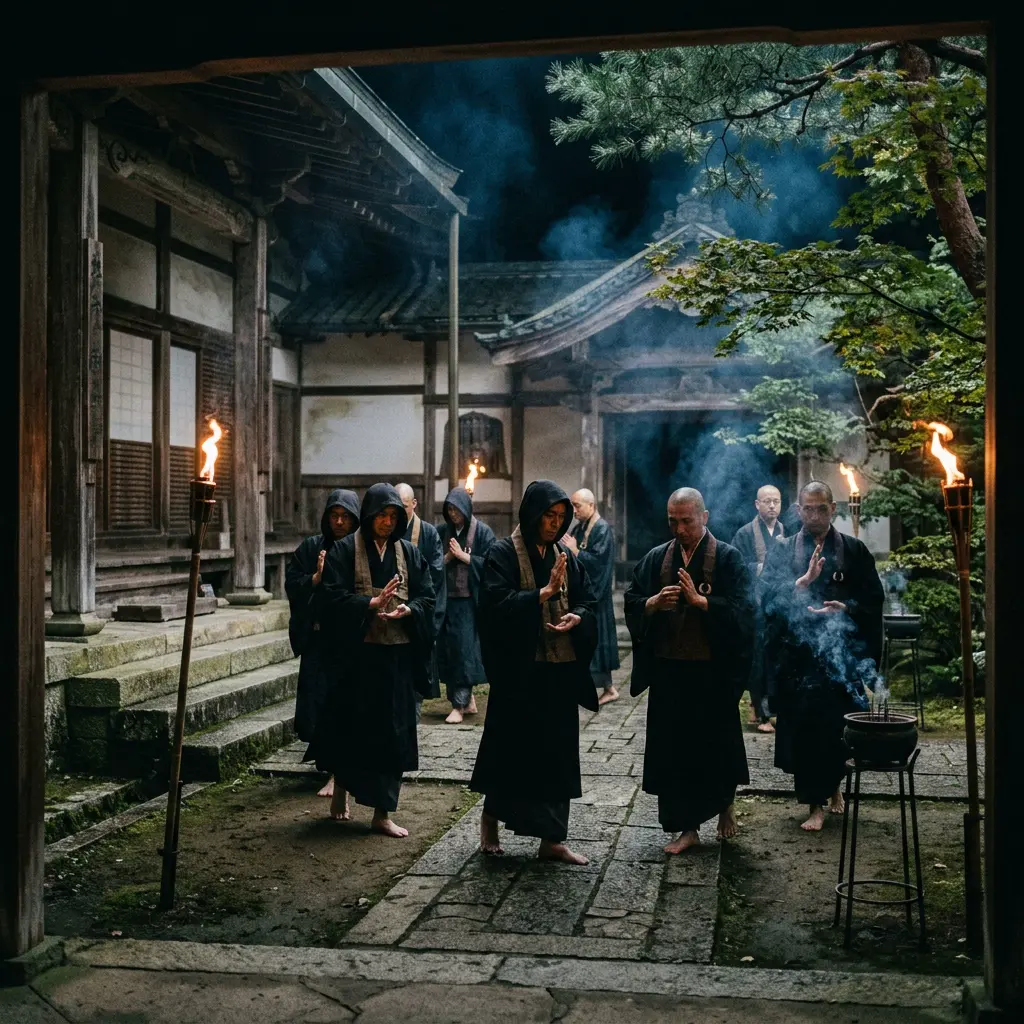
Long before today's Bon Odori became the familiar face of Japanese summer festivals, medieval Japan already had ecstatic Buddhist dance traditions such as Odori Nenbutsu.
The terms odori nenbutsu and nenbutsu odori overlap in English-language writing but can refer to different historical and regional performance traditions; the practice popularized by the wandering monk Ippen Shōnin (1239–1289) is conventionally called odori nenbutsu.
The practice of reciting the name of Amida Buddha (nenbutsu) was established in Japan by the tenth century, notably championed by the street-preaching monk Kūya. But it was Ippen who helped popularize an ecstatic form of nenbutsu performed through chanting and dance, drawing on a tradition associated with the earlier monk Kūya. Ippen walked across Japan distributing nenbutsu talismans (fuda) and preaching the universal efficacy of reciting Amida Buddha's name for rebirth in the Pure Land.
The 1279 Dance in Shinano
According to the Ippen Shōnin eden (Illustrated Biography of the Monk Ippen), the spontaneous dancing iteration of this practice began in 1279 in Shinano Province. While Ippen and his followers were chanting, the intensity of their devotion reportedly caused them to break into a rhythmic, leaping dance. They struck hand-held gongs and beat bowls for percussion. The illustrated biography later depicts gatherings so large that hundreds crowded onto a residence veranda, damaging part of the structure.
Compared with elaborate temple rites that required clerical expertise or elite patronage, Ippen's portable nenbutsu practice demanded remarkably little from participants. His preaching made participation possible across social boundaries that more formal religious settings could reinforce.
Crowds, Stages, and Social Boundaries
The gatherings visibly crossed social boundaries: nobles, warriors, and commoners from a broad range of backgrounds appear in the visual record surrounding Ippen's movement, dancing together in public spaces.
At times, Ippen and similar itinerant practitioners encountered restrictions and hostility. In 1282, when Ippen pressed forward to enter Kamakura, an attendant beat some of his followers, and the warrior confronting him struck Ippen twice. He was then refused entry into Kamakura. The incident shows that itinerant religious movements could collide with political and spatial controls—but it should not automatically be read as a blanket government ban on the dance itself.
As the movement grew, the spontaneous dancing of Ippen's early followers evolved. Raised stages (odori-ya) came to be used for increasingly organized performances and preaching in temple courtyards, organizing the practice into a structured performance and a tool for proselytization.
When Nenbutsu Dance Met Bon Traditions
Odori Nenbutsu was a major medieval influence on the dance traditions that later became associated with Bon, though modern Bon Odori emerged from several overlapping ritual and folk-performance traditions rather than from Ippen's movement alone.
Historically, Bon traditions emerged from a complex interweaving of Urabon (rituals for the dead), ancestral veneration, local folk dances (furyū odori), and Buddhist chanting. By the late medieval period, nenbutsu-based dance, furyū performance, and Bon memorial customs had begun to overlap in different ways across local communities. Today, while the Ji-shū sect still preserves formal Odori Nenbutsu, many localized folk performing arts across Japan continue to blend nenbutsu chanting with community memorial dances. The history is not a straight line from Ippen to Bon Odori, but a centuries-long overlap of Buddhist practice, local ritual, performance, and memorial dance.
Frequently Asked Questions
Is Nenbutsu Odori the same as Bon Odori?
Not exactly. Odori Nenbutsu is one important historical influence on some later Bon dance traditions, but Bon Odori developed from several overlapping Buddhist and local folk practices associated with the Obon season.
Who was Ippen Shonin?
Ippen Shonin (1239–1289) was an itinerant Buddhist monk who founded the Ji-shu sect. He popularized the ecstatic 'dancing nenbutsu' across medieval Japan, lowering the barriers to religious participation.
Was Odori Nenbutsu opposed by medieval authorities?
At times, Ippen and similar itinerant practitioners encountered restrictions. In 1282, when Ippen pressed forward to enter Kamakura, an attendant beat some of his followers, and the warrior confronting him struck Ippen twice before refusing him entry. However, surviving evidence does not justify treating this as a simple government ban on dancing nenbutsu itself.