Kamikakushi: Why People Once Explained Disappearances as "Spirited Away"
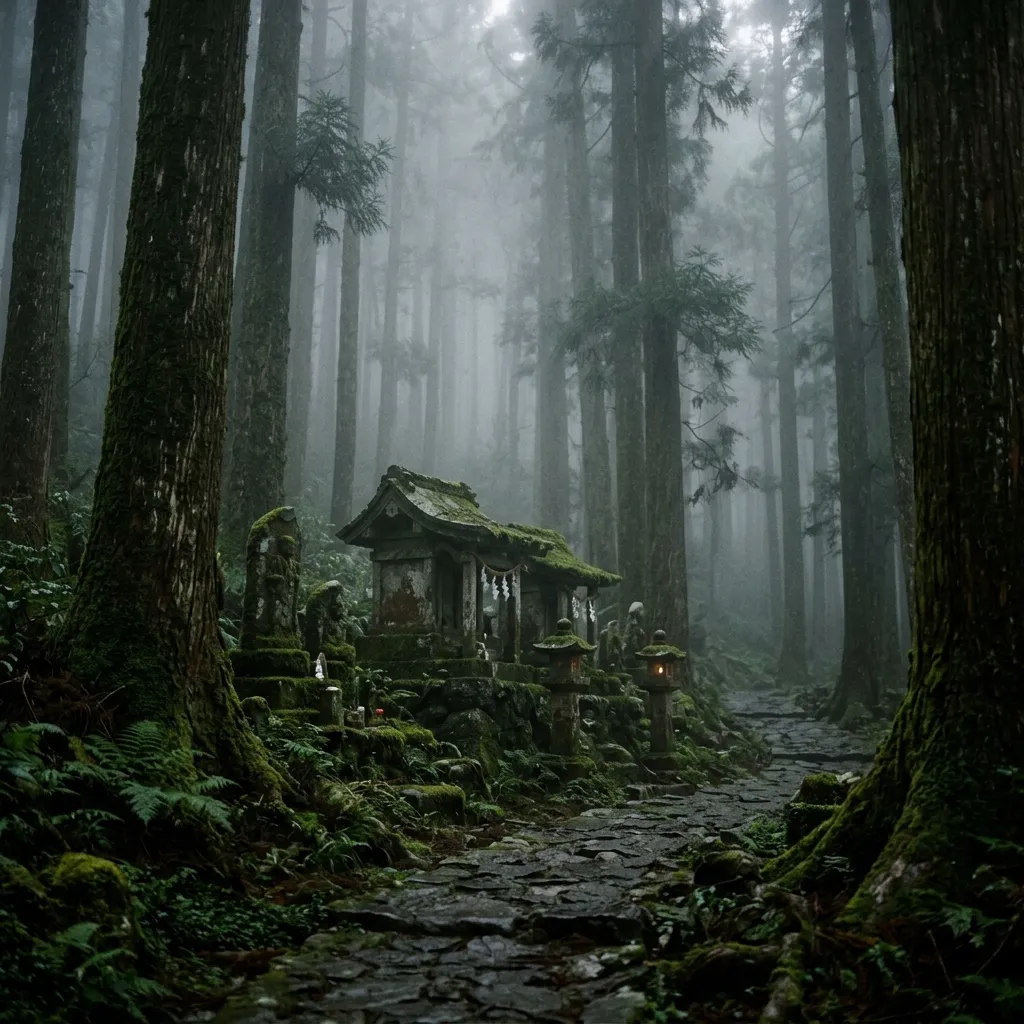
Explore the Japanese folklore of kamikakushi, in which unexplained disappearances were sometimes attributed to kami, tengu, foxes, and other non-human beings.
In 1910, the pioneering Japanese folklorist Kunio Yanagita published The Legends of Tōno, a compilation of rural oral histories that formally documented an enduring motif of the Japanese countryside: kamikakushi. Translating literally to "hidden by a kami" (a deity or spirit), the term described sudden, inexplicable disappearances attributed to the intervention of kami or other supernatural beings, often in landscapes imagined as bordering the human and otherworldly realms. In folklore, unexplained disappearances could be interpreted through the framework of kamikakushi, especially when conventional explanations were unavailable or socially difficult.
Kamikakushi in the Tōno Monogatari
Yanagita's accounts from the Tōhoku region record specific instances of women and children vanishing from their homes without a trace. When someone was suspected to be a victim of kamikakushi, the village did not merely mount a physical search. The community would set out beating drums and calling out the missing person's name. Calling a missing person's name can be read as an auditory tether—an attempt to draw them back toward the human world. The noise may have carried ritual as well as practical significance, though early accounts rarely specify a single explicit mechanism for the drumming.
Why Mountains Mattered
This framework was deeply rooted in the psychological geography of pre-industrial Japan. The village, characterized by rice paddies and communal hearths, represented order. Anthropologists such as Carmen Blacker have noted that mountains could be imagined as liminal or otherworldly domains, ruled by non-human beings whose motives did not necessarily align with human safety or social order. Crossing this boundary, especially during the transitional twilight hour known as omagatoki, was traditionally regarded as a dangerous act.
Tengu and Supernatural Abduction
Tengu are among the most prominent supernatural abductors in Japanese kamikakushi literature. While they are often described generally as mountain-associated supernatural beings, their roles vary greatly across period and region. In abduction folklore, they were frequently cited as the culprits who snatched humans away. Some tengu-abduction tales describe victims returning in elevated or inaccessible places, including roofs and high trees. Furthermore, in the famous Edo-period case of Torakichi, the boy claimed that a mysterious mountain master associated with the tengu realm took him on extraordinary journeys of flying through the night sky and visiting distant mountains.
What About Kitsune?
Foxes (kitsune) also feature in the lore of divine kidnapping. However, fox folklore is more commonly associated with illusion and trickery rather than pure abduction. Fox folklore frequently emphasizes transformation, possession, and elaborate deception: a person may misrecognize places, people, or objects under a fox's influence. Such tales dramatize a fear that ordinary perception can no longer be trusted.
Between Folklore and Real Disappearances
Komatsu Kazuhiko has argued that kamikakushi could function as a cultural explanation for otherwise difficult disappearances, including cases in which the person's own reasons for leaving were socially awkward or deliberately left unexamined. In other cases, an unexplained disappearance in dangerous terrain may simply have remained unresolved. Sadler, for example, reads several northern narratives through themes of alienation and mental suffering, while cautioning that the underlying circumstances are often impossible to recover. Some tales describe returnees as dazed, confused, or unable to give ordinary explanations for where they had been. Such descriptions can also be read, cautiously, alongside experiences of trauma, disorientation, or psychological distress.
Kamikakushi in Modern Culture
The term remains culturally familiar in modern Japan, famously popularized globally by the animated film Spirited Away (Sen to Chihiro no Kamikakushi). While contemporary disappearances are handled by law enforcement, the historical belief in kamikakushi reveals how rural communities once made sense of the unthinkable. The mountains simply provided a language for loss, transforming an absence into an encounter with the unknown.
Frequently Asked Questions
Where did the belief in Kamikakushi originate?
Kamikakushi belongs to a broad complex of Japanese folk beliefs involving mountains, kami, tengu, foxes, and other non-human beings; its history cannot be reduced to a single religious tradition.
What does the word omagatoki mean?
Omagatoki literally translates to 'the time of meeting evil spirits.' It refers to twilight, which was traditionally regarded as a dangerous liminal time associated with encounters with supernatural beings.
Are there real forests in Japan associated with Kamikakushi?
Tōno in Iwate Prefecture is strongly associated with documented kamikakushi narratives from the early twentieth century. Other sacred mountain regions, such as Mount Takao, possess rich tengu lore, but they should not automatically be treated as historical kamikakushi sites.