Trunyan Cemetery: The Mepasah Tradition of Lake Batur
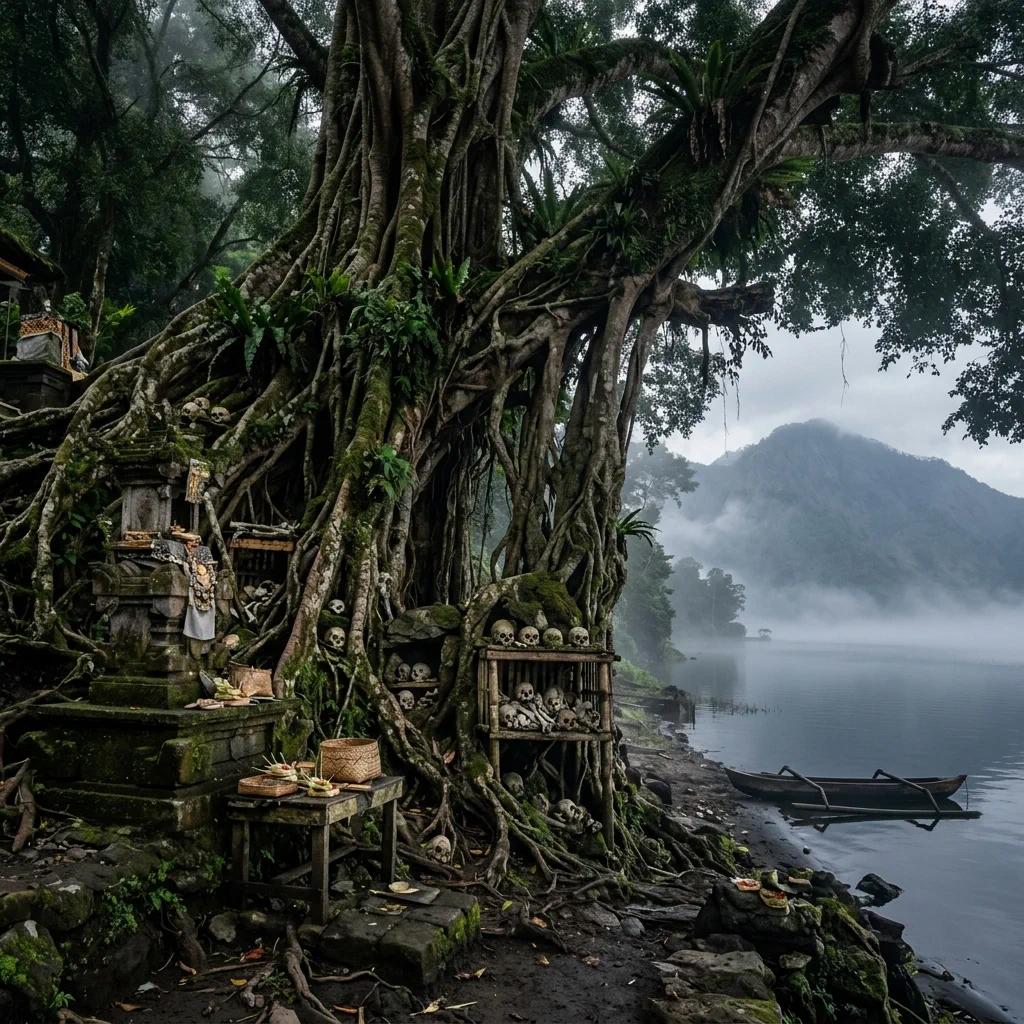
On the shores of Lake Batur, the Trunyan community observes Mepasah, a burial practice where the deceased are placed above ground beneath the Taru Menyan tree.
While many visitors are familiar with the Balinese death tradition through the Ngaben cremation ceremony, a different mortuary tradition exists on the eastern shore of Lake Batur. Trunyan is one of the Bali Aga communities, groups of Balinese people who maintain a number of traditions and social structures distinct from lowland Balinese traditions. Here, the deceased are not buried in the earth or cremated. Instead, bodies are transported by wooden boat across the lake to a specialized cemetery where they are placed above ground in the open air, a ritual known locally as Mepasah or Ngutang Mayit.
At the main cemetery, Sema Wayah, the air is not as dominated by the odor of physical decay as might be expected from open-air burial. According to local tradition, this is due to a massive, ancient banyan-type tree known as the Taru Menyan (fragrant tree). The tree is believed to help absorb or neutralize the scent of the deceased placed in the cemetery, forming the center of one of the most well-known explanations for the Mepasah practice in Trunyan.
In his ethnography on Trunyan, Indonesian anthropologist James Danandjaja documented the local community's burial rules and practices, including the placement of bodies and the use of bamboo structures. The deceased are placed on the earth and covered with triangular cages of woven bamboo called ancak saji.
The Classification of the Dead
Surrounding the bamboo cages, personal items are left alongside the deceased. In the traditional burial classification documented in Trunyan, the spatial organization of the cemeteries follows specific ritual categories rather than solely family preference.
Villagers who died of natural causes, were married, and had physically intact bodies are traditionally placed at Sema Wayah, beneath the fragrant tree. Those who pass away from sudden accidents, inexplicable illnesses, or violent events are taken to a separate cemetery called Sema Bantas. Infants and unmarried individuals are laid to rest at a third site known as Sema Nguda. This division demonstrates that the burial location is determined by specific ritual parameters.
After the Body Decomposes
After the soft tissue has decomposed, families perform a final ritual step. The skulls are removed from the bamboo cages and placed on a stone altar at the base of the Taru Menyan, joining the arrangement of older ancestors.
The Women's Taboo and Tourism
In the ritual rules documented in Trunyan, customs regarding spiritual impurity (cuntaka) forbid local village women from entering the cemetery during the burial rituals. This prohibition traditionally applies to local women in the context of specific rituals, while female tourists are typically able to visit the cemetery area outside of these processions.
Tourism in Trunyan supports the local economy through boat transportation and guide services. Visitors' experiences regarding pricing and negotiation can vary, so costs should ideally be agreed upon before departure. When photographs of skulls and bodies from Trunyan circulate as visual spectacles on social media, the family and ritual context behind them is often lost. Mepasah is not just a method of handling the deceased, but a reflection of the Trunyan community's relationship with their ancestors, ritual rules, and the landscape in which they live.
Frequently Asked Questions
How do you get to Trunyan cemetery?
The Trunyan cemetery is generally reached by boat across Lake Batur, typically departing from docks at Kedisan or Toya Bungkah. Hiring a local guide can help arrange transportation and explain visitor etiquette.
Why doesn't the Trunyan cemetery smell like decomposing bodies?
According to local tradition, the massive Taru Menyan tree is believed to absorb or mask the odor of the deceased placed beneath it.
Are women allowed to attend the burial rituals in Trunyan?
In the documented ritual rules of Trunyan, local women traditionally do not enter the cemetery area when the placement of a body occurs. Female tourists are typically able to visit the area outside of these specific processions, provided they follow local guidelines.
What is the difference between Sema Wayah, Sema Bantas, and Sema Nguda?
In traditional Trunyan burial customs, Sema Wayah is for married individuals who died of natural causes. Sema Bantas is for those who died unnatural or sudden deaths. Sema Nguda is reserved for infants and unmarried individuals.