Toraja Ma'Nene: The Ritual of the Exhumed Ancestors
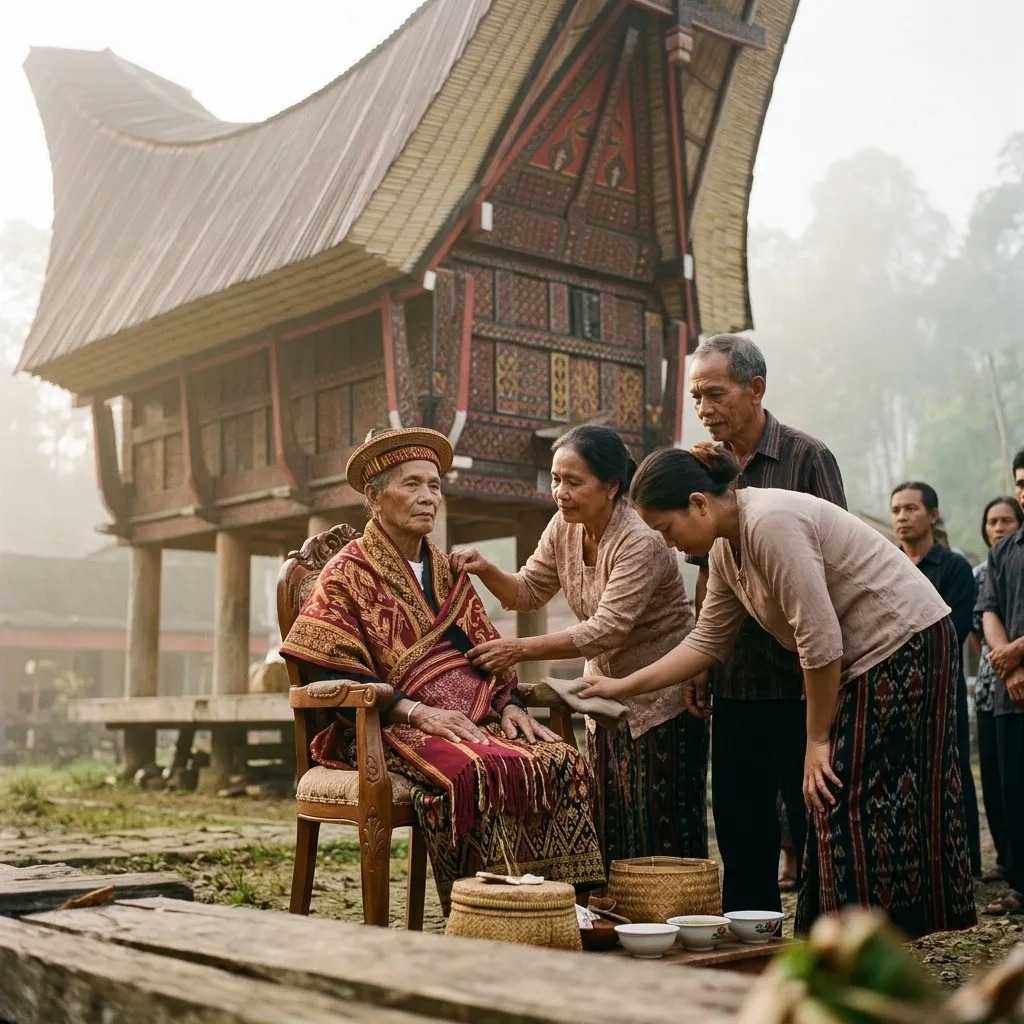
In the highlands of Sulawesi, the Torajan mortuary rituals, including Rambu Solo and Ma'Nene, treat death as a gradual social transition rooted in intergenerational duty.
In parts of North Toraja, families periodically reopen ancestral tombs, remove preserved remains, clean them, and replace their clothing. The practice is known as Ma'Nene, a deeply grounded cultural tradition that demonstrates a relationship with the dead far different from modern conventions.
What Is Ma'Nene?
Ma'Nene translates roughly to 'cleaning the corpses' or 'taking care of ancestors'. It is a ritual where families return to the burial sites of their relatives to clean the graves, repair coffins, and, most visibly, exhume and care for the physical remains of the dead. Rather than a morbid fascination with mortality, the practice is a practical and emotional reaffirmation of familial ties. By physically tending to their ancestors, Torajan families demonstrate that biological death does not sever the obligations and love shared between generations.
Why Toraja's Relationship With Death Is Different
To understand Ma'Nene, one must understand the traditional Torajan cosmology, known as Aluk To Dolo (Way of the Ancestors). In this belief system, physical death is not always viewed as an immediate, absolute end. When a person's heart stops beating, they are initially considered to makula, a sick person.
The deceased may remain inside the traditional family home (tongkonan) for months or even years while the family gathers the resources for a formal funeral. This arrangement creates a prolonged interval between biological death and the social finality of the funeral, allowing families to grieve pragmatically and continue caring for their loved ones. This period before the funeral should not be confused with Ma'Nene, which takes place after burial when families later return to care for ancestral remains.
Ma'Nene and Rambu Solo Are Not the Same Ritual
It is common for observers to conflate the dramatic funeral ceremonies with the exhumations, but they serve distinct purposes. The Rambu Solo is the grand, final funeral rite—a massive social event designed to elevate the deceased's soul to Puya (the land of souls). Ma'Nene, in contrast, occurs years or decades after the Rambu Solo. It is a quieter, recurring maintenance of the relationship, ensuring the ancestor is not neglected in the afterlife.
Why Buffalo Matter
Anthropologist Toby Alice Volkman extensively documented how Torajan funerals operate as complex systems of intergenerational debt.
The number and type of water buffalo (tedong) sacrificed can signal wealth, social standing, and the scale of a family's ritual obligations. These massive animals are ceremonially sacrificed during the funeral, associated with the deceased's journey to Puya. The substantial costs of these ceremonies form part of a network of intergenerational family obligations, extending even to Torajans who migrate and contribute from afar.
What Actually Happens During Ma'Nene
During Ma'Nene, the focus is entirely on care. Family members will remove the preserved bodies—which may have been dried through traditional methods or, as is common today, using formalin or other preservation methods—and clean them with dry brushes. They replace old, decaying clothes with fresh attire.
Once dressed, the family poses with the ancestor for formal photographs and spends time in quiet company before carefully returning the body to its tomb. It is an overwhelming display of filial devotion, carried out with care and familial intimacy.
Ma'Nene Is Not Frozen in Time
It is crucial to recognize that Ma'Nene is not a static relic of the past. Contemporary sociological studies, such as those conducted in Baruppu and Tonga Riu, reveal that the practice continues to evolve. Families actively negotiate the ritual's meaning in the context of modern religious shifts (including Christianity), economic realities, and social changes. Amidst these shifts, the core value of honoring ancestors maintains the ritual's relevance.
Do Toraja Corpses Really "Walk"?
Stories of corpses walking home belong to a separate body of Torajan folklore and are frequently conflated with Ma'Nene online. Ma'Nene itself does not involve corpses reanimating or walking independently. The error lies in treating these stories as an explanation for Ma'Nene.
When and Where Ma'Nene Takes Place
There is no single schedule for Ma'Nene across Toraja. In communities where it is practiced, timing varies by locality and family, often following the rice harvest; August is frequently associated with ceremonies in Baruppu.
Can Travelers Witness Ma'Nene?
As global tourism has expanded, travel agencies have increasingly marketed these rituals as an exotic spectacle, a trend documented by scholars like Kathleen Adams. While many Torajan families are hospitable and may allow respectful visitors to observe Ma'Nene, it is not a tourist attraction. Travelers must secure permission from the family, maintain their distance and follow boundaries set by the family, and understand that they are witnessing a profoundly private moment of grief and love.
The Dead Never Entirely Leave the Family
By refusing to hide their dead away in sterile environments, Torajans maintain a tangible link to their past. Ma'Nene makes that continuity unusually tangible: death may end a life, but it does not necessarily end a family's obligations of remembrance and care.
Frequently Asked Questions
Is the corpse really kept in the house with the living?
In some traditional Torajan practices, the deceased (to makula) may remain in the family home (tongkonan) while the family prepares for the Rambu Solo funeral. Within the Aluk To Dolo framework, this phase has a different social and ritual status from the final burial. This period is separate from the Ma'Nene ritual.
Why are buffaloes sacrificed during the Rambu Solo?
In Torajan belief, the sacrificed water buffalo serves as a spiritual guide to Puya (the afterlife), while simultaneously fulfilling complex social obligations, distributing wealth, and reinforcing kinship ties.
When does the Ma'Nene ritual usually happen?
There is no single schedule for Ma'Nene across Toraja. In communities where it is practiced, timing varies by locality and family, often following the rice harvest; August is frequently associated with ceremonies in Baruppu.