Hákarl: The Biochemistry of Icelandic Survival
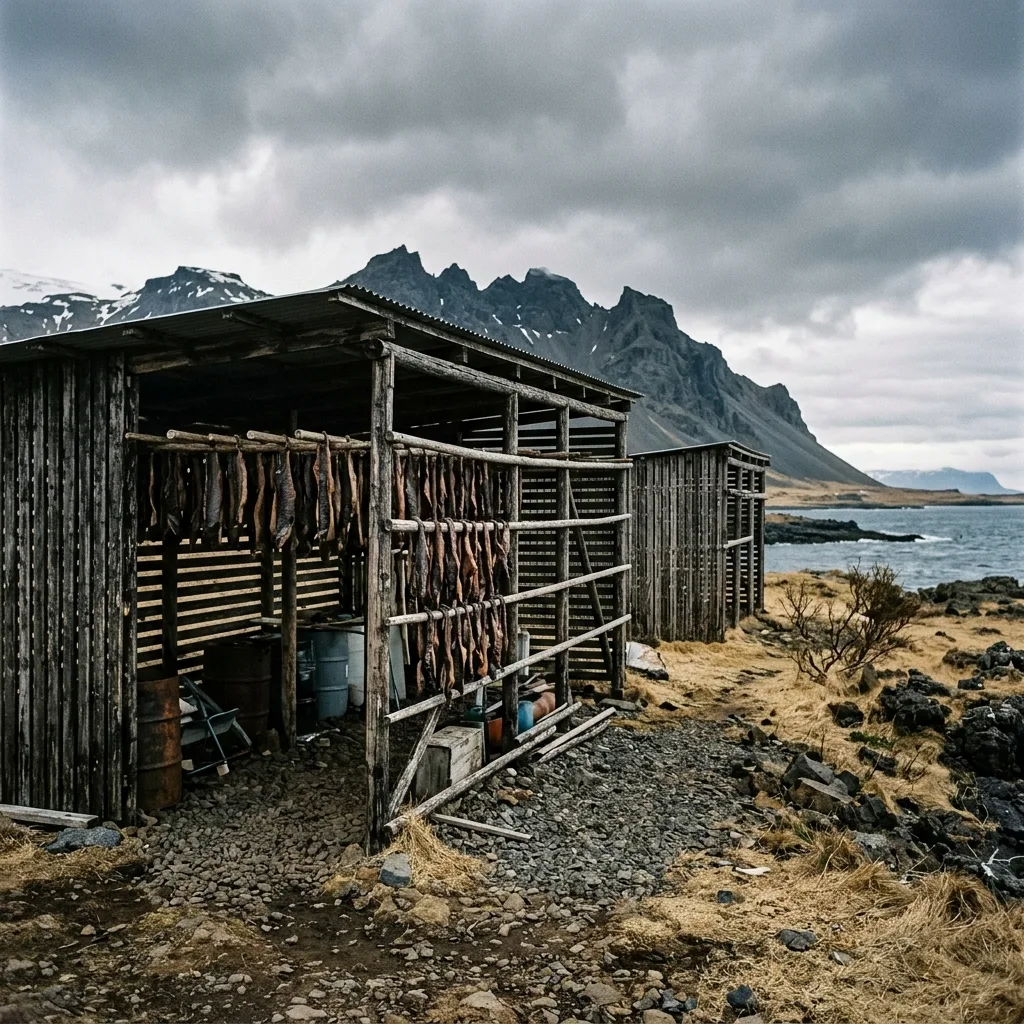
Behind its reputation as an extreme food challenge, Hákarl is the result of a preservation technique that allows the otherwise unsafe meat of the Greenland shark to be consumed as a traditional Icelandic food.
The Greenland shark (Somniosus microcephalus) is a large predator native to the cold waters of the Arctic and North Atlantic. While a single shark yields a substantial amount of meat, it cannot be safely consumed fresh. The shark's tissue contains high concentrations of urea and trimethylamine N-oxide (TMAO), compounds that function as osmolytes to stabilize proteins in deep, freezing waters. Eating the unprocessed meat can cause symptoms of intoxication and gastrointestinal distress. To make the meat safe, Icelanders developed a lengthy process of fermentation and drying.
How Toxic Meat Becomes Hákarl
Historically, the process began by burying the decapitated shark in a shallow gravel pit, covered with heavy stones. This underground fermentation phase lasted for several months. In modern production, such as at the Bjarnarhöfn Shark Museum, the meat can be pressed in large food-grade plastic containers as an alternative to traditional burial.
A 2019 study by food microbiologist Andrea Osimani, Unveiling hákarl, analyzed the microbiota responsible for this transformation. The research identified specific bacterial consortia, primarily Tissierella and Pseudomonas, playing a central role during fermentation. These bacteria break down the urea into ammonia and reduce the TMAO. This bacterial action alters the chemical composition of the meat, significantly reducing the compounds that make the fresh shark unsafe.
The Drying Sheds (Hjallar)
Following the fermentation stage, the meat is cut into thick strips and hung in open-air drying sheds known as hjallar. At the Bjarnarhöfn museum, run by the Hildibrandsson family, these slatted wooden sheds allow the strong North Atlantic winds to circulate around the meat for several more months.
During this period, the meat develops a brown crust and a firm, rubbery texture. The continuous exposure to the cold, dry air preserves the meat and allows the concentrated ammonia vapors to dissipate slightly, though the final product still retains a very strong ammonia odor.
From Traditional Food to "Food Challenge"
In recent years, international travel media has heavily publicized Hákarl as an extreme culinary challenge, often focusing on the visceral reactions of tourists to the intense ammonia smell. On the internet, it is frequently stripped of its historical context and presented merely as a test of endurance.
In reality, Hákarl is deeply tied to Icelandic cultural heritage. Today, it is no longer a daily staple but is primarily consumed during Þorrablót, a midwinter festival celebrating Icelandic history and traditions. During this festival, Hákarl is served as part of a traditional food platter (þorramatur), can be accompanied by a shot of Brennivín. Its presence during Þorrablót keeps Hákarl connected to Iceland's culinary identity and historical food preservation techniques.
Frequently Asked Questions
Is Hákarl still fermented by burying it in the ground?
Traditionally, yes. But today, many commercial producers ferment the meat in large food-grade plastic vats to maintain hygiene, though the underlying bacterial process is the same.
How long does the entire Hákarl production process take?
The complete process typically takes between four to six months. This includes a fermentation period of several weeks, followed by several months of air-drying.
Is the Greenland shark an endangered species?
The Greenland shark is classified as 'Vulnerable' on the IUCN Red List, which also notes bycatch as a threat to the species.