Svið: The Zero-Waste Economics of a Boiled Skull
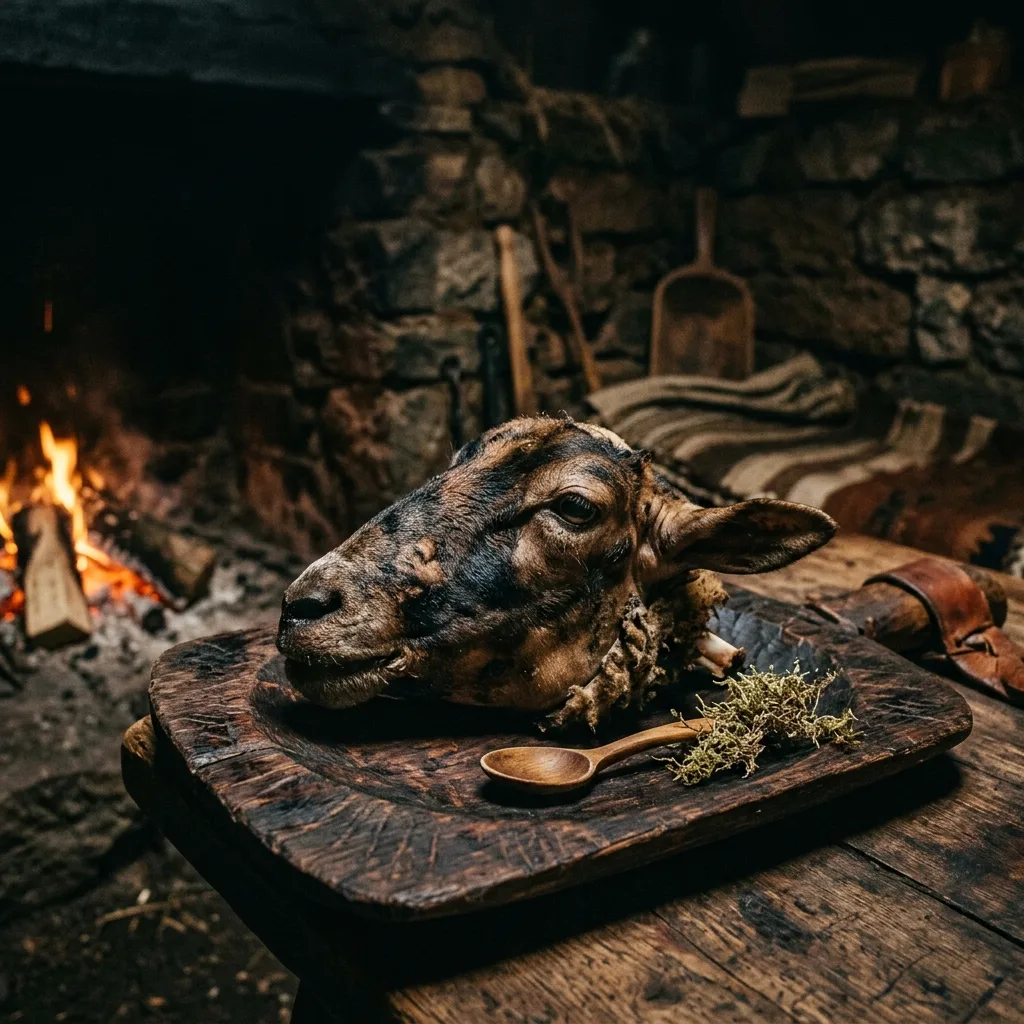
Eating half a sheep's head is a stark confrontation with mortality. In historical Iceland, Svið was not a morbid curiosity, but a masterclass in zero-waste survival.
To sit down to a meal of Svið is to engage in a macabre staring contest with your dinner. There is no delicate plating, no artful disguise to mask the origin of the meat; it is simply half of a sheep's head, boiled and served whole. The jawbone lies exposed, and the teeth grimace in a final rictus of death. For centuries, this dish was a cornerstone of Icelandic sustenance. In a land dominated by glaciers and unforgiving winters, the sheep was the ultimate lifeline. Discarding the head would have been a foolish squandering of precious calories.
Icelandic ethnographer Árni Björnsson, in his foundational 1977 work Saga daganna (The Story of Days), details the origins of these winter foods, particularly their role in the midwinter festival of Þorrablót. Björnsson's research underscores that dishes like Svið were born strictly of material necessity. The preparation method itself is a testament to severe resource scarcity. Historically, Iceland lacked abundant firewood. Rather than boiling the head for hours to loosen and scrape off the wool—which would waste precious fuel—the head was quickly singed over an open flame. This burned away the hair while leaving the skin intact. The skin was crucial, providing a dense, gelatinous layer of fat and calories necessary to survive the freezing temperatures.
Carving the Face of Survival
The act of eating Svið requires a level of anatomical detachment that sanitized modern meat consumption has largely erased. Diners are armed with a knife and fork, but hands are often required to pry the meat from the intricate crevices of the skull. The flesh itself is surprisingly tender, infused with a distinct, smoky flavor from the initial singeing process. The cheek is widely considered the most palatable portion, offering a rich, muscular bite that resembles traditional mutton.
However, the true test lies beyond the cheek. The tongue is a massive, dense muscle. The skin, thick from hours of boiling, coats the mouth in a heavy slick of rendered fat. And then, there is the eye. Plucking the eyeball from its socket and swallowing it whole is a visceral act that forces the diner to fully internalize the reality of the beast they are consuming. The sensation is one that lingers long after the meal is over. You are not eating a formless fillet; you are dismantling a recognizable face, picking flesh from a jawbone that once chewed Icelandic moss.
The Ghostly Feast of Þorrablót
While Svið can still be found in some modern Icelandic supermarkets—often pre-cooked and shrink-wrapped in the refrigerated aisle—its cultural significance peaks during Þorrablót in January and February. This month-long celebration is a time when Icelanders deliberately summon the ghosts of their ancestral past. It is a feast dedicated to the harsh realities of history, a deliberate embrace of the foods that kept their forebears alive through the freezing terror of the long night. The air is thick with the smell of boiled fat and ammonia from accompanying fermented shark, transporting diners back to the dirt-floored turf houses of the 18th century.
By willingly eating the face of a sheep, by swallowing the tough and smoky remnants of the slaughter, locals are reaffirming their resilience. Svið is a monument to zero-waste survivalism. It reminds us that in the face of absolute desperation, the concept of the 'macabre' simply ceases to exist, replaced only by the primal, driving need to consume and survive.
Frequently Asked Questions
Do you really eat the sheep's eye?
Yes, many traditionalists consider the eye a delicacy. However, it is customary to avoid eating the hard lens inside the eyeball.
Why is the head singed instead of skinned?
Historically, boiling water to loosen the wool required too much scarce firewood. Singeing was faster and preserved the calorie-rich skin, which was essential for survival.
Is Svið served year-round?
It is most prominent during the midwinter Þorrablót festival, but pre-cooked Svið is available in many Icelandic grocery stores year-round.