Svarti Dauði: The 'Black Death' Liquor of Iceland's Prohibition
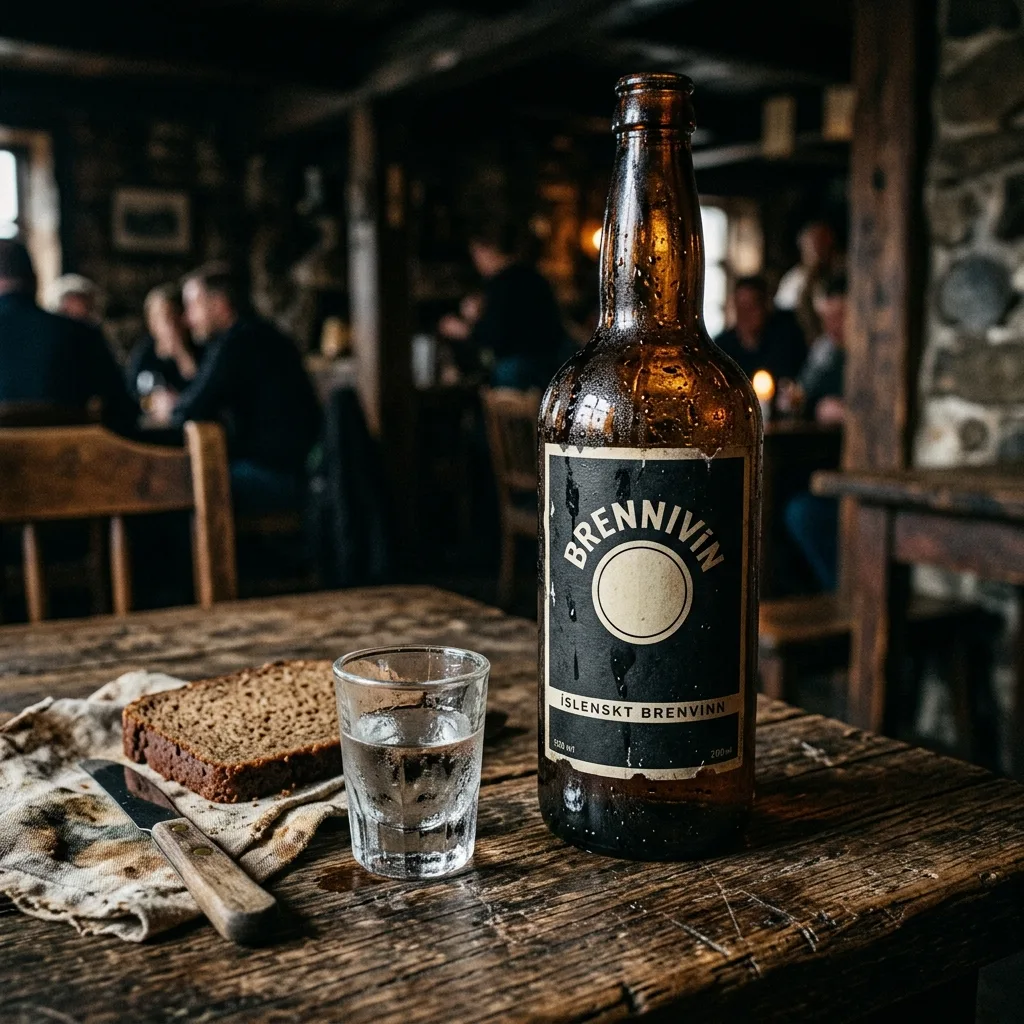
Introduced in 1935 amidst Iceland's unusual alcohol policies, Brennivín became known for its stark black label and the sinister nickname Svarti Dauði—'Black Death'.
Brennivín is Iceland's signature aquavit. However, for generations, this black-labeled bottle has been better known by a far more sinister name: Svarti Dauði—the 'Black Death'.
The word brennivín literally translates to 'burning wine' and has long been used in the Nordic region to describe various distilled spirits. But the specific spirit now synonymous with the name was introduced to the market in 1935, following a distinct legal exemption in Iceland's national alcohol prohibition laws.
The State Alcohol and Tobacco Monopoly of Iceland (ÁTVR) released this unbranded liquor to the public. Brennivín was marketed in a dark green bottle with a simple black label and a white circle, an appearance that later became one of its hallmarks. This stark look gave rise to the nickname Svarti Dauði or 'Black Death', and the drink gradually became a subcultural icon.
The Symbolic Politics of the Beer Ban
The presence of Svarti Dauði is intrinsically linked to Iceland's legal anomaly that banned beer until 1989 while re-legalizing hard spirits in 1935. In his 2017 academic analysis, Professor Helgi Gunnlaugsson notes that the temperance movement enjoyed strong support as a response to mass alcoholism across the Nordic region.
However, the legal distinction between beer and spirits was steeped in class politics. The politics behind the ban also had class and cultural dimensions. Gunnlaugsson notes that conservative rural politicians associated beer with urban lifestyles and Danish influence, while hard liquor held a different position in Icelandic customs.
Why Brennivín Tastes Like Caraway
Historical records show that Iceland possessed almost no suitable land for grain cultivation. When imported crops began to be processed in local distilleries, the methods often yielded alcohol with a very sharp, harsh taste.
To mask the abrasive flavor of the distillation process, producers flavored the liquor with caraway, an aromatic plant that can also grow in Iceland. This herbal aroma has remained Brennivín's main characteristic to this day.
Bjórlíki: When Icelanders Made Their Own 'Beer'
During the decades when the beer ban was still in effect, Svarti Dauði found a unique place in Reykjavík's bars and nightlife. Because real beer was legally prohibited, locals sought ways to circumvent the law by mixing a substitute beverage known as bjórlíki.
Bartenders would serve non-alcoholic pilsner—which was perfectly legal—and mix a heavy measure of Brennivín into the glass. This kind of mixture was known as bjórlíki and became one of the ways Icelanders circumvented the beer ban.
The New Image of Svarti Dauði
Today, the image of Brennivín has changed drastically. This signature Icelandic aquavit is marketed internationally, and the bottle's design is now considered to hold its own cultural value. When visiting Iceland today, many tourists order a shot of Brennivín to accompany a piece of fermented shark (hákarl).
Although it is now marketed internationally, the sharp caraway character remains Brennivín's main hallmark—a trace of flavor that connects this modern product to its origins in the 1930s.
Frequently Asked Questions
Why was beer banned in Iceland while hard liquor was legal?
The beer ban was maintained by conservative rural politicians who associated beer with Danish urban culture and a perceived threat to traditional Icelandic values.
What does Brennivín taste like?
Brennivín is an unaged aquavit with a strong caraway aroma. It tastes sharp, herbal, and slightly medicinal, with an aggressive, warm finish.
Why is it called the Black Death?
The nickname 'Svarti dauði' was coined by the public in 1935 in rebellious response to the government's intimidating, unbranded black-and-white label designed to scare people away from drinking it.