Ainu: How Japan Tried to Erase the Culture of Its Indigenous North
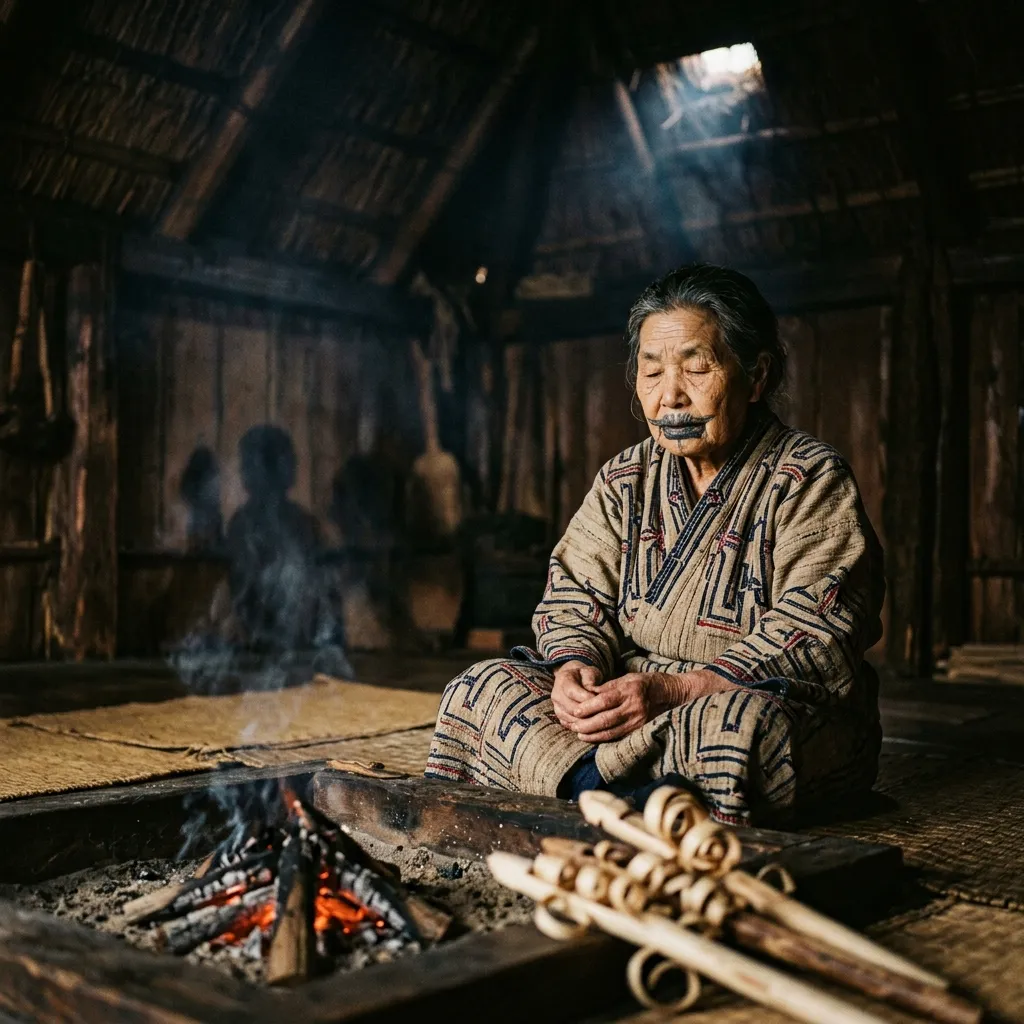
For generations, Japan subjected the Ainu to policies of assimilation that suppressed their language, livelihoods, and cultural practices. This is the story of their survival.
In the late nineteenth century, photographers frequently captured portraits of Ainu women. To these foreign and Japanese observers, the women's dense blue lip tattoos made them visually "exotic." But to the Ainu women themselves, the tattoos belonged to a far more complex system of adulthood, beauty, protection, and spiritual identity. The Ainu are Indigenous to the northern Japanese archipelago, particularly Hokkaido, with historical homelands extending into Sakhalin and the Kuril Islands. They were not merely exotic subjects; they were a people facing the systematic erosion of their way of life.
How Japan Colonized Ainu Mosir
In 1869, the Meiji government renamed Ezo as Hokkaido and brought the island under a much more intensive program of state administration, settlement, and development. Settlement expanded, Ainu lands were transformed, and policies increasingly restricted traditional livelihoods. For generations, Japan subjected the Ainu to policies of assimilation. Authorities prohibited the Ainu from traditional hunting, fishing in their ancestral rivers, and practicing many spiritual rituals. Ainu children were educated through an assimilationist school system that prioritized Japanese and marginalized their ancestral language and culture. These policies sought to absorb the Ainu into the modern Japanese state, a process that severely weakened the language, livelihoods, and cultural practices through which Ainu identity was maintained in what they called Ainu Mosir (the land or world of humans).
Kamuy: A World That Was Never "Primitive"
In many Ainu traditions, the boundary between human life, the natural world, and kamuy is understood very differently from a strict human–nature divide. The word 'Ainu' means 'human', defined in direct relation to 'Kamuy'. Anthropologist Neil Gordon Munro, in his 1963 ethnographic study Ainu Creed and Cult, alongside modern scholarship, details how elements of the natural world could be understood as manifestations or vessels of kamuy. The brown bear in the spruce forest, the fish owl on a cedar branch, and a well-used kitchen knife were not simply objects or animals; they were spiritual entities visiting the physical world.
Iomante: Not Simply a Bear Sacrifice
When hunters encountered a bear cub in the woods, they sometimes brought it to the village for a ritual called Iomante. The ceremony is often described in English simply as a "bear sacrifice," but that translation obscures its theological meaning as a sending-off ceremony. In some accounts, women even nursed very young cubs, which could be raised within the household before being moved to a wooden cage. The bear itself was understood as a kamuy in disguise. Accounts vary by region, but in documented Hokkaido ceremonies, the bear was ritually killed after a sequence of prayers and ceremonial actions, sometimes ending in strangulation between wooden logs. The goal was to release the kamuy from its physical vessel, sending it back to the spirit world where it was believed to recount how hospitably the humans had received and treated it.
Sinuye: Tattoos, Womanhood, and the Afterlife
Ainu women underwent a sacred tattooing tradition known as sinuye. Created using a sharp blade and birch soot, tattooing typically began around puberty and was gradually extended as a girl approached adulthood. According to the Japan Tourism Agency and cultural historians, the tattoo served multiple purposes: it repelled evil spirits, signified maturity and readiness for marriage, and was believed to prepare a woman for the afterlife. In 1871, the Japanese government outlawed tattooing among Ainu women as part of its assimilation measures, thereby suppressing a practice deeply tied to Ainu women’s adulthood, spiritual life, and social identity.
How a Language Was Pushed Toward Silence
Traditionally, the Ainu language was passed down orally and lacked a widely used native writing system. Its rich oral tradition includes yukar, epic narratives transmitted through performance around the fire. Today, Ainu is critically endangered, and the exact number of fluent speakers is difficult to establish. Linguist Kyoko Murasaki documented and recorded the Sakhalin Ainu dialect during fieldwork in the 1970s, preserving material from a speech community whose intergenerational transmission was disappearing. Despite the decline, revitalization programs are now actively teaching the language to new generations.
From Assimilation to Recognition: 1899–2019
The modern legal status of the Ainu reflects a long struggle for recognition. In 1899, Japan passed the Hokkaido Former Aborigines Protection Act, a law encouraging and restructuring Ainu livelihoods around agriculture, while reshaping land use and undermining traditional patterns of access to land and resources. It took nearly a century for this to be repealed and replaced by the Ainu Culture Promotion Act in 1997. It was not until 2008 that the Japanese Diet formally recognized the Ainu as an Indigenous people, finally leading to the 2019 legislation that legally mandated the promotion of Ainu culture and prohibited discrimination.
Ainu Culture Is Not a Museum Exhibit
Physical artifacts—like the attush robe woven from elm inner bark with its protective moreu (spiral) patterns, or the carved wooden prayer sticks known as inaw—are now prominently displayed in places like the Upopoy National Ainu Museum, which opened in 2020. Museums such as Upopoy preserve and present important material culture, but Ainu culture does not end at the museum door. Treating the Ainu merely as historical curiosities is a mistake. The strongest evidence that Ainu culture was not erased is not hidden in Hokkaido's forests. It is spoken, taught, performed, argued over, and reinvented by Ainu people themselves.
Frequently Asked Questions
Are there still Ainu living in Hokkaido today?
Yes. Estimates vary considerably because Japanese census data do not provide a simple count of Ainu identity and not everyone identifies publicly as Ainu. Historical surveys have reported figures in the tens of thousands, while the total number of people with Ainu ancestry may be higher.
Where is the Upopoy National Ainu Museum located?
The museum is located in Shiraoi, Hokkaido, overlooking Lake Poroto. It is accessible by train from Sapporo and serves as a central hub for exploring Ainu history and contemporary culture.
Why do so many Hokkaido place names come from the Ainu language?
The Ainu language was historically spoken across Hokkaido. When the Meiji government incorporated the island, they adapted many existing Ainu place names into Japanese kanji. For example, Sapporo is commonly linked to Ainu expressions including 'sat poro pet' (large dry river), although multiple etymologies have been proposed. Shiretoko comes from 'sir etok' (end of the earth).