Irezumi: Why Japan's Traditional Tattoos Became Linked to the Yakuza
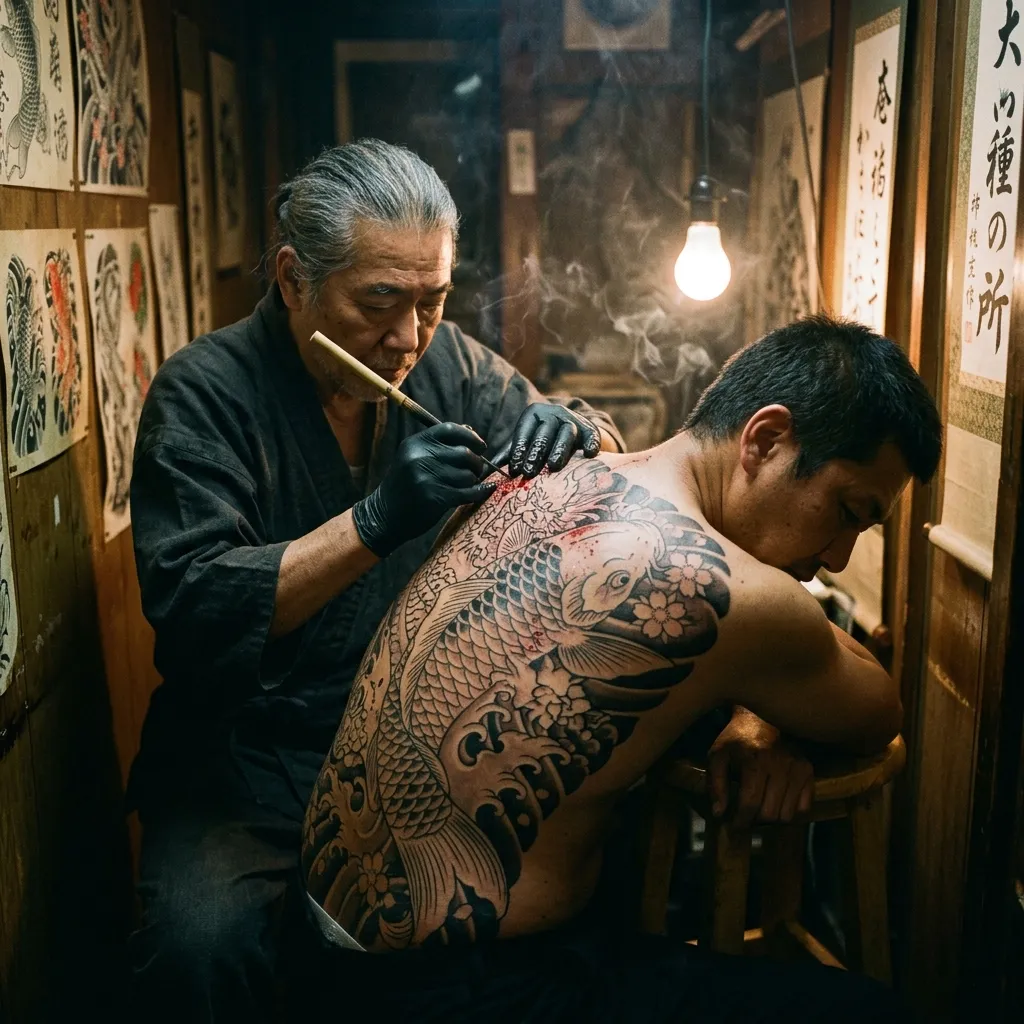
Explore Japan's irezumi tradition, the tebori technique, Edo-period tattooing, its complex association with the yakuza, and modern tattoo restrictions.
Japanese traditional tattooing is popularly treated as synonymous with the yakuza, but that association collapses several different histories, techniques, and social groups into one stereotype. Japanese tattoo terminology is less tidy than English summaries often suggest. Irezumi is widely used as a general term for tattooing, while horimono commonly refers to large-scale traditional decorative work. Tebori, by contrast, describes the hand-applied technique used to execute parts or all of such tattoos. Understanding the distinction and overlap between these terms is essential to unraveling why a sophisticated artistic tradition became intertwined with organized crime.
The mechanics of tebori differ significantly from modern electric tattooing. A practitioner (horishi) inserts ink by rapidly driving a wooden or metal stick equipped with a cluster of needles into the skin. This methodical, rhythmic process places pigment into the dermal layer, producing the characteristic blue-black appearance traditionally associated with sumi-based tattooing. The resulting large-scale artworks, or horimono, are not simply random assortments of images. Traditional horimono typically follow a highly structured visual grammar. They can be composed in several bodysuit configurations. Some leave an untattooed strip along the chest and terminate where clothing can conceal the work, reflecting a historical need to keep the artwork private.
The imagery itself draws heavily from woodblock prints (ukiyo-e), religious iconography, and folklore. Dragons, koi, tigers, and figures from the Suikoden (a classical Chinese tale of outlaw heroes) are common motifs. The meaning of a horimono is not derived from a simplistic dictionary of symbols, but rather from the composition and narrative pairing chosen by the horishi and the client. Seasonal and narrative consistency often matters more than assigning a single fixed meaning to an individual motif.
The Evolution of Stigma
The stigma surrounding irezumi stems from a complex history. During the Edo period (1603–1867), authorities utilized tattoos (bokkei) as a punitive measure, permanently marking the foreheads or arms of criminals, thereby making their punishment and criminal status publicly identifiable. However, decorative tattooing also flourished during the Edo period among working-class urbanites, firefighters, and laborers as an expression of endurance and subcultural identity. It should not be treated simply as an outgrowth of penal marking.
In 1872, following the Meiji Restoration, the Japanese government banned tattooing entirely in an effort to present a "civilized" image to Western powers. This ban drove the practice underground. When the ban was eventually lifted after World War II, horimono had already become heavily associated with the yakuza. For some syndicate members, enduring a full-body tattoo functioned as a marker of toughness, endurance, outsider status, and affiliation with a criminal subculture. Visible tattoos could seriously restrict access to conventional employment and other areas of mainstream social life, cementing the wearer's separation from ordinary society.
Are Irezumi Really "Yakuza Tattoos"?
Despite this deep historical association, membership in the yakuza has not depended on a universal formal requirement to be tattooed. The assumption that every person with a horimono is a yakuza member is a pervasive myth. Today, many artisans, blue-collar workers, and international enthusiasts receive horimono purely for its artistic and traditional value.
Nevertheless, the historical link to organized crime has resulted in widespread exclusion of tattooed patrons from certain facilities. Many public bathhouses (sento), hot springs (onsen), municipal pools, and private gyms maintain policies refusing entry to anyone with visible tattoos. In many cases, the rule operates without any assessment of whether the wearer has an actual connection to organized crime. However, restrictions are not universal. Policies vary by establishment, and some facilities explicitly accept tattooed guests or permit small tattoos when covered.
How the Horishi Tradition Is Changing
The traditional landscape of the horishi has been fundamentally altered in recent years. The implementation of strict anti-gang ordinances (boryokudan haijo jorei) across Japan has severely restricted the financial operations of the yakuza. The shrinking yakuza has altered one of the social worlds historically associated with horimono.
Furthermore, the culture surrounding the creation of these tattoos is shifting. Traditional apprenticeships under some masters could involve years of observation, studio work, and gradual instruction before ever touching a needle to skin, though this model is increasingly difficult to sustain in a modern economy. Similarly, while some traditional masters historically relied heavily on introductions and private networks to vet clients, contemporary booking practices vary considerably, with many artists now operating openly or engaging with an international audience.
The enduring irony of Japanese tattooing is that the same tradition is widely admired abroad as a distinctive part of Japanese visual culture while remaining socially uncomfortable at home. Its history intersects with punishment and organized crime, but reducing horimono to merely "yakuza tattoos" erases the dedicated craftsmen, working-class traditions, changing clientele, and deep artistic lineage that also produced it.
Frequently Asked Questions
Is having a tattoo illegal in Japan?
No. Having a tattoo is not itself illegal in Japan. However, because of the historical association with organized crime, visible tattoos can lead to exclusion from many public and private facilities, such as hot springs (onsen) and gyms.
How does Tebori differ from machine tattooing?
Tebori relies on manual force, with the practitioner rhythmically pushing a stick with needles into the skin. While modern practitioners may use a combination of electric machines for outlining and tebori for shading, advocates of tebori claim the manual method creates richer shading and unique color saturation.