Paniki: North Sulawesi's Fruit Bat Stew
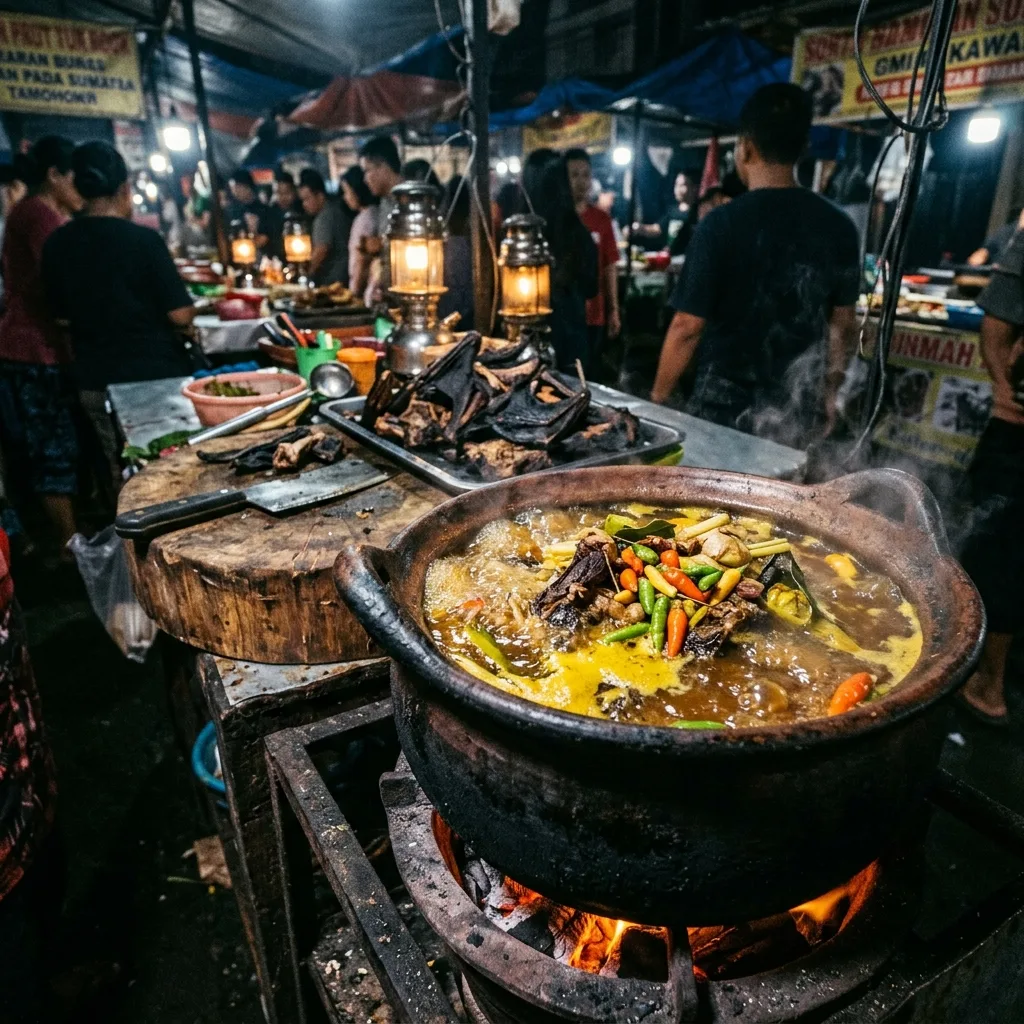
A close look at Paniki, the traditional fruit bat dish of the Minahasa highlands, its culinary preparation, and the modern wildlife trade debate.
At the Tomohon traditional market in North Sulawesi, fruit bats are commonly sold on butcher tables. To many international visitors, this is categorized as extreme food. However, in the culinary vocabulary of the indigenous Minahasan people, this is the raw ingredient for Paniki, a regional dish that relies heavily on strong spices.
Wildlife consumption has a long history in Minahasan food traditions. The forested environment of North Sulawesi provided various types of jungle game that eventually became part of the local cuisine, a consumption pattern also documented in historical studies of the region.
How Paniki Is Prepared
Preparing Paniki begins with removing the bat's fur over an open fire before the body is cleaned and butchered. Once the exterior is scorched, the wings are often detached at the joints, and the body is then chopped into several segments.
Why the Spices Matter
Paniki is cooked using a robust Minahasan spice paste, which can include chilies, lemongrass, ginger, galangal, and coconut milk, depending on the specific recipe.
These strong spices form the defining flavor character of Paniki while simultaneously balancing the distinct aroma of the meat. Furthermore, the prolonged simmering process helps to physically soften the texture of the meat.
Wildlife, Health, and a Changing Market
In recent years, the consumption of Paniki and the operation of wildlife markets have faced intense epidemiological scrutiny. Following the global outbreak of COVID-19, international attention turned toward such markets, as environments where close contact among wildlife, vendors, and customers can increase opportunities for zoonotic transmission.
It is important to note that there is no evidence that Paniki or the Tomohon Market played a role in the origins of COVID-19. Nonetheless, despite temporary restrictions and health warnings regarding wildlife consumption, the local trade has persisted.
For Minahasan diners, Paniki does not need the label "extreme." It is simply part of a regional cuisine shaped by ingredients that outsiders rarely consider food.
Frequently Asked Questions
Is Paniki (bat dish) safe to eat in Manado?
The risks of wildlife consumption are not solely related to the meat after cooking, but also the handling of wild animals before and during butchering. Cooking the meat thoroughly does not eliminate all risks associated with the wildlife trade chain.
Why is Paniki associated with Minahasa?
Wildlife consumption has a long history in the Minahasan culinary tradition. Various types of game from the North Sulawesi environment have become part of the local cuisine, including fruit bats prepared as Paniki.