Cobra Blood Tonics: Jakarta's Midnight Apothecaries
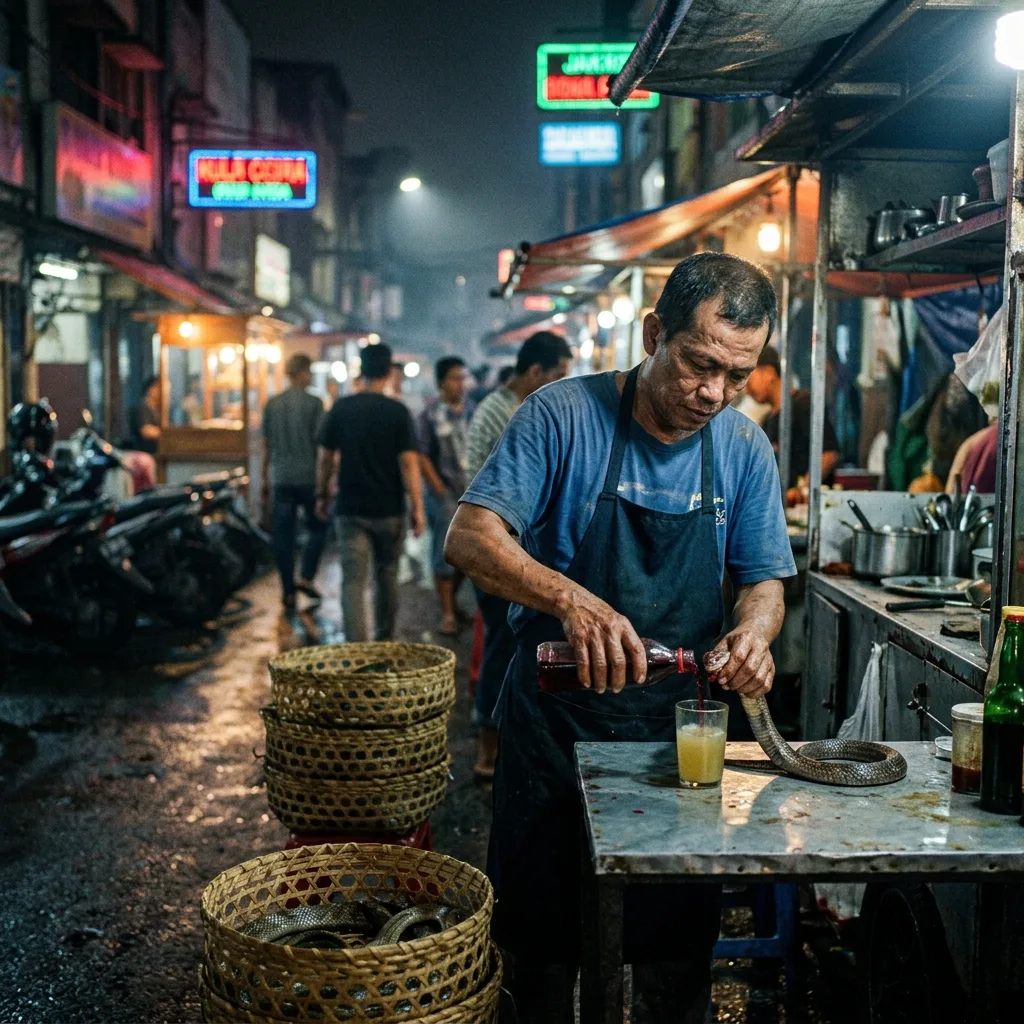
What outsiders film as an extreme-food spectacle is sold locally as medicine. A closer look at the documented cobra stalls of Mangga Besar.
The Cobra Stalls of Mangga Besar
Mangga Besar's cobra stalls are not a forgotten ritual hidden from modern Jakarta. They are part of the modern city—an open, heavily documented urban trade operating directly along Jalan Mangga Besar. In this district, street food, folk medicine, commerce, and spectacle overlap entirely. A number of vendors set up their tents as the evening settles, establishing a bustling marketplace that caters specifically to alternative remedies rather than conventional dining.
Blood, Bile and the Promise of Vitality
The preparation process at these stalls is relatively simple and direct. A vendor selects a live snake from a basket, typically severing its head with a swift strike. The fresh blood is drained into a glass, while the empedu (gallbladder) is also frequently included in the preparation. The vendor slices the sac and squeezes the green bile into a mixture of strong rice wine (arak), dark tea, or honey to mask the intense metallic taste.
Many customers reportedly seek the tonic for stamina after long working hours. According to vendors and regular patrons, the concoction is believed to act as a potent aphrodisiac, clear the lungs, and treat severe skin conditions like eczema. The clientele is predominantly composed of local working-class men who consume the beverage based on these long-standing promises of vitality.
What Medicine Actually Says
While vendors often assure customers that consuming raw fluids from a venomous snake is a harmless and traditional practice, medical reality presents a different picture. Although oral exposure to snake venom or contaminated fluids is generally less dangerous than a direct injection, it cannot be considered safe. Any undetected wound or lesion in the mouth or gastrointestinal tract may provide a route for toxic components to enter the body's tissue. These traditional claims should not be treated as medical evidence that the practice is safe.
From Folk Remedy to Internet Spectacle
What outsiders frequently film as an extreme-food spectacle is sold locally as alternative medicine. Foreign vloggers occasionally wander into Mangga Besar to capture the preparation for internet shock value, focusing on the visual intensity of the blood and the slaughtered snakes.
However, this sensationalized lens often misses the reality of the stalls. They exist primarily to serve a domestic demand for stamina and folk healing. The midnight remedy vendors of Mangga Besar continue to pour their dark concoctions not as a theatrical dare, but as an ingrained, commercialized fixture of Jakarta's nightlife.
Frequently Asked Questions
Is drinking raw cobra blood or venom safe?
No. While oral exposure is generally less dangerous than injection, it cannot be considered safe. Any undetected lesion or wound in the mouth or digestive tract can allow toxic components to enter the body's tissue.
Where do vendors sell cobra blood tonics in Jakarta?
The practice has been heavily documented operating openly along and around Jalan Mangga Besar in West Jakarta.
What do customers believe the cobra tonic does?
Consumers drink it under the traditional belief that it acts as a potent aphrodisiac, boosts stamina for manual labor, and cures skin conditions. These claims lack scientific validation.