Grýla and the Yule Cat: The Dark Side of Icelandic Christmas
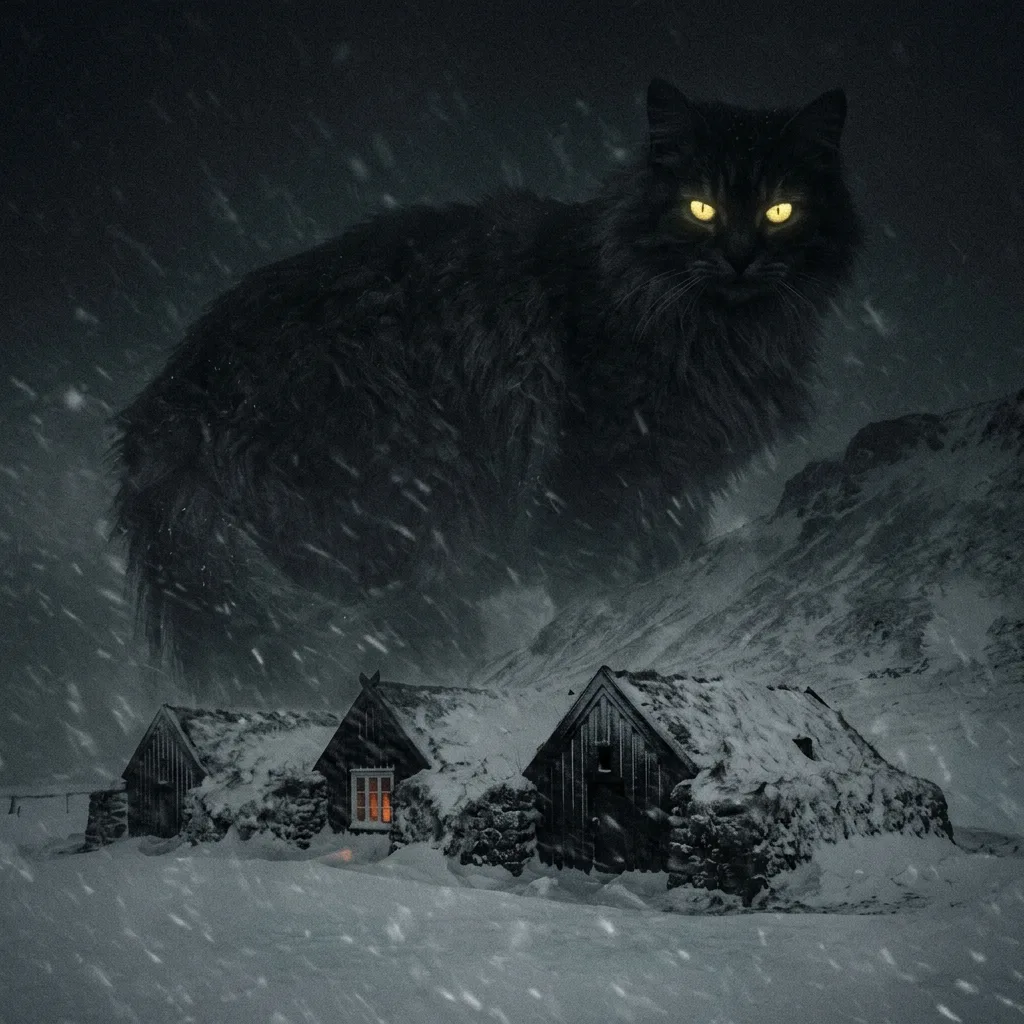
While Christmas traditions in many places feature Santa Claus, Icelandic folklore has Grýla who preys on children and a giant cat that hunts those without new clothes.
In Icelandic folklore, Christmas is not always populated by friendly figures. One of the most famous is Grýla, a giant female troll who, according to various tales, descends from the mountains in winter to search for naughty children. According to oral tradition, they are put into a sack, taken back to her lair, and cooked in a cauldron.
Grýla does not come alone. She is accompanied by Jólakötturinn, or the Yule Cat. Unlike Grýla, the Yule Cat has a very specific criterion for its prey: it hunts anyone who does not receive new clothes before Christmas Eve. In 19th-century written records, such as Jón Árnason's 1862 collection of folktales, this monster was already part of the winter lore. One interpretation links the legend of the Yule Cat to the tradition of wool processing before Christmas. In this interpretation, workers who finished their wool processing could receive new clothes, so the absence of new clothes became associated with unfinished work.
Grýla also has thirteen sons known as the Yule Lads (Jólasveinar). For thirteen consecutive nights before Christmas, they descend from the mountains to harass the locals. Their names and habits are equally strange. Gluggagægir ("Window-Peeper") peers into homes looking for things to steal, while Ketkrókur ("Meat-Hook") uses a long hook to steal hanging meat.
The Origins of Grýla and the Yule Lads
Folklorist Terry Gunnell connects the figure of Grýla and similar traditions to the practice of winter masking and mumming once found across the North Atlantic. In these traditions, villagers would often wear frightening costumes or masks and play specific roles during the darkest months of the year.
These legends were apparently frightening enough that the Danish-Icelandic authorities felt the need to intervene. In 1746, they issued an official decree (Tilskipun um hús-agann á Íslandi) explicitly banning parents from using threats of Grýla, the Yule Lads, or other ghosts to scare and discipline their children. The ban indicates a concern over the use of frightening stories as a tool to discipline children.
In the 20th century, the image of the Yule Lads gradually changed. Due to outside cultural influences, they were no longer solely depicted as nuisance trolls, but began to absorb the friendlier, gift-giving characteristics of Santa Claus.
Dimmuborgir and the Troll Legends
According to current tradition, Grýla and her monstrous family are often associated with Dimmuborgir, a lava field region in northern Iceland. Dimmuborgir is filled with volcanic rock formations, jagged pillars, and dark caves. Its landscape filled with dark lava formations makes the area easily associated with stories of trolls and other folklore creatures.
Today, Dimmuborgir is a tourist destination, especially in winter. Local actors often dress in Yule Lads costumes to entertain visitors who come to see the snow-covered lava pillars. This commercialization softens the original story into a modern holiday attraction.
Grýla, the Yule Cat, and the Yule Lads have indeed adapted into parts of modern Christmas celebrations. However, the old stories of boiled children, meat thieves from the roof, and a cat preying on those without new clothes still endure. Icelandic Christmas has become friendlier; its monsters simply never left.
Frequently Asked Questions
Where is Grýla's cave located?
According to current folklore traditions, Grýla and her family are associated with the Dimmuborgir lava fields in northern Iceland.
Why does the Yule Cat eat people without new clothes?
One interpretation is that the legend was tied to autumn wool production. Workers who finished their tasks before winter were rewarded with new clothing, marking them as safe, while those who didn't faced the threat of the beast.
Are the Yule Lads similar to Santa Claus?
Originally, no. In old tales, the Yule Lads were depicted as nuisance trolls with various habits of stealing and harassing humans. In the 20th century, their image slowly became friendlier, increasingly resembling Christmas gift-giving figures.