Strandagaldur: The Necropants and the Economics of Icelandic Sorcery
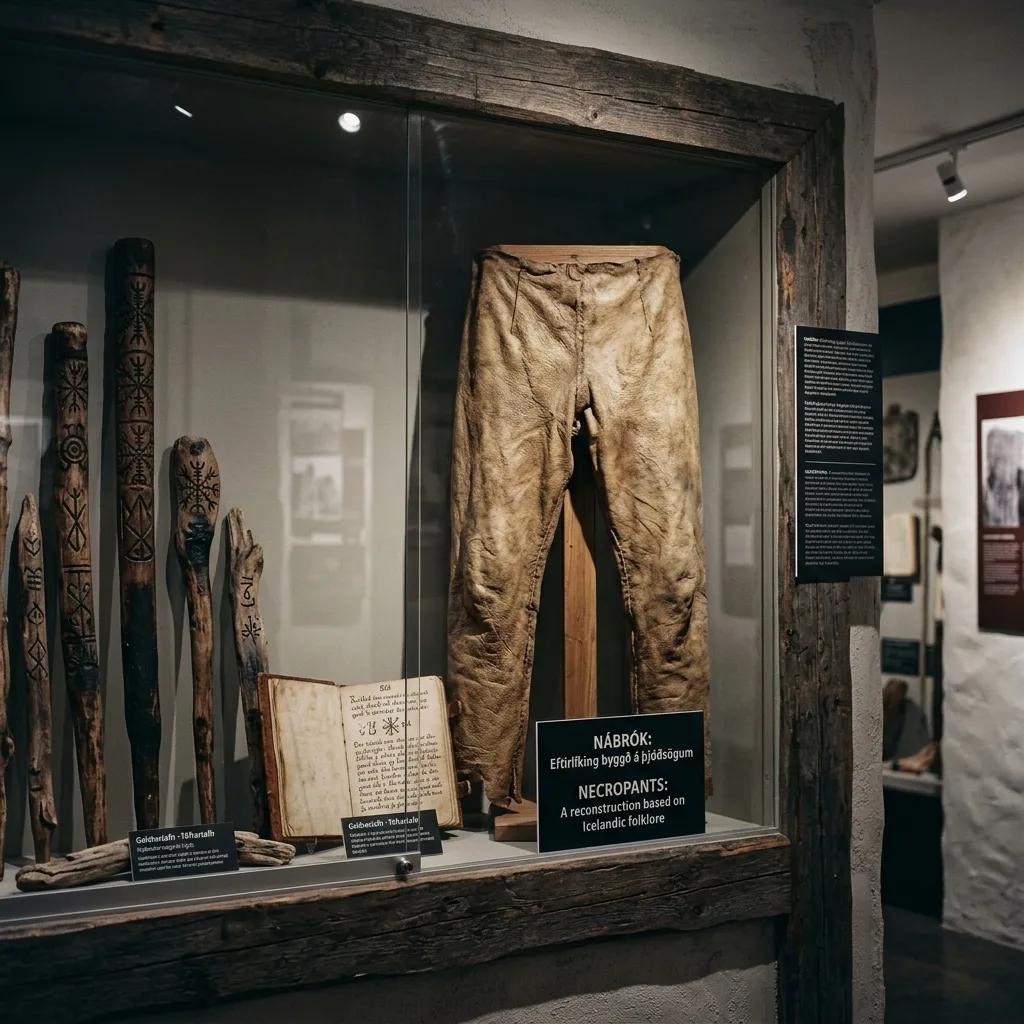
The Strandagaldur Museum in Hólmavík preserves one of the strangest aspects of Icelandic folklore: magical symbols, 17th-century court records, and the Nábrók—a gruesome ritual that supposedly used the skin of the dead to generate wealth.
In the 17th century, Icelandic witch trials exhibited one striking difference from many European witch hunts: the vast majority of those executed were men. The practices they were accused of also did not always center on pacts with Satan. Icelandic sources reveal magical symbols (galdrastafir) associated with daily needs, protection, luck, and interpersonal conflicts.
The Museum of Icelandic Sorcery & Witchcraft (Strandagaldur) in Hólmavík catalogs this history. The exhibits strip away elements of fantasy to reveal the agonizing reality of rural survival.
Galdrastafir and Practical Magic
In Angurgapi: The Witch-hunts in Iceland (2003), historian Magnús Rafnsson demonstrates that many Icelandic magical practices had highly practical purposes related to everyday life. Many recorded galdrastafir had practical purposes, such as for luck, protection, catching fish, or safeguarding livestock. These practices were closely tied to the harsh material and environmental conditions.
The Economics of Necropants
The Nábrók, or Necropants, originates from a magical tradition documenting a ritual to acquire wealth. Displayed in the museum as a replica, this ritual is one of the most striking parts of the museum's exhibition. According to the ritual description preserved by the museum, one had to obtain permission from a man during his lifetime.
After the man died and was buried, his body then had to be exhumed and the skin of his lower half removed intact. Subsequent instructions mention a coin stolen from a destitute widow and placed inside the scrotum along with a specific magical symbol.
Stolen Milk and Neighborhood Conflicts
The surviving spell books also note that much of the magic required blood to activate. Some spells were also related to disputes, protection, or attempts to harm others.
In Icelandic folklore, the Tilberi is associated with milk theft. This parasitic creature was supposedly made from a stolen human rib bone and sent to steal milk from other people's livestock.
The Archives in Hólmavík
Of the 21 people executed for sorcery in Iceland, 20 were men. The surviving court records provide a glimpse into the accusations, conflicts, and magical practices circulating in Icelandic communities at the time.
The Strandagaldur Museum does not need to create a haunted house to make this history feel bizarre. The replica of the Nábrók, the galdrastafir, and the court records are enough to show how different Icelandic magical practices and accusations were from the more familiar European image of witches. In Hólmavík, the most disturbing part of the exhibit is not whether these rituals actually worked—but rather that someone once felt the need to write them down.
Frequently Asked Questions
Are the Necropants in the museum real human skin?
No, the Nábrók displayed in the Museum of Icelandic Sorcery & Witchcraft is a highly realistic replica, not actual human remains.
Why were the vast majority of people executed for witchcraft in Iceland men?
Icelandic witchcraft cases differed from the more familiar patterns in parts of Europe because the accused were largely men. The practice of galdur and the use of galdrastafir at the time also often appeared in male-dominated social spheres. However, the causes of this gender pattern are more complex than a single factor.
How do you get to the Strandagaldur Museum?
Hólmavík can be reached via the road network from Reykjavík. The travel time is about three hours under normal conditions, but road and weather conditions should be checked before departure. Museum opening hours should also be verified directly as they can change seasonally.