Bōsōzoku: The Rise, Fall, and Afterlife of Japan's Motorcycle Gangs
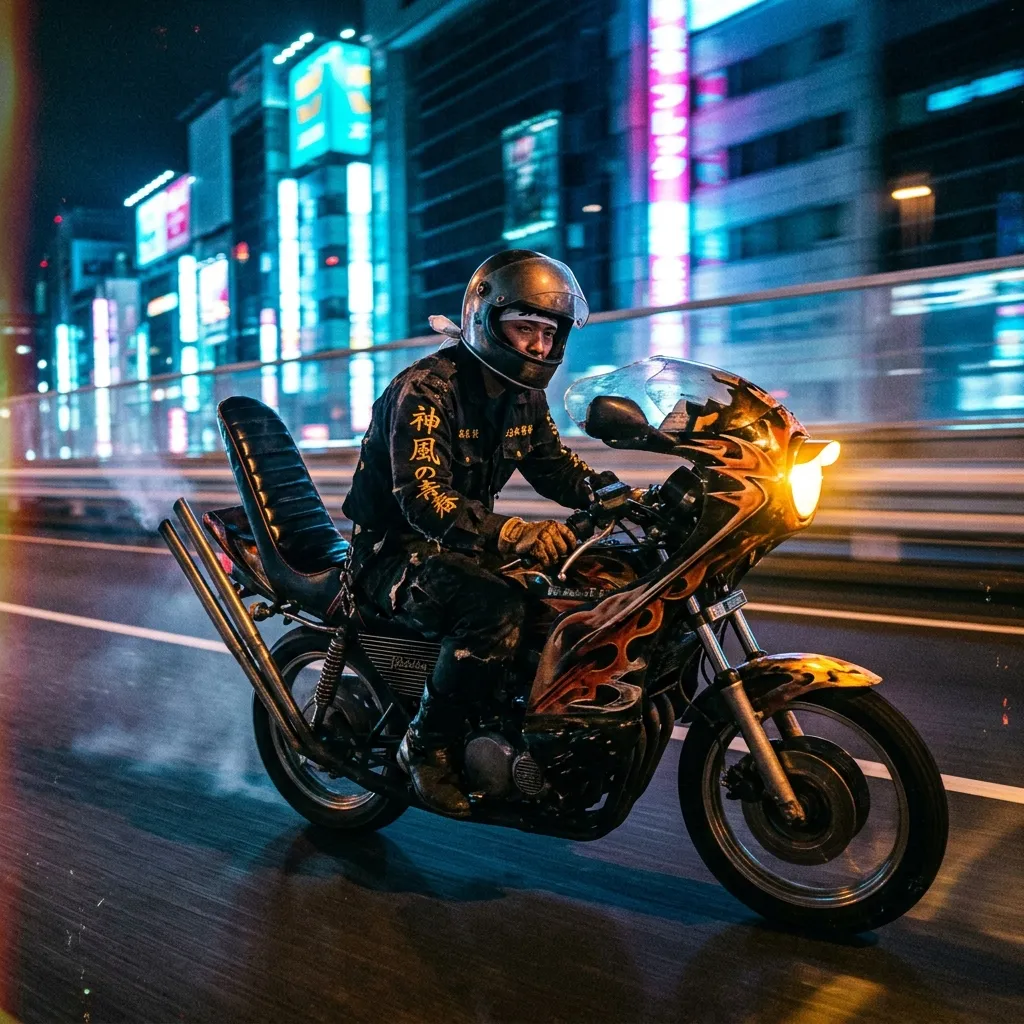
Explore the history of Japan's bōsōzoku motorcycle gangs, from mass highway runs and tokkōfuku uniforms to the 2004 crackdown and their survival today.
What Were the Bōsōzoku?
In 1982, Japanese police counted 42,510 bōsōzoku members nationwide, roaring across the country’s highways in large, highly organized formations. Clad in elaborate uniforms and riding heavily modified motorcycles, these gangs were a highly visible fixture of Japan's postwar economic boom. While frequently associated with organized crime in popular media, sociologist Ikuya Sato, in his 1991 ethnography Kamikaze Biker: Parody and Anomy in Affluent Japan, documented that the bōsōzoku were primarily working-class youths engaged in theatrical rebellion rather than professional criminal syndicates.
From Kaminari-zoku to Japan's Motorcycle Gangs
The movement emerged in the 1950s as the kaminari-zoku (thunder tribe) before evolving into the bōsōzoku in the 1970s. Researchers have linked the appeal of bōsōzoku to class, educational trajectories, group identity, and the search for status outside Japan's conventional school-to-company path, although participants' motivations were not reducible to a single form of social frustration. The motorcycle became a means to express identity and rebellion. Bōsōzoku formed large groups that prioritized solidarity, adopting hierarchical structures that mirrored traditional Japanese organizations while explicitly rejecting the trajectory of the standard salaryman.
Why Their Motorcycles Looked So Extreme
Their motorcycles were modified for disruption rather than speed. Exhaust pipes were routinely severed or hollowed out, ensuring the engines produced maximum noise. Fairings were tilted sharply upward, and seats were extended into towering vertical backrests known as sandan shiito. Adorned with complex airbrushing and gang insignias, the machines were designed to be visually and acoustically overwhelming.
Tokkōfuku: Clothing as Group Identity
This theatricality extended to their attire. Members wore the tokkōfuku (special attack clothing), which borrowed visual elements from the jumpsuits of manual laborers and wartime uniforms. The long coats were heavily embroidered with kanji spelling out the gang’s name, territory, and fatalistic slogans. Within many groups, the tokkōfuku served as a deeply symbolic uniform, rarely washed, deliberately absorbing the oil and dirt of the road as a badge of authenticity before being passed down to younger members.
What Actually Happened During a Bōsōzoku Run?
A typical bōsōzoku run, or shūkai, was a highly choreographed exercise in civil disruption. Hundreds of bikers would occupy major intersections or highways, deliberately driving at a crawl to paralyze traffic. They performed a zigzag riding pattern known as dakkou-unten across all lanes. The leaders orchestrated the pack's rhythm, frequently utilizing a technique called bura-bura, where riders repeatedly snapped the throttle to create a synchronized, percussive noise.
Were Bōsōzoku Connected to the Yakuza?
Bōsōzoku were not simply youth divisions of the Yakuza, but the two worlds were not completely separate either. Police and researchers have documented links between some motorcycle groups and organized crime. While many riders simply aged out of the subculture and joined the regular workforce, some former members later entered bōryokudan (Yakuza) organizations.
The 2004 Crackdown
The sheer scale of these mass runs eventually provoked a systemic crackdown. The turning point was a 2004 revision to Japan's Road Traffic Act. The new legislation substantially broadened police powers against dangerous group riding and noisy driving, making behavior associated with mass bōsōzoku runs easier to prosecute even when it did not involve conventional speeding offences. Authorities deployed extensive surveillance and strategic roadblocks to physically halt and dismantle the large organized groups.
Do Bōsōzoku Still Exist Today?
Today, the massive, hierarchical bōsōzoku runs of the 1980s have declined dramatically, but the subculture is not completely extinct. National Police Agency reports and contemporary news sources confirm that bōsōzoku still exist, primarily in smaller, fragmented groups rather than massive regional alliances. The towering tokkōfuku coats are now a rare sight on the streets, having largely transitioned into private collections or pop culture aesthetics, though the occasional modified exhaust note still echoes in rural and suburban areas.
How "Bosozoku Style" Became a Global Car Aesthetic
Interestingly, the bōsōzoku aesthetic experienced a massive afterlife outside of the original motorcycle gangs. On the modern internet, "bosozoku style" is frequently used by international car enthusiasts to describe highly modified vintage Japanese cars featuring extreme negative camber, exaggerated aero, and elongated exhaust pipes. Depending on the car and its modifications, more accurate terms may include kaidō racer, shakotan, or other specific Japanese automotive styles. Those automotive cultures overlapped historically and aesthetically with the broader delinquent youth scene, but bōsōzoku itself refers primarily to the gang and subculture rather than a single car-modification style. This international re-appropriation has largely divorced the visual extreme from the original 1980s street delinquency, turning a localized form of youth rebellion into a global automotive design language.
Frequently Asked Questions
What does bōsōzoku mean?
The word is written 暴走族: bō (暴, violent/wild), sō (走, running/driving), and zoku (族, group/tribe), giving rise to loose English renderings such as 'violent running tribe.' The term was originally coined by Kanagawa police and later standardized by national media in the 1970s.
Do bōsōzoku still exist in Japan today?
Yes, but not on anything like the scale of their 1980s peak. Traditional large, hierarchical gangs and mass highway runs have declined dramatically due to stricter laws and police crackdowns, while smaller, fragmented groups continue to exist.
Were bōsōzoku connected to the Yakuza?
Bōsōzoku were not simply youth divisions of the Yakuza, but the worlds were not completely separate. Police and researchers have documented links between some groups and organized crime, and former bōsōzoku members sometimes entered bōryokudan (Yakuza) organizations after aging out.
What is a tokkōfuku?
The tokkōfuku ('special attack clothing') is the traditional uniform of the bōsōzoku. It features a long coat heavily embroidered with kanji. Within some groups, the uniform acquired strong symbolic significance, acting as a badge of authenticity that was passed down between members.
Are "bosozoku-style" cars actually bōsōzoku?
Often, no. The term 'bosozoku style' is widely used on the international internet to describe highly modified Japanese cars (with extreme camber and long exhausts). In Japan, depending on the car, these are typically categorized under styles like kaidō racer or shakotan. Those automotive cultures overlapped historically and aesthetically with the broader delinquent youth scene, but bōsōzoku itself refers primarily to the gang/subculture rather than a single car-modification style.