The Disappearance of Michael Rockefeller in Asmat
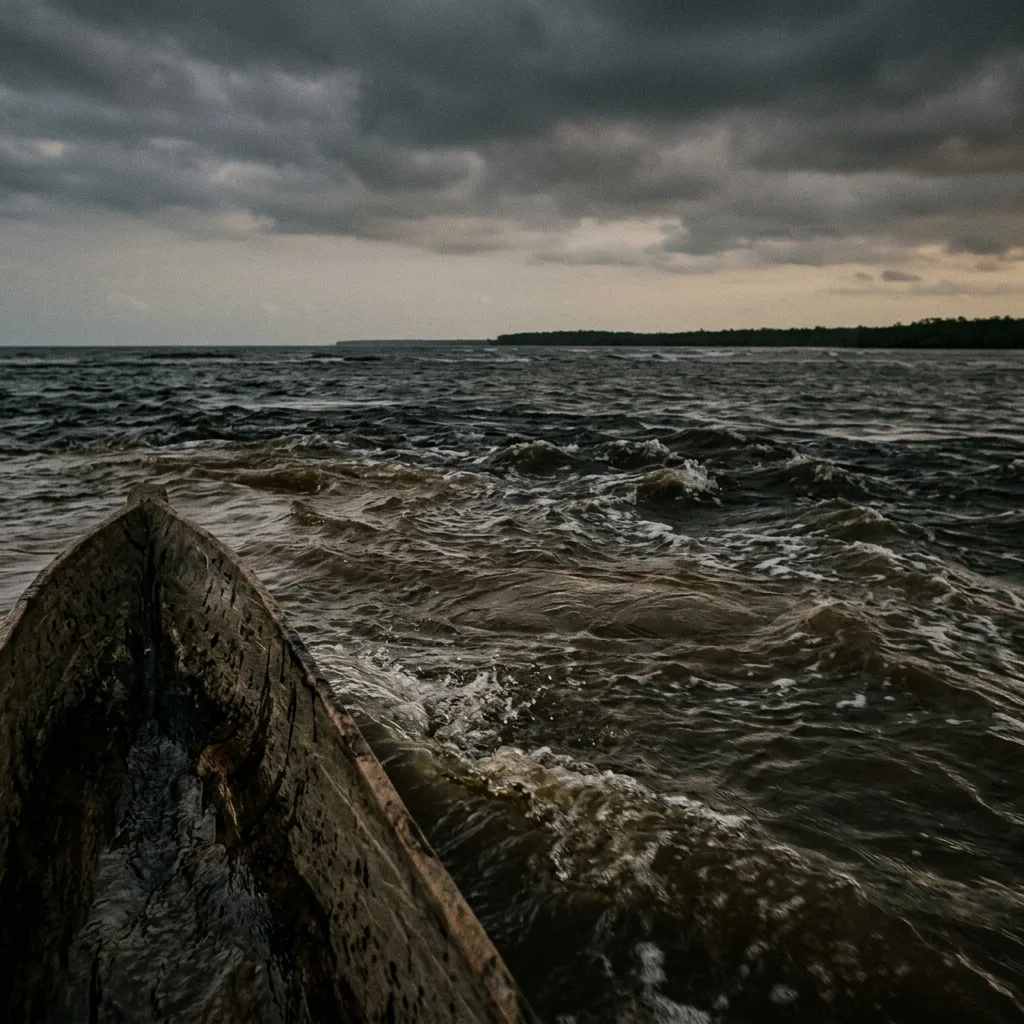
In November 1961, a 23-year-old Harvard graduate and son of New York's governor swam away from a capsized catamaran off the coast of Papua. He was never seen again. What happened to Michael Rockefeller remains one of the most contested disappearances of the 20th century.
November 19, 1961. Michael Rockefeller stripped to his undershorts, tied two empty jerrycans to his waist, and told René Wassing he was going to swim for shore. The distance was uncertain: perhaps three miles, perhaps ten. Wassing stayed with the overturned catamaran. Rockefeller swam away. He was never seen again.
Seventeen months earlier, Michael Clark Rockefeller had graduated from Harvard at the age of 22. His father was Nelson Rockefeller, then Governor of New York and grandson of Standard Oil founder John D. Rockefeller. The family name meant something specific to Americans in 1960: wealth and power—a family insulated from the ordinary world. Michael appeared headed in a different direction. He had joined the Harvard-Peabody New Guinea Expedition that same year, spent months in the highlands, and come home determined to return. In 1957, his father had founded the Museum of Primitive Art in New York. In 1959, Michael became a trustee of the museum and became more deeply involved with its collections. By October 1961, at 23, he was back in Asmat, the swampy southwestern coast of what was then Dutch New Guinea, traveling with René Wassing, a Dutch anthropologist assigned to him from the colonial government's Department of Native Affairs.
What drew Michael to this particular coast was the art. The Asmat carve ancestor poles called bisj, some reaching six to seven meters in height, stacked with openwork human figures representing the recently dead. In Asmat cosmology, death is not a closed account. The spirits of those who died without being properly mourned remain unsettled, and a bisj pole reminds the living family of their obligation toward their deceased ancestors. Michael had written in his field notes of the poles as "inviolate for the encroachment of western commercialism upon Asmat art." During his second expedition, he spent three weeks trading steel axes, fishhooks, cloth, and tobacco across 13 villages, collecting drums, shields, bowls, spears, paddles, and bisj poles. He was not a casual collector. His journals document stylistic variation between villages, differences in iconography, questions he wanted to investigate further.
The Last Crossing — November 1961
In mid-November, Michael and Wassing returned briefly to Agats, the administrative center of the Asmat region, to restock supplies. They planned one more leg south, down the Arafura Sea coast into territory that was still rarely visited by outsiders. Their intended destination was a rendezvous with Father Cornelius van Kessel, a Dutch priest who knew the southern Asmat better than most outsiders. On November 17, they set out again in the homemade catamaran Michael had purchased from a Dutch patrol officer — a craft assembled from two dugout canoes and a plank platform. Two Asmat teenagers traveled with them. The following day, November 18, while crossing the Betsj River mouth, the Arafura Sea tide collided with strong outflowing river currents. A wave swamped the outboard motor. Without power, the catamaran drifted, then capsized.
The two teenagers, born on these rivers, jumped in and swam for the nearby shore. They reached it, waded through mud for hours, and summoned help in Agats by evening. Michael and Wassing had no such option. They spent the night of November 18 clinging to the overturned hull. By the time dawn came on November 19, Michael was worried they would drift into the open Arafura Sea, prompting his decision to swim.
The Search That Found Nothing
The Dutch colonial government mobilized ships, aircraft, and helicopters. Wassing was spotted from the air that same afternoon and rescued the following morning. Nelson Rockefeller and Michael's twin sister Mary chartered a Boeing 707 and flew to Merauke, a town 150 miles southeast of the Asmat coast. They could get no closer. By November 24, the Dutch Minister of the Interior told the New York Times: "There is no longer any hope of finding Michael Rockefeller alive." His father and sister flew home on November 28, nine days after Michael had swum away. The Dutch formally ended the search two weeks later. No body was ever found. No personal effects, no trace. Michael Rockefeller was declared legally deceased in 1964.
For decades, the official and widely accepted explanation was drowning. Swimming three to ten miles in those conditions, without equipment, exhausted after a night on an overturned hull, is beyond what most people could survive. Michael's twin sister Mary Morgan offered the clearest assessment: "I think it would be an extraordinary feat for a young man, for anybody, to swim approximately 10 miles in that choppy water and that current."
Three Years Earlier in Otsjanep
In 1958, three years before Michael's disappearance, Dutch colonial officer Max Lapré led a patrol into the Asmat village of Otsjanep following a series of inter-village raids that colonial authorities considered destabilizing. In the confrontation, several Otsjanep leaders were shot and killed. The specific names and number of the dead are documented in Dutch colonial records. In Asmat tradition at the time, a violent death was not always considered resolved when someone was buried. It could leave obligations for the surviving family and community. The bisj tradition relates to unresolved obligations between the living and those who have died. In Hoffman's reconstruction, those deaths left an unresolved obligation of reciprocity when Rockefeller arrived three years later.
More than fifty years after Michael vanished, American journalist Carl Hoffman spent two and a half years investigating the case. His 2014 book Savage Harvest reconstructed the following account from oral histories, colonial archives, and missionary records. Shortly after Michael's disappearance in 1961, Asmat men told Dutch missionaries that a white man had swum ashore near Otsjanep and been killed. Those missionaries reported what they had heard to their superiors. According to documents Hoffman located, the information was classified: internal church and colonial correspondence instructed that Nelson Rockefeller not be informed. Hoffman's reconstruction suggests that men who encountered Michael on that shore had familial ties to those killed in Lapré's 1958 patrol. Hoffman stated publicly that he was "absolutely convinced" Michael had not drowned. His account has not been independently corroborated by physical evidence, and the men involved have never testified publicly. The theory has never been confirmed through legal proceedings in either Indonesia or the Netherlands.
What Came Back to New York
Michael Rockefeller collected more than 600 works of Asmat art across his two expeditions. The bisj poles he acquired from the village of Omadesep on his first trip — poles he described as among the most significant objects he had encountered — are now exhibited in the Arts of Oceania galleries within the Michael C. Rockefeller Wing at the Metropolitan Museum of Art in New York. The wing, named in his memory after the closure of the Museum of Primitive Art in 1976, underwent major renovation and reopened in May 2025. The objects made the journey. The man who collected them did not.
Hoffman's reconstruction offers a detailed explanation, but without physical evidence, it remains unproven. The possibility that Rockefeller never reached the shore can also never be ruled out. More than six decades later, the simplest question in this case remains unanswered: did Michael Rockefeller ever reach the shore?
Frequently Asked Questions
What happened to Michael Rockefeller?
On November 19, 1961, Michael Rockefeller tied two empty jerrycans to his waist and swam from a capsized catamaran toward the coast of southwest Papua. He was never found. The most widely held explanation is that he drowned in the powerful currents near the Betsj River mouth. Journalist Carl Hoffman, in his 2014 book Savage Harvest, presents an alternative reconstruction based on Asmat oral histories and Dutch colonial documents, suggesting Michael may have reached shore near the village of Otsjanep and been killed. No physical evidence has ever confirmed either account, and no legal finding has been made. The case remains officially unresolved.
Who was René Wassing, and why does he matter?
René Wassing was a Dutch anthropologist assigned to Michael Rockefeller by the Dutch colonial government's Department of Native Affairs. He was traveling with Michael when their catamaran capsized near the Betsj River mouth on November 18, 1961. Both men clung to the overturned hull through the night. The following morning, Michael chose to swim for shore while Wassing stayed with the boat. Wassing was spotted from the air and rescued. His first-hand account of those final hours — including Michael's last known words — is the primary source for what is known about the moments before the disappearance.
What is Carl Hoffman's theory, and is it proven?
Carl Hoffman, an American journalist, spent two and a half years investigating the case and published his findings in Savage Harvest (HarperCollins, 2014). His reconstruction, based on Asmat oral histories, Dutch colonial archives, and missionary records, proposes that Michael swam ashore near the village of Otsjanep, whose men had lost family members in a 1958 Dutch colonial patrol. Hoffman argues the encounter took place within a framework of reciprocal obligation specific to Asmat social structure. He described his conclusion as absolute certainty. However, no body has been found, no physical evidence supports the account, and the individuals involved have never testified. No Dutch or Indonesian legal proceeding has been initiated. Hoffman's is the most detailed investigative reconstruction available, but it remains a reconstruction, not a verified conclusion.
Where are the artifacts Michael Rockefeller collected, and can you visit them?
Over his two Asmat expeditions, Michael Rockefeller collected more than 600 works of art, including bisj ancestor poles, shields, drums, and canoes. These objects became the core of the Museum of Primitive Art in New York, which he had helped establish. When that museum closed in 1976, the collection was absorbed by the Metropolitan Museum of Art. The Michael C. Rockefeller Wing, named in his memory, houses these works in Room 354 and surrounding galleries. The wing underwent major renovation and reopened to the public in May 2025. The bisj poles he acquired from the Asmat village of Omadesep are among the centerpieces of the collection.
How do you get to the Asmat region and Agats today?
Agats, the administrative capital of the Asmat regency, sits on wooden boardwalks elevated over tidal mudflats in the southwestern lowlands of Papua province, Indonesia. There are no paved roads and no car traffic. Access typically requires flying to Timika from Jakarta or Jayapura, then catching a pioneer flight to Ewer Airport in Agats. Travel within the region between villages uses longboats. Independent travelers require a surat jalan (travel permit) for areas designated as restricted zones. A number of Indonesian operators run cultural expeditions into the Asmat interior; booking through a verified operator is advisable given the logistical complexity.