Silfra: What Happens to the Body in 2°C Water
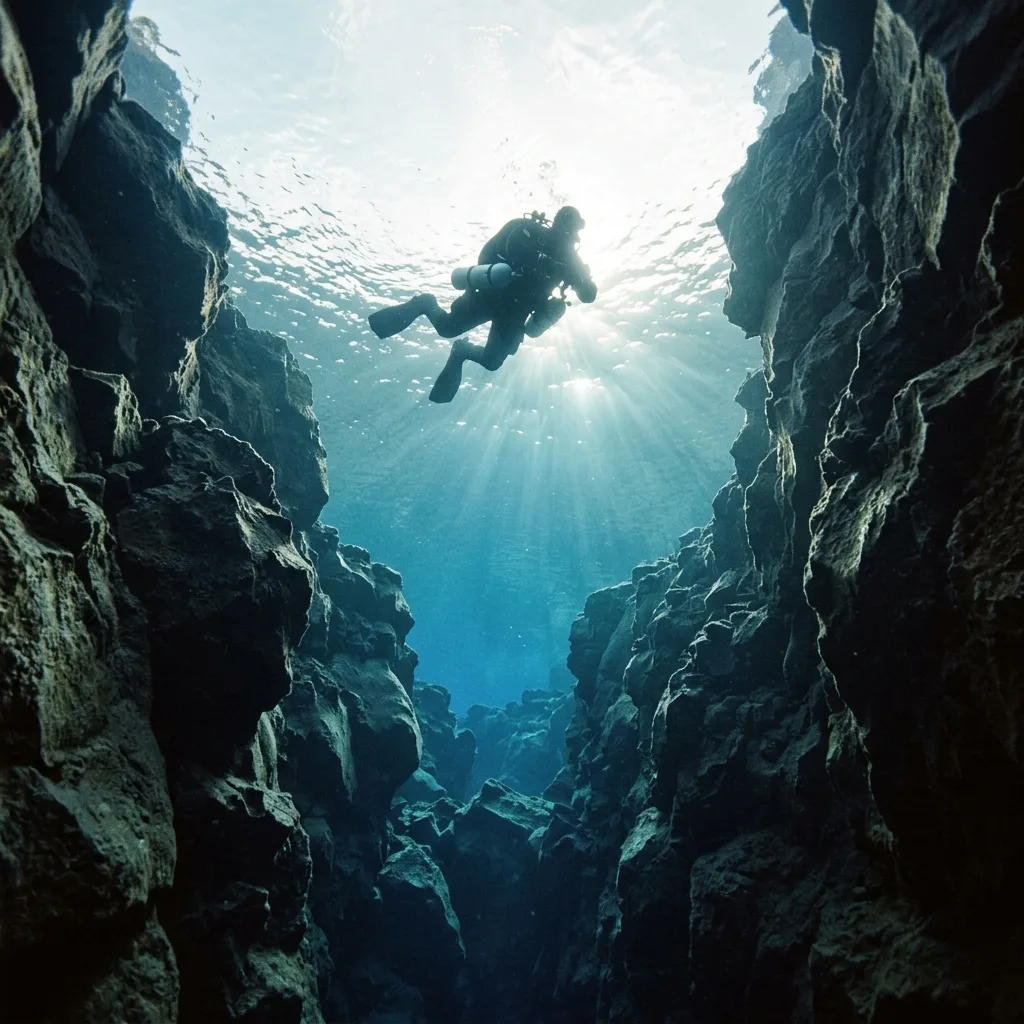
Beneath the clarity of Silfra, the body faces two conflicting physiological responses when the face touches 2°C water: the cold shock response and the diving reflex.
Travel brochures for the Silfra fissure in Þingvellir National Park often depict a diver floating in neon-blue water between the North American and Eurasian tectonic plates. These photos do not show what happens to the body when the face touches 2°C (35°F) water. Silfra is a submerged fault line where the water temperature remains near freezing year-round.
When a human body enters this environment, it undergoes immediate physiological stress. Even though a drysuit protects the majority of the body, the face and lips remain exposed to the glacial water. In their 2012 physiological study, Autonomic conflict: a different way to die during cold water immersion, researchers M.J. Tipton and M.J. Shattock detail the internal processes triggered specifically by this facial exposure.
Contact with near-freezing water immediately triggers the 'Cold Shock Response'—a reaction of the sympathetic nervous system. This causes peripheral vasoconstriction, a sudden spike in heart rate, and a gasp reflex, often followed by a desire to breathe rapidly. However, simultaneously, immersing the face in cold water triggers the 'Diving Reflex.' This is a parasympathetic response designed to conserve oxygen by abruptly lowering the heart rate. This biological paradox—when the heart receives two opposing neural signals at the exact same moment—is termed 'autonomic conflict' by researchers. In vulnerable individuals, the conflict between these two responses can increase the risk of cardiac arrhythmias.
The Physical Constraints of a Drysuit
Because of this extreme cold, divers and snorkelers must wear heavy drysuits. A drysuit keeps the body dry by insulating it from the glacial water outside. Donning the suit means inserting the head and hands through tight neoprene seals at the neck and wrists so that water cannot enter.
In the water, divers cannot move as freely as the photos suggest. The air trapped inside the drysuit must be constantly controlled to maintain buoyancy and avoid inversion. You are suspended in a strange sensory contrast: your exposed face is in direct contact with glacial water, while the rest of your body is insulated inside the drysuit and thermal layers.
The Tectonic Environment
Descending into the Silfra fissure reveals an underwater landscape almost devoid of life. Visibility frequently exceeds 100 meters. The glacial water has been filtered through porous underground lava fields for decades, removing suspended particles and creating an incredibly nutrient-poor environment.
This filtration creates the famous clarity of the fissure, but it also means aquatic life is severely limited. The space consists of sheer tectonic rock walls, occasionally coated with green algae known locally as 'troll hair.' Diving Silfra requires managing physiological reflexes and controlling bulky, restrictive dive gear.
Frequently Asked Questions
Can anyone dive or snorkel at Silfra?
No. Due to the physiological demands, participants must meet medical, age, and fitness requirements set by the national park and operators. Scuba divers must also hold specific drysuit certifications.
What happens if a drysuit leaks at Silfra?
A leak exposes the body to 2°C water, leading to rapid heat loss. A flooded drysuit is a serious safety concern due to the risk of hypothermia.
Are there any fish in the Silfra fissure?
Very rarely. The glacial water is cold and incredibly nutrient-poor. Aquatic life in Silfra is severely limited compared to typical marine environments.