Reynisfjara: Why This Black Sand Beach Is an Active Hazard Zone
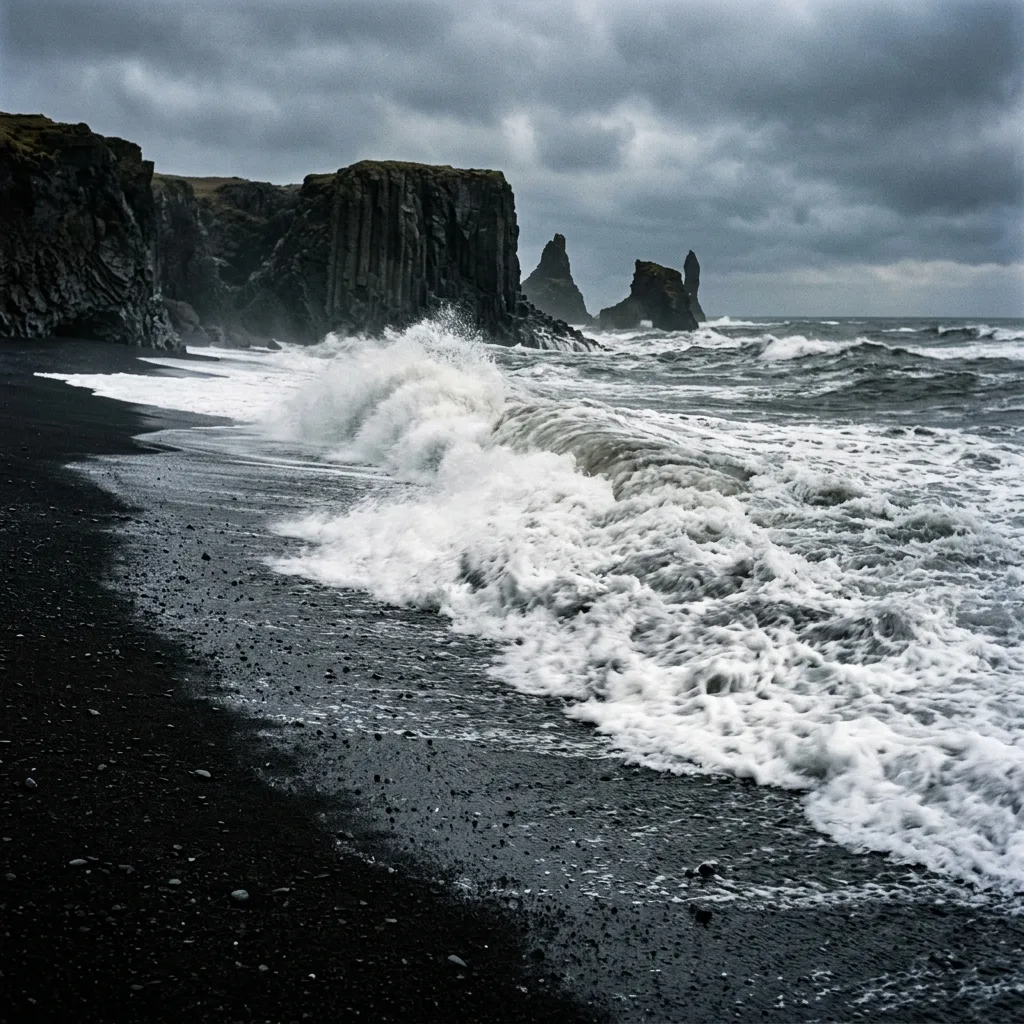
Reynisfjara is famous for its black sand and basalt columns, but sneaker waves make its shoreline dangerous. Learn how the zoning system and warning lights work.
Reynisfjara looks like a beach designed to be photographed: black volcanic sand, geometric basalt columns, and the North Atlantic in the background. But the waterline on this beach is not a place to stand waiting for the surf. Icelandic authorities treat Reynisfjara as an active hazard zone with a specialized warning system.
The primary risk here comes from 'sneaker waves.' In this region, the North Atlantic stretches out as a vast expanse of open water. Large ocean swells can travel vast distances across the sea before reaching the Icelandic coast. When these swells approach the steeply shelving shallow waters near the shore of Reynisfjara, the dynamics change. The combination of the ocean swell and the steep slope of the beach causes a rapid wave run-up that can reach significantly higher up the shoreline than the preceding waves.
Beach Geometry and the Backwash
The danger of a sneaker wave lies not just in the incoming water, but in the rapid backwash. The black sand at Reynisfjara is loose volcanic gravel. After a wave surges far inland, that large volume of water flows rapidly back down the steep beach into the ocean. This strong backwash can cause visitors to lose their footing and drag them seaward.
People who lose their footing can be pulled by the backwash into extremely cold water, causing the situation to become dangerous very quickly. Being suddenly immersed in the freezing North Atlantic can trigger a cold shock response, including a loss of breathing control.
The Warning System and the Basalt Cave
The risk is elevated near the Hálsanefshellir sea cave, a formation of hexagonal basalt columns right on the shoreline. Visitors frequently enter the cave to take photographs, unaware that a single wave sweeping far inland can flood the space, trapping them between the water and the rock walls with limited escape routes.
To mitigate accidents, Icelandic authorities have installed a zoned warning light system. A yellow light indicates that visitors must not enter the yellow sand zone and must stay far back from the waterline. A red light signifies a total ban on entering the beach area completely. Obeying the warning zones and keeping a safe distance from the water are critical parts of staying safe when visiting Reynisfjara. An additional safety recommendation provided by authorities is to never turn your back on the ocean.
Frequently Asked Questions
Is it safe to visit Reynisfjara during good weather?
A sneaker wave requires no local storm. Good local weather does not guarantee safe wave conditions. The energy often comes from storms occurring far away in the open ocean.
What do the flashing lights at Reynisfjara mean?
A zoning system dictates danger levels. Yellow means you must stay far back from the water and outside the yellow sand zone. Red means extreme danger, and entering the beach is strictly prohibited.
Can you rely on running to escape a sneaker wave?
No. A sneaker wave can reach much higher up the beach than previous waves, so visitors should not rely on reaction time or running speed to avoid it. The safer approach is to remain outside the hazard zone and follow the warning system.