The Stealth Hazard Behind Iceland's Eruptions: Volcanic Gas
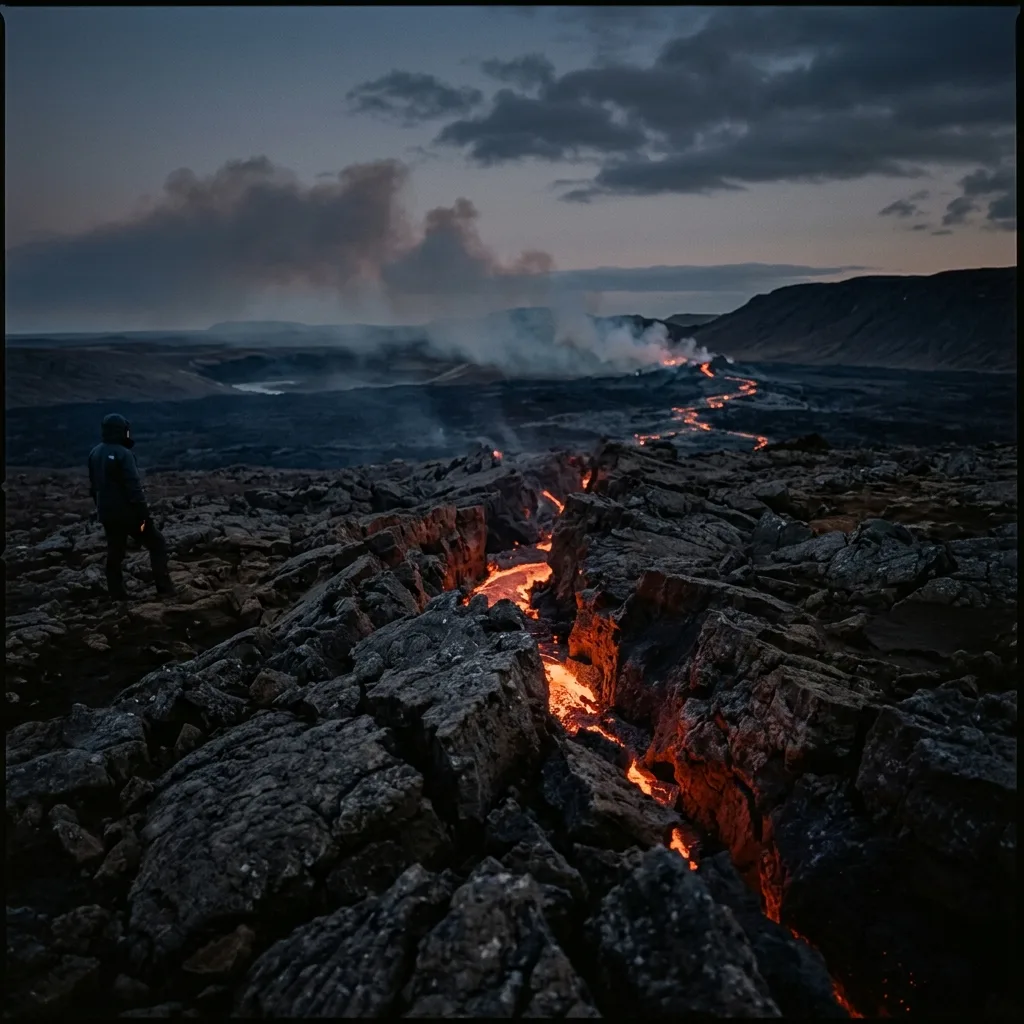
Lava is visible; volcanic gas is not. Learn how wind and topography can cause dangerous gases to accumulate around Iceland's active eruption zones.
When a new fissure tears open on the Reykjanes peninsula, the sight of molten rock often attracts visitors to the surrounding basalt fields. However, the visual spectacle of the lava is not the only risk. Another threat from Icelandic eruptions is often invisible: volcanic gas, the dispersion of which is heavily influenced by local atmospheric conditions.
Volcanologist Dr. Evgenia Ilyinskaya, in her 2017 study on large fissure eruptions, documented the environmental impacts of these emissions, referring to volcanic pollution as a 'stealth hazard.' When magma reaches the surface, it releases a massive volume of gases, primarily sulfur dioxide (SO2) and carbon dioxide (CO2). Stepping away from the edge of the lava does not automatically eliminate the risk. Depending on wind direction, gas pollution can be carried away from the immediate eruption site, meaning exposure is not limited to the area right next to the fissure.
Accumulation and Topography
Under certain wind and topographical conditions, volcanic gas can accumulate in natural depressions and low-lying areas. Because of this, authorities monitor the dispersion direction of the gas, not just the physical distance from the eruption point.
This creates a shifting hazard for hikers, particularly given Iceland's erratic weather patterns. Wind conditions can change the location and concentration of gas, including in valleys and hollows where visitors might stop to rest. Consequently, official safety guidelines strongly advise visitors against lingering in these low-lying areas during an active eruption.
Atmospheric Dispersion and Aerosols
Sulfur dioxide is a respiratory irritant, and exposure to high concentrations can cause respiratory symptoms. Because gas concentration and dispersion direction can change, conditions must be assessed based on official monitoring and authority guidelines.
Furthermore, as Dr. Ilyinskaya's research demonstrates, the hazard of volcanic gas does not stop where the lava ends. SO2 can chemically convert into fine sulfate aerosol particles as it travels downwind. These microscopic atmospheric pollutants can drift over long distances, so the impact of air pollution can extend far from the eruption site.
Glowing lava is a visible attraction. Air quality is one of the invisible hazards—and the reason atmospheric conditions must be checked. Before heading to any eruption area open to visitors, check the latest gas dispersion models from the Icelandic Meteorological Office (Veðurstofa Íslands) and obey any closures or local authority instructions.
Frequently Asked Questions
What should you do before approaching an active eruption area?
Check the latest safety information and gas dispersion models from the Icelandic Meteorological Office, and obey local closures and authority instructions. Gas conditions can change based on weather and wind direction.
Why do authorities warn against staying in low-lying areas near the eruption site?
Volcanic gases can accumulate in natural depressions or valleys, especially when the wind is low. Visitors are advised to avoid these low-lying areas in accordance with official safety guidelines.
Is an eruption site safe if the air looks clear?
Not necessarily. Volcanic gas hazards are not always visually apparent. Dangerous gases can be invisible, which is why checking official safety information remains necessary even if there is no visible plume or smoke.