Waldniel-Hostert: The Nazi Children's Killing Ward
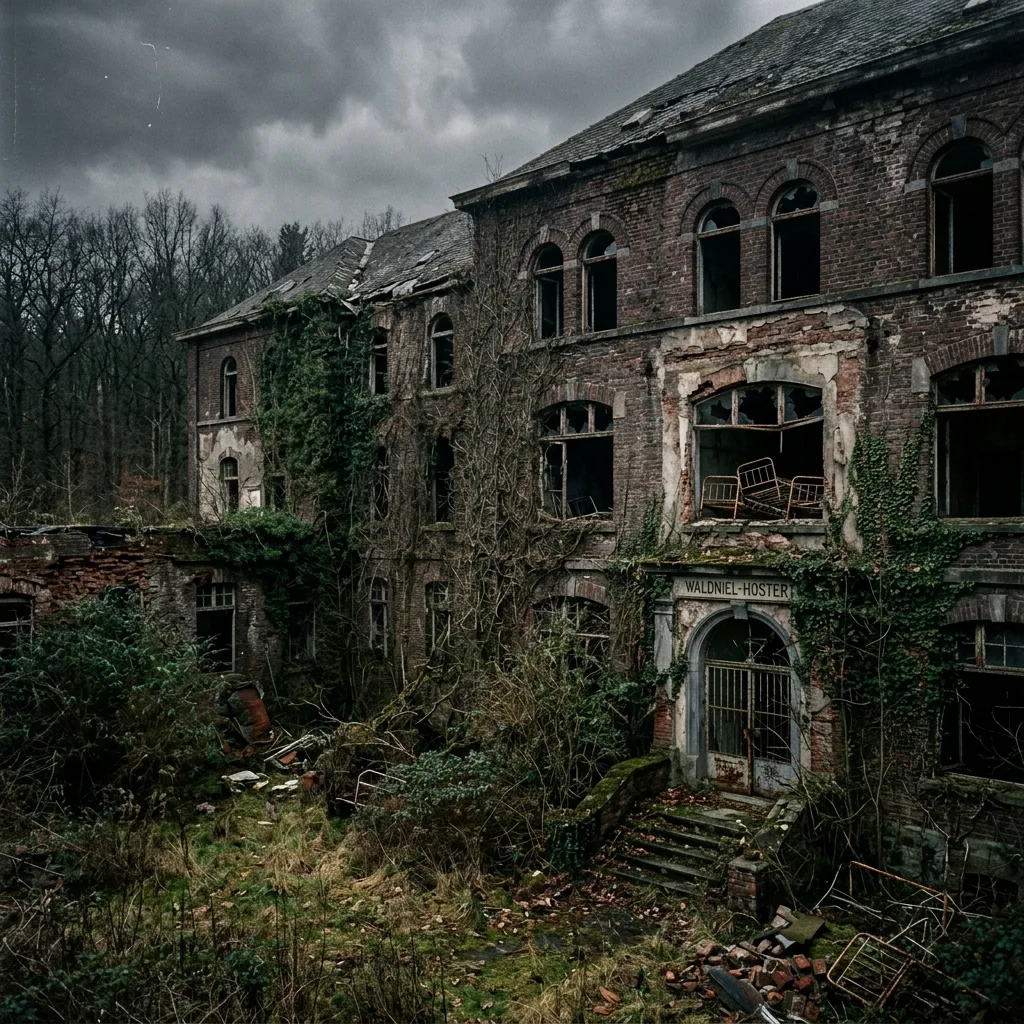
Waldniel-Hostert began as a Franciscan care institution before becoming a state psychiatric facility. During the Nazi era, part of it was used as a Kinderfachabteilung, where dozens of disabled children were murdered.
Nestled in the rural landscape of Schwalmtal in North Rhine-Westphalia lies an expansive complex of red-brick buildings. The Waldniel-Hostert facility began as a sprawling Franciscan care hospital before being transformed into a state-run psychiatric institution. Today, the surviving complex bears witness to the institution's changing history and its role in Nazi medical crimes.
The Franciscan Origins and State Takeover
Founded in the early 1900s by the Franciscan Brothers of the Holy Cross, the institution was established to care for individuals with intellectual and physical disabilities. For decades, it operated as a largely self-sufficient sanctuary, expanding to include a school, workshops, a working farm, and a church. This era ended in 1937. Facing intense pressure from the Nazi regime through regulatory obstacles, fines, and the withdrawal of state financial support, the religious order was forced to relinquish the facility. The Rhine Province administration subsequently assumed total control.
Under Nazi administration, the institution became part of the system used to classify, transfer, and persecute patients deemed "unworthy of life."
Nazi "Euthanasia" and the Kinderfachabteilung
By 1941, a specific wing of the facility was officially designated as a "Kinderfachabteilung" (Children's Specialty Department). The ward was part of the decentralized Nazi program that targeted children with disabilities and illnesses for systematic killing. Between 1941 and 1943, historical records confirm that 99 children were murdered in this specific ward.
The medical directors of the ward, including Dr. Georg Renno and his successor Dr. Hermann Wesse, administered the lethal "Luminal-Schema" protocol. The children were given repeated or lethal doses of Luminal (phenobarbital) and other barbiturates. Medical records often attributed the deaths to causes such as pneumonia, concealing the deliberate killings. Between 1939 and 1945, over 500 individuals in total—both adults and children—died at the Waldniel institution due to deliberate killing, starvation, or neglect.
The Memorial and Remembrance
For decades after the war, the victims were largely forgotten in unmarked graves in the institutional cemetery located near the edge of the property. It was not until the late 1980s that local historians, notably Peter Zöhren, alongside persistent activists, successfully fought to bring the historical truth to light and establish formal recognition.
Today, the site includes an official memorial, redesigned in 2018, honoring the victims who perished within the facility. An architectural wall lists the names of those who died, ensuring they are not forgotten. Annual remembrance ceremonies are held here on January 27, the International Holocaust Remembrance Day.
Visiting Waldniel-Hostert Today
Following a brief stint as a British Military Hospital and later as the Kent School for British military children, the main complex was abandoned in the 1990s. The property is now privately owned. Access to the historic main hospital buildings is strictly prohibited and the structures are closed to the public. However, the memorial cemetery remains accessible. Visitors are welcome to visit the memorial site to pay their respects and reflect on the historical reality of the institutional grounds.
Frequently Asked Questions
Is it legal to enter the Waldniel-Hostert hospital complex?
No. The hospital complex is privately owned and closed to the public. Entering the buildings without permission constitutes trespassing.
Can you visit the memorial cemetery?
Yes, the memorial cemetery located on the edge of the property is accessible to the public and serves as a place of reflection for the victims.
What was the Kinderfachabteilung at Waldniel-Hostert?
The Kinderfachabteilung was a "Children's Specialty Department" established in 1941. It operated as a decentralized killing ward where 99 disabled children were murdered under the Nazi "euthanasia" program.