Why Some Japanese Onsen Restrict Tattoos: History, Yakuza Stigma, and Changing Rules
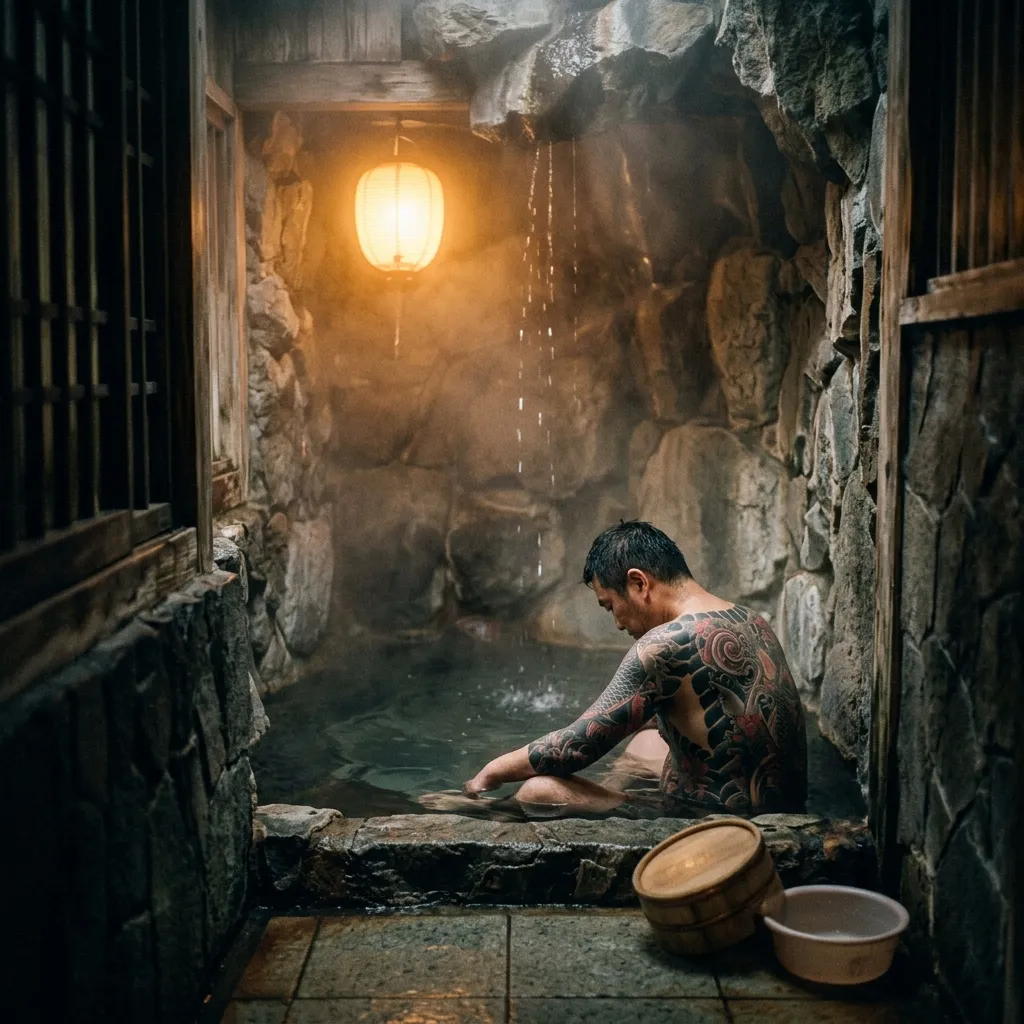
Tattoo restrictions at Japanese onsen are not imposed by a nationwide tattoo ban. Learn how history, Yakuza stigma, facility policies, and changing attitudes shape today's rules.
Japanese law does not impose a nationwide statutory ban on tattooed bathers. Instead, restrictions at hot springs (onsen) and public bathhouses (sento) are generally facility policies shaped by a longstanding association between tattoos and organized crime, customer concerns, and local operating practices. To understand why these policies exist—and how they are gradually changing—requires looking into Japan's complex history with body art.
How Tattoos Became Associated With Criminality
During the Edo period, authorities used tattoos as a form of punishment, branding criminals on their faces or arms. At the same time, decorative tattooing developed as a distinct practice among parts of the urban population, separate from punitive tattooing. In 1872, the Meiji government outlawed tattooing across Japan in a deliberate effort to appear civilized to Western powers. The prohibition pushed tattooing underground. Over subsequent decades, tattooing also became associated with marginal and criminal subcultures. During the post-war period, the association between irezumi and yakuza became especially prominent in popular consciousness, reinforcing the link between tattoos and organized crime.
The Public Bath House Act and Facility Policies
It is a common misconception that tattoos are banned by Japanese national law. The 1948 Public Bath House Act (Law No. 139) mandates that operators must refuse entry to individuals with infectious diseases, but it does not mention tattoos. Tattoo restrictions are generally established by individual facility operators rather than imposed by a nationwide tattoo ban.
Having a tattoo is not synonymous with membership in an organized crime group. Japan Tourism Agency guidance notes that policies vary widely and explains that restrictions have historically been linked to concerns among other guests about tattoos' association with antisocial groups.
Onsen vs. Sento: Understanding the Distinctions
When navigating bathing facilities in Japan, it is helpful to understand the distinction between different types of baths. An onsen uses water that legally qualifies as hot-spring water under Japan's Hot Springs Act, based on its source temperature or mineral composition, and is often part of a destination resort or upscale ryokan (traditional inn). A sento is a public bathhouse that uses heated tap water, historically serving locals who did not have baths at home. Policies at sento can differ from those at tourist-oriented onsen and ryokan, so travelers should check each facility individually.
Changing Policies and Modern Etiquette
Many facilities still restrict tattoos, but policies vary substantially by establishment and are slowly evolving. Japan Tourism Agency guidance notes growing understanding of tattoo cultures outside Japan and highlights that some ryokan now impose no restrictions or make decisions case by case. Some onsen and ryokan now welcome tattooed guests, while others allow small tattoos or assess access on a case-by-case basis.
For tattooed travelers, compliance with local etiquette is essential. Some facilities accept small tattoos when covered with an approved waterproof patch designed to stay adhered during bathing. However, if a facility strictly prohibits all tattoos and a guest violates the stated policy, they may be asked to leave. Always check the specific policy of the establishment beforehand. If a facility restricts tattoos, a private bath (kashikiri-buro) can provide an alternative without requiring concealment.
Frequently Asked Questions
Are tattoos banned by Japanese national law?
No. The Public Bath House Act requires operators to refuse entry to people considered to have infectious diseases, but it does not mention tattoos. Tattoo policies are generally determined by individual facility operators.
Can I cover my tattoo with a bandage to use an onsen?
Some facilities allow small tattoos to be covered with waterproof tattoo seals or patches, while others do not. Always check the facility's policy before entering.
Are there any tattoo-friendly onsens in Japan?
Yes. Some onsen and ryokan accept tattooed guests, while others allow small tattoos or assess them case by case. Private baths (kashikiri-buro) can also provide an alternative where available.