Plastinarium: The Human Preservation Laboratory
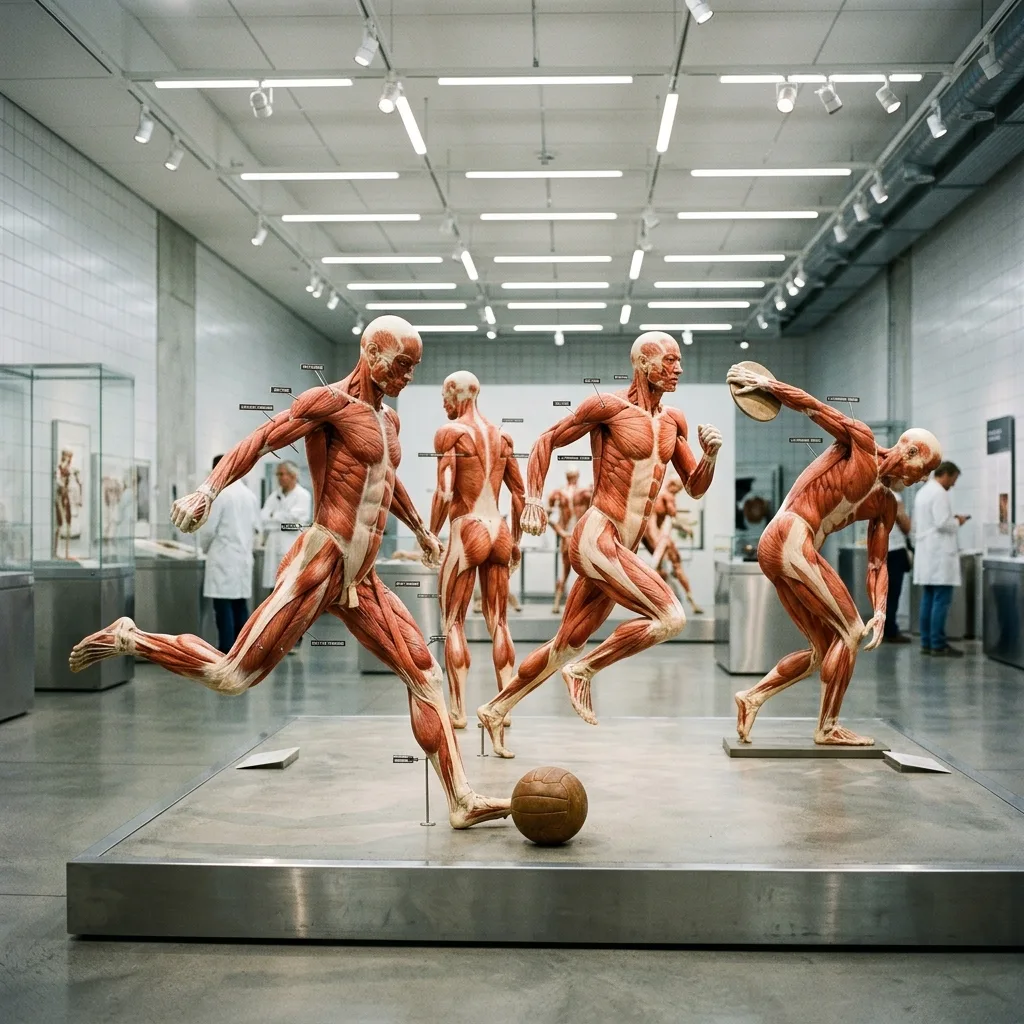
In the border town of Guben, a restored 19th-century cloth factory houses a unique facility where human remains are preserved as anatomical models through the plastination process.
In the border town of Guben, Germany, a restored nineteenth-century cloth factory houses an industrial facility dedicated to biological preservation. The Plastinarium functions as an active laboratory where human remains are processed and transformed into permanent anatomical specimens using synthetic polymers, alongside an exhibition space detailing the procedure.
In the preparation rooms, the plastination process is carried out through a series of chemical stages. The technique, pioneered by anatomist Dr. Gunther von Hagens in 1977, replaces the water and fats in biological tissues with synthetic polymers.
Plastination requires significant time and manual labor. The water and soluble fats of a donated biological specimen are extracted in sub-zero acetone baths and subsequently replaced with reactive liquid polymers, such as silicone rubber, epoxy, or polyester. This process hardens the tissues, rendering the specimens dry, odorless, and preserved.
From Body to Anatomical Specimen
The Plastinarium grants visitors insight into the active workshops where technicians perform dissections, separating muscle fibers from bone.
According to the Institute for Plastination, preparing a full-body specimen requires an average of 1,500 hours of manual labor. Skin is removed, subdermal fat is dissolved, and the underlying structure of muscle, nerve, and blood vessels is exposed. Before the polymers are cured using specialized gas or heat, the specimens are often positioned into athletic poses.
The removal of skin and specific tissues allows the underlying structure of muscle, nerve, and blood vessels to be observed clearly.
In the Exhibition Hall
Beyond the dissection areas, the exhibition halls showcase the finished specimens.
Human specimens at the Plastinarium come from donors who voluntarily gave their bodies for plastination after death. Through the Institute for Plastination's body donation program, this is done with the explicit consent of the donors for the purpose of anatomical education.
The displays highlight various aspects of the human body, including complex blood vessel networks. By utilizing a specialized polymer injection process, technicians isolate the branching structures of the circulatory system. The Plastinarium presents human anatomy directly—from bone and muscle to the vascular networks typically hidden beneath the skin.
Frequently Asked Questions
Are the human specimens in the Plastinarium real bodies?
Yes. The human specimens in the Plastinarium come from donors who voluntarily donated their bodies for the plastination process.