Namahage of Akita: The Demon-Masked Deities of Oga
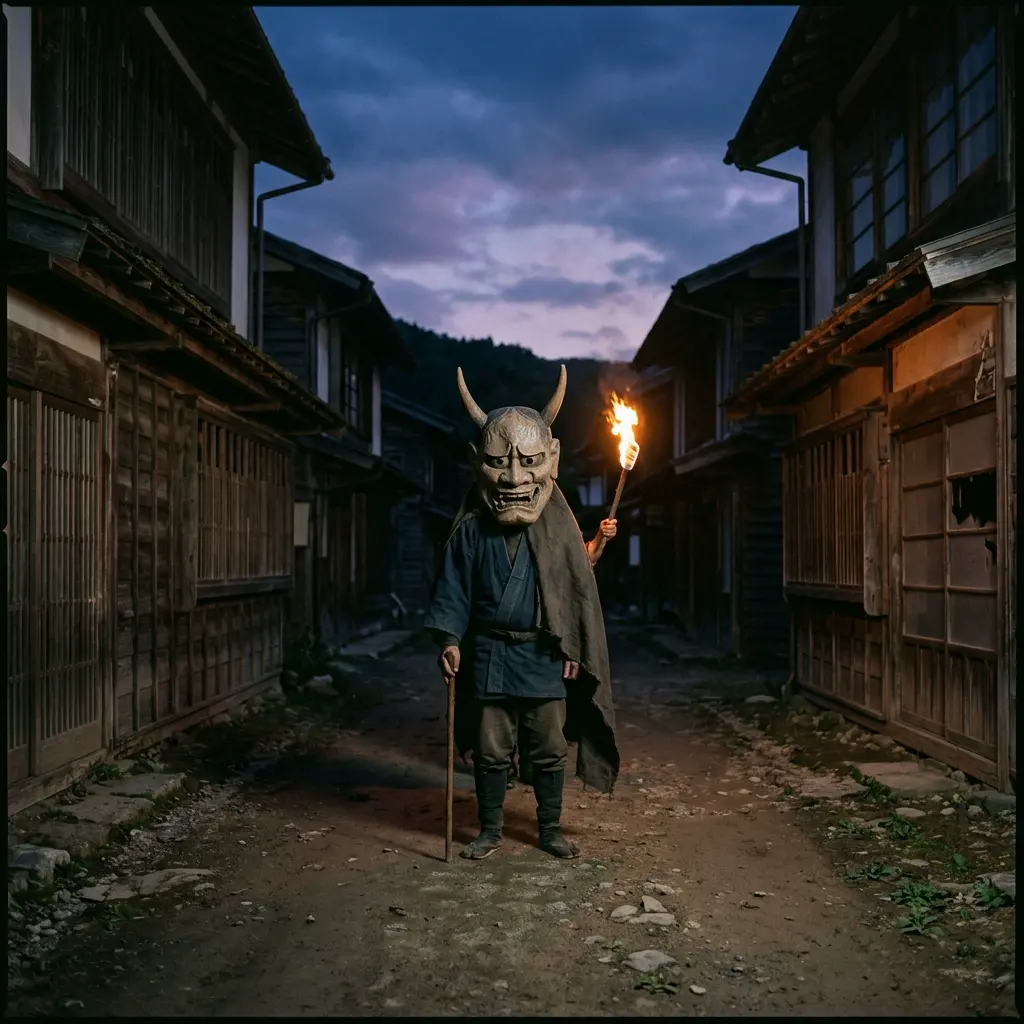
In Oga, Akita, masked visiting deities enter homes on New Year's Eve to admonish laziness, frighten children, and bring wishes for health and good fortune.
On New Year's Eve, the bitter cold of the Oga Peninsula in Akita Prefecture is pierced by a terrifying sound: deep, guttural roars echoing through the snowy streets. Men wearing massive straw costumes and grotesque, wild-eyed wooden masks march from door to door, wielding large wooden knives and buckets.
To an outsider, it looks like an invasion of monsters. But these terrifying figures are the Namahage, and they have not come to destroy the village. They are visiting deities—raiho-shin—who arrive to admonish laziness, question the household's behavior, and bring blessings for the coming year.
Oni or Deities?
The visual design of the Namahage closely resembles the Oni of traditional Japanese folklore. Oni are often portrayed as threatening figures, especially in popular imagery, but Japanese tradition has never treated them as uniformly evil. As folklorist Noriko T. Reider notes in Japanese Demon Lore, Oni can be ambiguous figures capable of bringing both disaster and prosperity.
In Oga, while some local origin legends connect the Namahage to oni, in ritual practice they are firmly treated as visiting deities rather than ordinary malevolent demons. Their frightening appearance therefore does not make them straightforward embodiments of evil; within the ritual, they appear with the authority of visiting deities.
When Namahage Enter the House
The ritual unfolds through direct household visits and ritualized dialogue with residents. A traditional visit is highly structured. First, a guide known as a sakidachi checks with the household before the Namahage enter—homes experiencing a recent birth, death, or severe illness are respectfully bypassed. Once admitted, the Namahage enter forcefully, stamping their feet and demanding to know if there are any lazy people or disobedient children inside.
Fear is an unmistakable part of the encounter, especially for children. The Namahage actively look for children, threatening to take them away to the snowy mountains if they misbehave. The visit also has a disciplinary dimension: Namahage admonish laziness and misbehavior, reinforcing expectations within the household and community.
However, fear operates within a structured exchange of admonishment and hospitality. The head of the household intercedes, pleading with the furious visitors and offering food and sake according to local custom. Through this tense negotiation, the Namahage are placated, leaving the family with wishes for good health and a bountiful harvest before moving to the next house.
Becoming Namahage
At the Namahage Sedo Festival, the ceremonial transformation of young men into Namahage is explicitly ritualized. The Sedo Festival is not identical to the household New Year's Eve custom; it combines Namahage tradition with Shinto ritual and public performance. Young men from the community gather at a local shrine where they are ritually purified by a Shinto priest. Only after this purification do they receive the sacred masks associated with the spirits of the gods, officially taking on the role of the Namahage for the night.
From Household Rite to Public Heritage
Today, the tradition exists both as a living household custom and as publicly presented cultural heritage. Oga no Namahage is included in UNESCO's 2018 inscription for "Raiho-shin, ritual visits of deities in masks and costumes." While the intimate New Year's Eve visitations remain primarily for local residents, the culture is shared with the world through the Oga Shinzan Folklore Museum and the annual Sedo Festival, where visitors can encounter public presentations of Namahage tradition.
The continued practice of Namahage also shows how ritual authority can remain meaningful within a changing community. Namahage still cross the threshold of homes on New Year's Eve, not merely as men in costumes, but as visiting deities whose authority is sustained by the household's willingness to participate seriously in the ritual. When the roar of the deity rattles the sliding doors in the dead of winter, the community remembers its obligations to one another.
Frequently Asked Questions
Are Namahage considered demons in Oga?
They wear frightening, demon-like masks and some legends connect them to oni, but in Oga ritual practice they are treated as visiting deities who admonish laziness and bring blessings for the coming year.
How do participants become Namahage during the Sedo Festival?
At the Namahage Sedo Festival, young men are ritually purified by a Shinto priest before receiving Namahage masks and taking on the role of the visiting deities. Household New Year's Eve customs vary by village.
Can tourists see Namahage safely?
Yes. The Sedo Festival in February and the Shinzan Folklore Museum provide public presentations. Traditional household visitations are generally community practices rather than tourist performances.