Kitsune no Yomeiri: Sunshowers, Foxfire, and Japan's Mysterious Fox Weddings
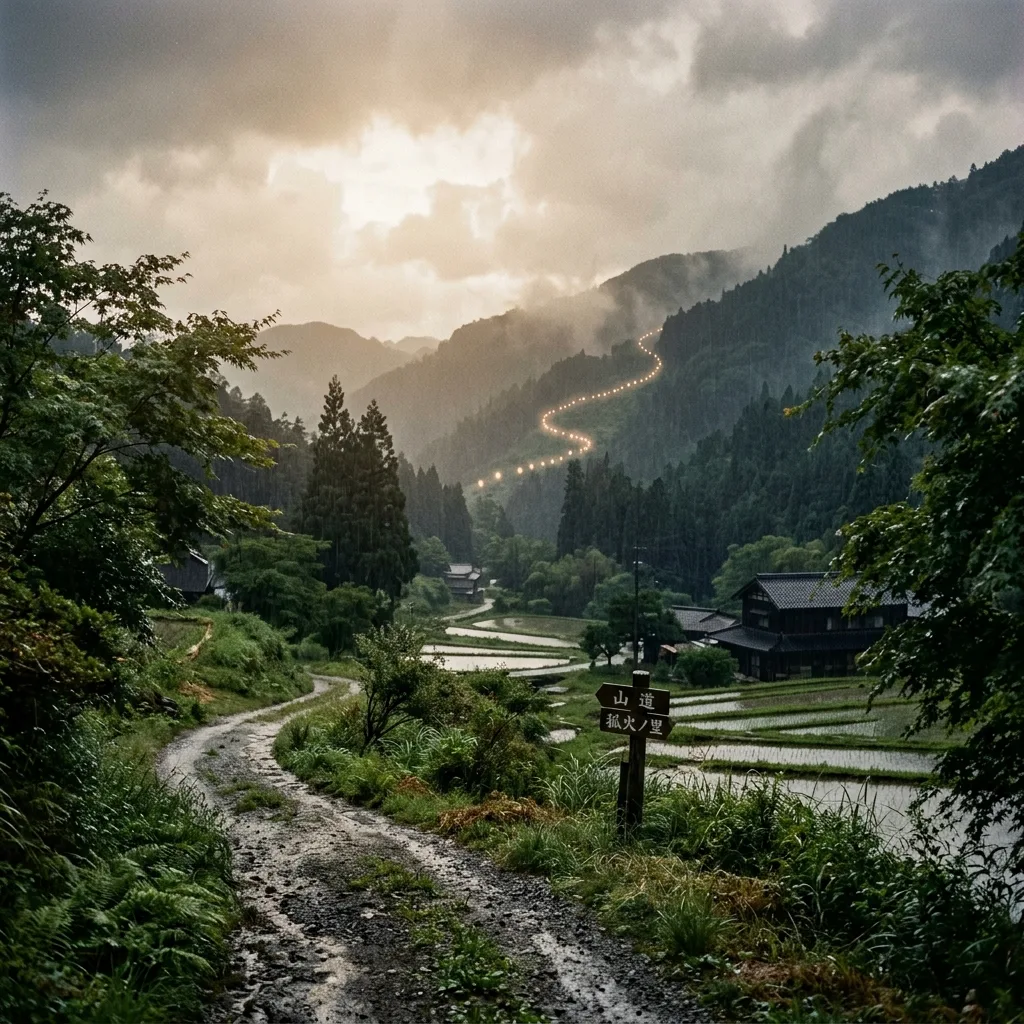
Discover why sunshowers and mysterious foxfire became known as Kitsune no Yomeiri—Japan's legendary “fox weddings”—and how the tradition survives in Niigata.
In many cultures, rain falling from a cloudless, sunlit sky is considered a strange meteorological anomaly. But in Japan, a sunshower is often referred to by a much more evocative phrase: Kitsune no Yomeiri, or the Fox Wedding. For centuries, this atmospheric quirk has been deeply entangled with the folklore of foxes (kitsune), creatures known for their shapeshifting abilities and penchant for tricking humans.
However, the term Kitsune no Yomeiri is not just a poetic name for the weather. It actually encompasses a complex web of interconnected folklore. Depending on the region and the era, it can refer to a sunshower, mysterious lights in the mountains, or a literal folk tale about supernatural foxes holding a marriage procession in secret.
When Mysterious Lights Looked Like a Wedding
To understand the connection between foxes and weddings, one must look at how marriages were historically conducted. Before modern wedding venues became common, bridal processions could take place after dark, with participants carrying lanterns. In rural Japan, observers would sometimes look out across a distant mountain or a dark riverbank and see a long procession-like line of mysterious lights traditionally called kitsunebi, or "foxfire."
Because these eerie lights resembled the distant lanterns of a nighttime human wedding, locals began to call the phenomenon a "fox wedding." The eighteenth-century Echigo Nayose, a topographical work from Echigo Province, describes long lines of mysterious lights associated with fox weddings. The association with foxes was strengthened by another detail: in some regional accounts, if a human attempted to approach the procession, the lights would often vanish, which helped reinforce the idea that foxes were deceiving human observers.
Why a Sunshower Became a Fox Wedding
The leap from mysterious nighttime lights to sunshowers is more complicated. No single explanation survives as the definitive origin for why a sunshower is called a fox wedding. Instead, several different theories have emerged over time.
One explanation suggests that the strange, contradictory weather of a sunshower simply felt like being tricked by a fox. Another theory proposes that secretive foxes actively conjured the rain to keep humans away from the mountains while they held their wedding processions. Another possibility is that terminology associated with foxfire processions later became attached to sunshowers. Whatever the exact origin, "the foxes are getting married" became a familiar traditional expression for rain during sunshine across many regions of Japan, although names and interpretations varied locally.
Fox Weddings Changed From Region to Region
There is no single, universal Fox Wedding myth. According to the Database of Folklore of Strange Phenomena and Yōkai compiled by the International Research Center for Japanese Studies (Nichibunken), the phenomenon meant different things in different prefectures. In Aichi Prefecture, a sunshower was straightforwardly called a fox wedding. In Nara Prefecture, folklore described foxes disguising themselves as humans to hold weddings on drizzly nights.
In Yamanashi Prefecture, the legend was tied to lanterns mysteriously appearing and disappearing on mountain roads, sometimes accompanied by a figure resembling a bride wearing a traditional watabōshi hood. Meanwhile, in Gifu Prefecture, both sunshowers and strings of mountain lanterns were interchangeably referred to as a fox wedding. These regional records show how localized the folklore truly was.
The Fox Wedding Wasn't Always a Bad Omen
Modern retellings often emphasize the eerie or dangerous aspects of the Fox Wedding. Regional folklore, however, was more varied. Some local traditions treated fox weddings as uncanny or potentially dangerous, but others interpreted them positively.
In agricultural communities, the phenomenon was closely tied to the land. According to Aga Town's official accounts, in places like Tsugawa in Niigata Prefecture, seeing abundant kitsunebi associated with the wedding procession was actually considered a highly auspicious sign. It was interpreted as a prediction of an abundant harvest for the coming year.
Tsugawa's Fox Wedding Procession Today
Today, this elusive folklore is actively recreated and celebrated. Aga Town transforms the local legend into a major local festival known as the Tsugawa Kitsune no Yomeiri Gyōretsu, or Fox Wedding Procession. Rather than an autumn event, the festival typically takes place in early summer; the 34th edition was held on June 6, 2026.
During the festival, a local "bride" wearing fox makeup is accompanied by roughly 108 attendants in a grand evening procession. The participants march a two-kilometer route starting from Sumiyoshi Shrine through the town, ending at Kirinzan Park. In the finale, the bride and groom symbolically transform into foxfire, echoing the traditional kitsunebi legends. The modern procession turns an elusive local legend into a public celebration, carrying the imagery of foxfire, lanterns, and hidden weddings into the present.
Frequently Asked Questions
Are Fox Weddings considered a sign of good or bad luck?
Interpretations vary by region. In some traditions, fox wedding lights are considered mysterious or something humans should avoid intruding upon, while in places such as Tsugawa, abundant foxfire was historically considered a good omen for an upcoming harvest.
Where does the Tsugawa Fox Fire Festival take place?
The procession is held in Tsugawa, Aga Town, Niigata Prefecture. The exact dates can vary by year, but the event is typically held in early summer, with an evening procession through the town.
Are Kitsune no Yomeiri and Kitsunebi the same thing?
Kitsunebi refers broadly to mysterious "foxfire" lights in Japanese folklore. Kitsune no Yomeiri is a related but broader tradition: the phrase can describe lights resembling a wedding procession, supernatural fox weddings, or—regionally—a sunshower.