Flesh, Salt, and Clay: The Architecture of Sumo
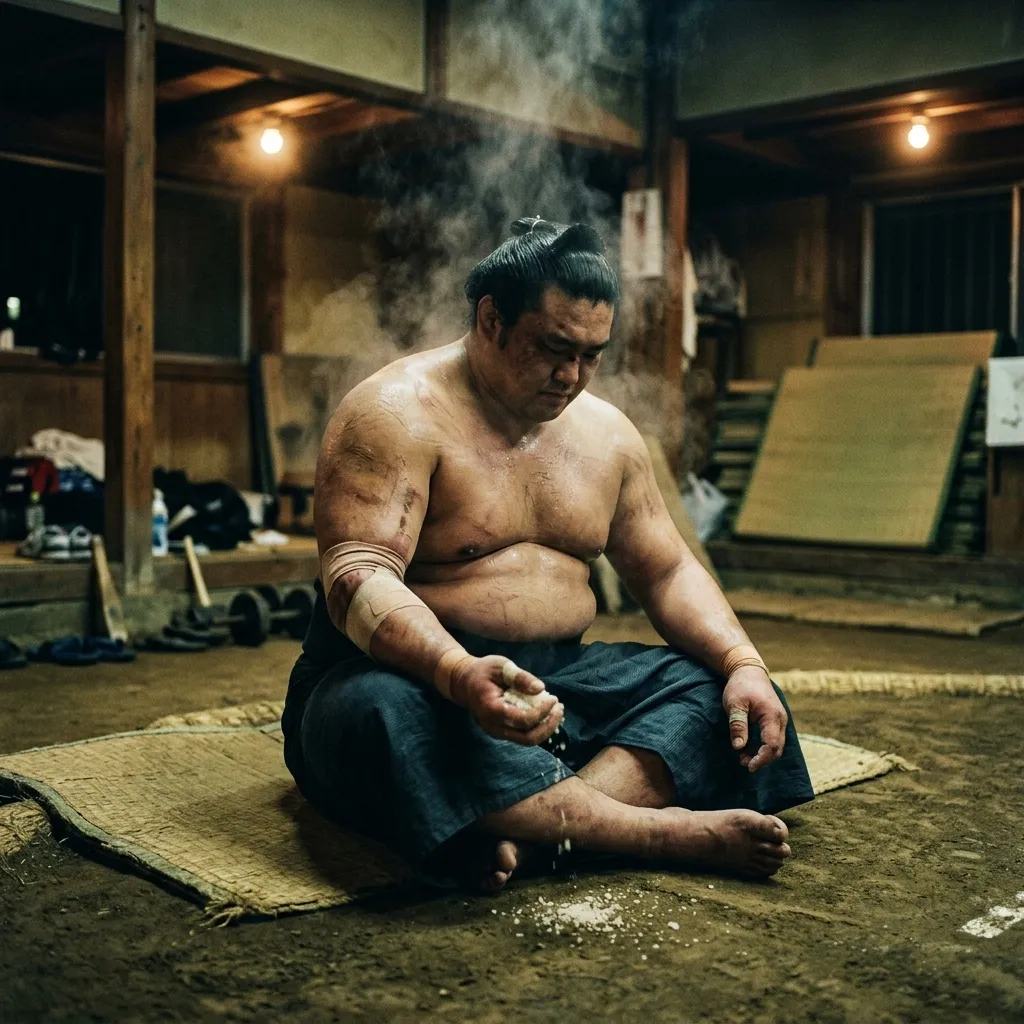
Explore life inside a sumo stable, from punishing morning training and chanko-nabe to dohyo rituals, referee traditions, and sumo's strict hierarchy.
At the tachi-ai—the initial charge of a professional sumo bout—two wrestlers, some weighing well over 130 kilograms, explode forward from a crouch and collide at close range. There are no weight classes to mitigate the impact. A smaller wrestler must rely on leverage, speed, and lower center of gravity to avoid being forced out of the ring by a heavier opponent. This physical reality dictates every aspect of a rikishi (wrestler)'s life.
Behind the televised pageantry of the six annual honbasho (tournaments) lies the heya, or training stable. Life inside a heya operates on a strict, pre-modern hierarchy. Young recruits, often joining around fifteen years of age, endure a rigorous lifestyle. Junior wrestlers also serve higher-ranked sekitori, handling chores and assisting them as part of the stable's rigid hierarchy. For visitors, access to a working heya is generally structured through designated practice-viewing arrangements or organized tours rather than casual walk-ins. Wrestlers wake before dawn to clean the stable, prepare meals, and endure hours of keiko (practice) on empty stomachs. The morning training focuses on repetitive, grinding drills like shiko (leg stomping) and teppo (striking a wooden pillar) to build a foundation of dense muscle.
The Architecture of Mass
The iconic sumo physique is not the result of unchecked gluttony, but a calculated nutritional strategy. After morning practice, wrestlers consume chanko-nabe—a highly nutritious, protein-rich stew containing chicken, fish, tofu, and vegetables, eaten with rice. Eating forms an important part of the training regimen. The combination of intense training, very large meals, and post-meal rest is designed to help wrestlers maintain the extraordinary body mass that can be advantageous in a sport without weight classes.
Maintaining this extreme physique comes at a physiological cost. The sheer mass places immense strain on the skeletal structure and internal organs. Older research has suggested that professional sumo wrestlers face elevated long-term health risks, with extreme body mass among the factors associated with poorer outcomes. The long-term health consequences of maintaining extreme body mass remain one of the less glamorous realities behind the sport.
Shinto Rituals on the Clay
Professional sumo incorporates a dense layer of rituals and symbols associated with Shinto tradition. The ring (dohyo) is built from packed clay and sand by yobidashi, the attendants responsible for preparing and maintaining the ring. It is treated as consecrated ground. The canopy suspended above the ring mimics the roof of a Shinto shrine, with four tassels representing the seasons. Before bouts in the upper divisions, wrestlers scatter salt across the dohyo as a purification ritual, a practice also traditionally associated with protection from injury.
The most controversial rule surrounding this space is professional sumo's prohibition on women entering the dohyo. The exclusion of women from professional sumo's ring is often explained through ideas of ritual purity associated with menstruation and childbirth (kegare), but the history is more complicated than that explanation suggests. Women have participated in various forms of sumo for centuries, from Edo-period performances to local shrine rituals, and even modern figures within the Japan Sumo Association have rejected the claim that its prohibition simply rests on the idea that women are inherently impure. The ban remains a highly debated intersection of tradition and modern gender politics.
The authority within the ring is maintained by the gyoji, who officiates wearing the elaborate silk robes of a traditional court official. The two highest-ranking referees, known as tate-gyoji, traditionally wear a tanto (short dagger). The blade symbolizes the seriousness of their judgment and the old ideal that a grave officiating error warranted seppuku. Today the consequence is symbolic rather than fatal: a top referee whose decision is overturned may offer his resignation, which is normally rejected but serves to uphold the gravity of the office.
The Weight of Tradition
Sumo remains an unusual modern spectacle in which athletic performance is inseparable from ritual, rank, purity, and tradition. The men who step onto the clay enter not only a sporting arena but a social and ceremonial system shaped over centuries.
From the hierarchy of the stable to the ceremonial garments of the referee, the sport preserves structures that modern competition elsewhere has largely discarded. Few sports make the weight of tradition quite so physical.
Frequently Asked Questions
Are women really banned from entering the Sumo ring?
Yes, professional sumo strictly prohibits women from entering the dohyo. While often attributed entirely to Shinto beliefs about ritual impurity (kegare), the history is more complex, as women have participated in amateur and ritual sumo forms for centuries.
How much do Sumo wrestlers actually eat?
Sumo wrestlers traditionally eat large, calorie-dense meals built around foods such as chanko-nabe and rice. There is no single daily calorie figure that applies to every rikishi; intake varies heavily with body size, rank, training, and weight goals.
Do Sumo wrestlers face long-term health risks?
Older research has suggested that professional sumo wrestlers face elevated long-term health risks, with extreme body mass among the factors associated with poorer outcomes. The physical toll of maintaining such massive weight is often cited as a key factor in these long-term health consequences.