Schwerbelastungskörper: Berlin's 12,650-Ton Concrete Test Weight
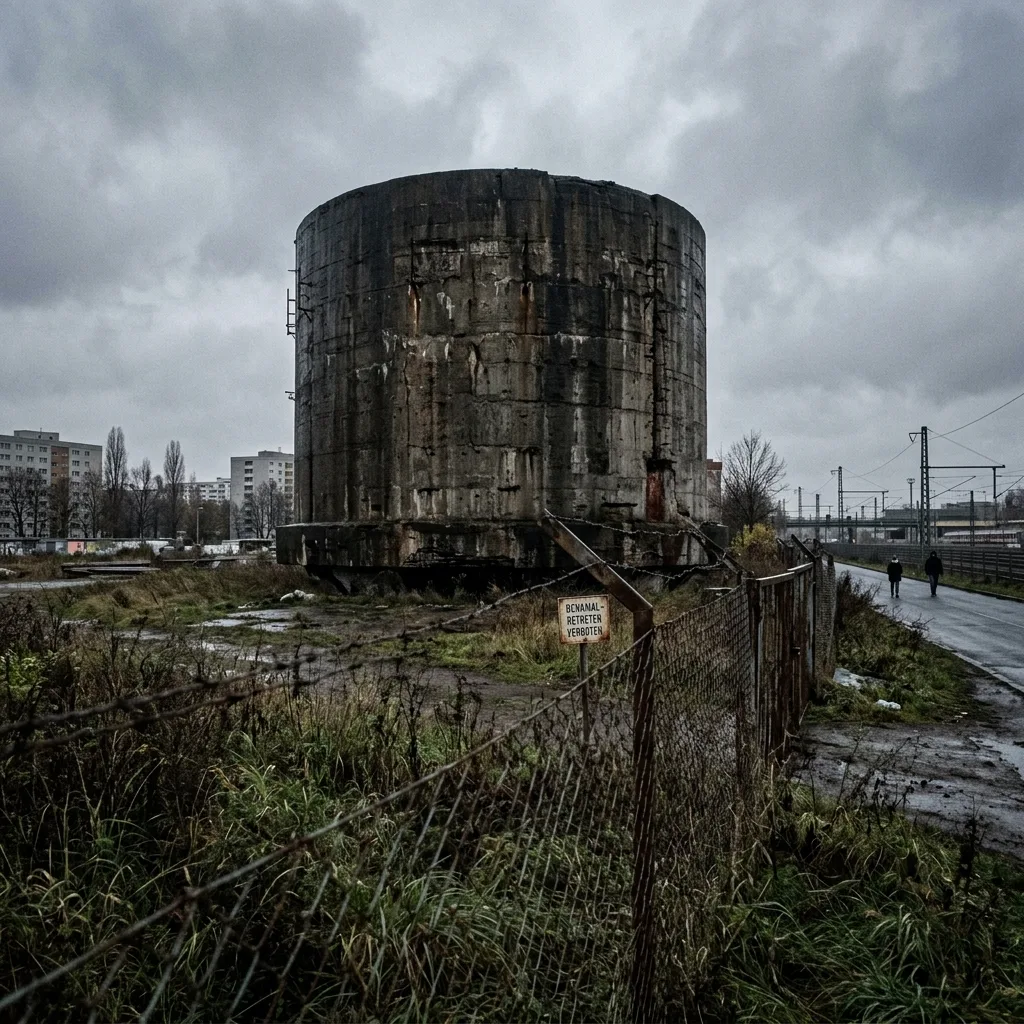
Hidden in a residential neighborhood of Berlin sits a colossal, 12,650-ton block of solid concrete built by the Nazis to test if the city's swampy ground could hold their architecture.
Tucked away in the residential district of Tempelhof in Berlin, an immense cylinder of concrete sits wedged between modern apartment blocks. The Schwerbelastungskörper (Heavy Load-Bearing Body) weighs 12,650 metric tons, stands 18 meters above ground, and plunges equally deep into the earth. The massive above-ground cylinder contains no conventional interior rooms; the measuring installations associated with the experiment were located below ground. It is neither a bunker nor a defensive fortress. It is a purely utilitarian test weight, left behind by the collapse of the Third Reich.
The Architecture of Welthauptstadt Germania
The Schwerbelastungskörper was built as part of the planning for Hitler's proposed transformation of Berlin into Welthauptstadt Germania. The centerpiece of this architectural overhaul was to be a massive Triumphal Arch, designed by chief architect Albert Speer, which was intended to dwarf the Arc de Triomphe in Paris.
But the project faced a fundamental problem: Berlin's sandy, marshy ground. To determine if the ground could support the immense weight of the proposed arch, Speer commissioned a precise ground-pressure experiment in 1941. The Schwerbelastungskörper was engineered by the construction firm Dyckerhoff & Widmann AG to replicate the exact pressure that a single pillar of the arch would exert on the earth. To pour the relentless volume of concrete required, the regime utilized the forced labor of French prisoners of war from a nearby camp.
The 1941 Ground Pressure Experiment
Deep within the subterranean measurement chambers beneath the block, engineers monitored highly sensitive dial gauges to track the cylinder's settlement. The German Society for Soil Mechanics had set a strict safety threshold: for the Triumphal Arch to be viable, the test weight could not sink more than 6 centimeters into the ground.
The results showed that the ground, in its existing condition, could not support the planned structure within the specified settlement limit. Over the course of the three-year testing period, the massive concrete body sank approximately 18 centimeters into the marshy soil, vastly exceeding the permissible limits. As the war progressed and Germany's military situation deteriorated, the steel, concrete, and manpower required for Germania were diverted to the armaments industry, effectively halting the architectural projects.
Post-War Survival and Preservation
Following the fall of the Third Reich, Allied forces systematically demolished Nazi military installations and monuments across Germany. However, when they evaluated the Schwerbelastungskörper, they faced a significant engineering problem. Demolition was considered, but the structure's enormous mass and proximity to surrounding buildings made blasting it impractical and potentially dangerous.
Unable to safely demolish the structure, authorities left it in place. For decades during the Cold War, it was ignored and slowly surrounded by overgrown weeds and opportunistic trees. Today, the Schwerbelastungskörper is a protected historical monument. The site has been cleared, and an elevated observation deck allows visitors to comprehend the sheer scale of the block—a physical remnant of an unrealized empire, anchored permanently in the Berlin soil.
Frequently Asked Questions
How much does the Schwerbelastungskörper weigh?
The Schwerbelastungskörper weighs approximately 12,650 metric tons.
Can you go inside the cylinder?
No, the main above-ground cylinder is completely solid concrete. While there are subterranean measurement chambers beneath it, access to these underground rooms is highly restricted and usually only visible during official guided tours.
Is the site open year-round?
Opening days and hours vary seasonally. Check the official visitor information before traveling, as it is generally closed from November through March.