Burg Frankenstein: The Alchemist's Dark Legacy
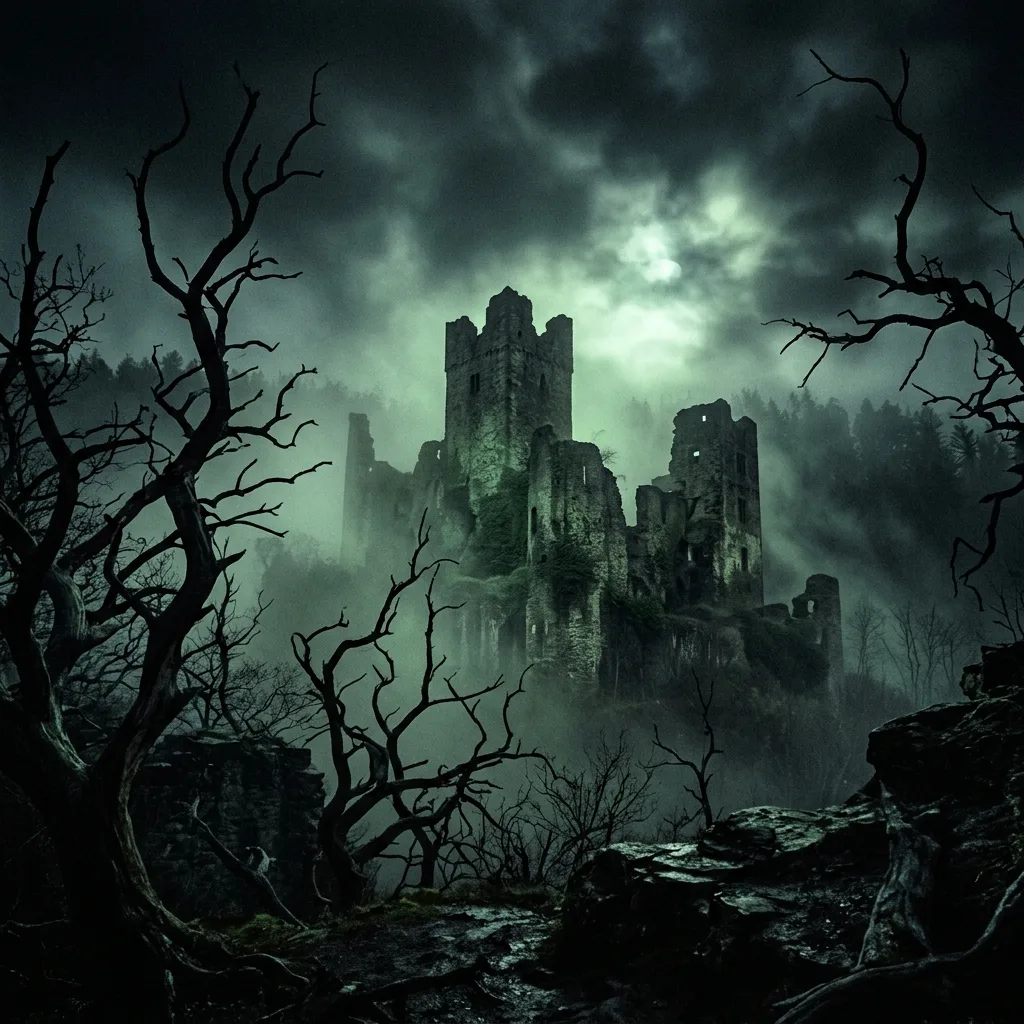
Perched on a forested ridge near Darmstadt, Burg Frankenstein combines medieval history with legends of alchemist Johann Konrad Dippel—and a controversial, unproven connection to Mary Shelley's Frankenstein.
Perched on a forested ridge overlooking the Rhine plain, the stone ruins of Burg Frankenstein began as a standard 13th-century medieval fortress built by the Lords of Breuberg. For centuries, it served as a territorial stronghold. Today, however, its aristocratic origins are overshadowed by its association with a rogue 17th-century alchemist and a fierce literary debate regarding the genesis of Mary Shelley’s masterpiece.
Johann Konrad Dippel was born within the castle walls in 1673. A brilliant but erratic polymath who often signed his academic works as 'Frankensteina,' Dippel studied theology, philosophy, and medicine but devoted his life to alchemy. Driven by relentless ambition, he became a controversial figure across Europe for his unorthodox theological views and alchemical experiments.
The Alchemist and the Local Legends
Dippel's historical reality is strange enough—he became associated with an animal-derived oil later known as Dippel's oil, which he promoted for medicinal purposes. While he traveled extensively and operated laboratories in cities like Berlin, his association with his birthplace cemented his legacy in the region.
However, it is the local folklore that elevated Dippel from an eccentric scholar to a gothic archetype. Later local legends from nearby Nieder-Beerbach claimed that Dippel entered graveyards at night. According to these persistent tales, he exhumed fresh corpses and dragged them up the steep mountain path to perform unspeakable anatomical experiments. One later version of the legend even claims he attempted to transfer the soul from one body to another using a system of funnels and hoses. While historical archives offer no empirical evidence for these nocturnal grave-robbings, the rumors permanently stained the castle’s reputation.
The Mary Shelley Debate
The connection between Dippel's legendary exploits and Mary Shelley’s 1818 novel, Frankenstein, is a subject of intense, often polarized historical debate. During her 1814 journey along the Rhine, Shelley traveled through the wider region. In his 1975 book In Search of Frankenstein, historian Radu Florescu proposed the theory that Shelley heard the local folktales of Dippel's reanimation attempts during this journey, consciously utilizing them as the foundation for Victor Frankenstein.
Many Shelley scholars remain skeptical of Florescu's hypothesis. Neither Dippel nor Burg Frankenstein appears in her surviving account of the journey. In her later account of the novel's origins, Shelley described a waking vision in Geneva in 1816 following discussions about experiments on the principle of life.
The theory remains popular because of the striking coincidence of the Frankenstein name and Dippel's reputation as an alchemist. But without evidence that Shelley knew of either the castle or Dippel, the connection remains literary folklore rather than established history.
A Castle in Transition
For decades, Burg Frankenstein embraced its macabre reputation by hosting a long-running Halloween festival, transforming the ruins into an interactive theatrical experience. However, the site has recently entered a new phase of its history.
The castle is currently undergoing a massive, multi-year structural renovation managed by the state of Hesse, expected to last until 2028. As a result, the famous Halloween festival has been relocated to Königstein Castle, and the on-site restaurant has permanently closed. For now, scaffolding rather than Halloween theatrics dominates the ridge, while the legends surrounding Dippel and Mary Shelley remain as persistent as ever.
Frequently Asked Questions
Did Mary Shelley actually visit Burg Frankenstein?
There is no documentary proof she set foot inside the castle. During her 1814 journey along the River Rhine, Shelley traveled through the wider region, but she never mentioned the castle or Johann Konrad Dippel in her surviving journals.
Is Burg Frankenstein open to the public?
As of 2026, the castle is undergoing extensive structural renovations expected to last until 2028. The on-site restaurant is permanently closed. While hikers can access parts of the surrounding forest, entry to the main ruins is restricted due to construction.
Does the castle still host the famous Halloween festival?
No. Due to the long-term renovations at Burg Frankenstein, the annual Halloween festival has been relocated to Königstein Castle.